
Why Japan's Warship Exports Are Reshaping Indo-Pacific Power
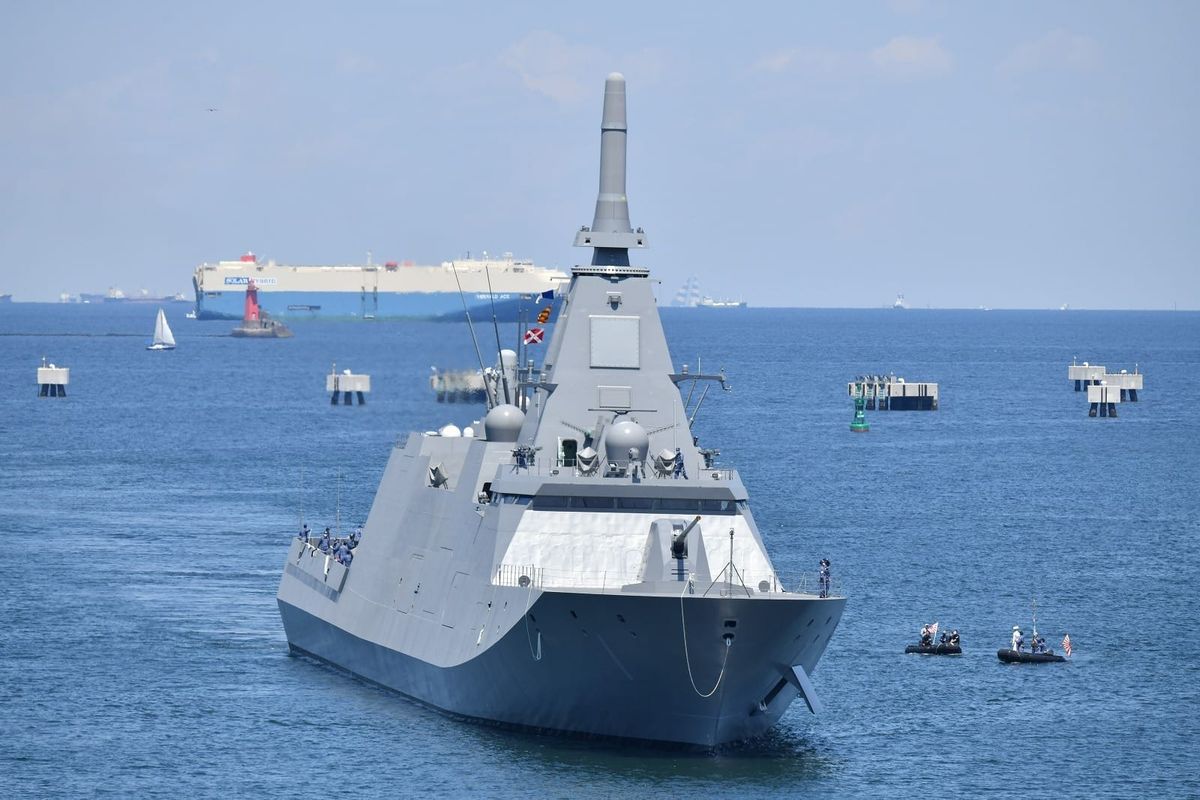
When reports emerged in late April that Japan had offered India the design plans for its prized Mogami-class frigate, the significance went well beyond a single contract. According to the South China Morning Post, Tokyo proposed letting India build the ships in its own yards using Japanese materials, with each hull costing about US$500 million and armed with anti-ship missiles and torpedoes.
It is also the clearest sign yet of a strategy that is reshaping naval power across the region. Japan is using the warships it builds, and increasingly the ones it no longer needs, to draw a widening circle of partner navies into dependence on Japanese hardware and support. The effect is a form of influence that resembles a network far more than an alliance.
The enabler arrived on the twenty-first of April, when Prime Minister Sanae Takaichi pushed through the biggest overhaul of Japan's defence-export rules in decades. For most of the postwar era, Japan's finished exports were confined to narrow, mostly non-lethal categories such as rescue and surveillance equipment.
The new rules opened the door to complete weapons systems, including warships and combat aircraft, for countries that have signed defence transfer agreements with Tokyo. Japan had loosened its rules before, in 2014 and again in 2023, but this change marks the most significant transformation of the country's defence export framework.
The deals that have followed reveal a deliberate logic. Japan is matching each partner to the level of capability its navy can afford to crew and maintain. Australia, among Tokyo's closest partners, secured the most advanced offer: an upgraded Mogami-class frigate, with up to eleven ships planned and most of the fleet to be built in Australian yards. New Zealand is weighing the same broad design. The Philippines, by contrast, is being offered something cheaper and faster — retired Abukuma-class escorts from the late 1980s, whose weapons can be stripped or modified before transfer.
Indonesia is the harder case to read. Jakarta has reportedly been offered retired Asagiri-class destroyers of the same vintage. But the talks are said to extend to newer Mogami frigates and even submarines, though the details remain murky and it is unclear whether any of it would be built locally. Nevertheless, Japan has been trying to deepen its ties with Indonesia for some time, so any deal with Jakarta must be viewed in that light.
But India now (apparently) sits at the more advanced end of Japan's defence export spectrum. The reported offer to share the Mogami design, rather than simply sell finished ships, points to the heart of Japan's approach. A sale ends when the vessel is delivered. A design transfer creates a lasting relationship, binding Indian shipbuilders to Japanese methods and decades of future support.
This is where Japan's real leverage begins. When Tokyo transfers a ship or a design, it also builds the apparatus needed to keep that ship working. Crews must be trained and engineers must learn the systems. Over time those habits accumulate, and partner navies begin to orbit the same Japanese centre of gravity. Analysts have started to call this a "network of navies", and the phrase captures the logic well. Japan does not need every partner to sign the same treaty or describe adversaries in the same terms. The network forms through practical dependence.
China is the reason any of this matters. Beijing now operates the world's largest navy by number of hulls, and its coast guard and maritime militia are pushing deeper into contested waters. Japan cannot match China hull for hull. Its response has been networked power. Australia anchors the southern Pacific. The Philippines sits beside the South China Sea and the approaches to Taiwan. Indonesia controls the straits through which much of Japan's energy passes. India would extend the web westward, into the Indian Ocean, where New Delhi already aspires to act as a regional security provider.
That India deal is the most striking escalation precisely because New Delhi guards its strategic autonomy so fiercely. India buys from many suppliers and joins no camp, and the reported arrangement dovetails neatly with its drive to localise defence production. This is the quiet genius of Japan's model: ambiguity is built in. Australia can treat its Mogami order as deep alignment, while India can frame Japanese technology as a boost to self-reliance. The network stays open to countries that would never join an explicit bloc against Beijing.
Even so, none of this is guaranteed. Many of these arrangements remain under discussion rather than signed, and the Indian offer rests so far on a single regional report. Japan's shipyards already face backlogs, and its defence firms remain cautious after decades of serving one customer. An ageing population and heavy public debt limit how fast the industrial base can grow.
Yet those very limits explain the strategy. Tokyo is not trying to flood the region with weapons or out-build China's yards. It is using the industrial strength it already has to become the hub around which other navies organise themselves. Each frigate sold and each blueprint shared ties another fleet a little more tightly to Japan, and pulls Tokyo back towards the centre of Indo-Pacific power.
Comments ()