Papua New Guinea has formally opened a multinational military exercise with forces from Australia, the United States and New Zealand, days after a new mutual-defence treaty elevated Port Moresby and Canberra to allies committed to integrating their armed forces more closely.
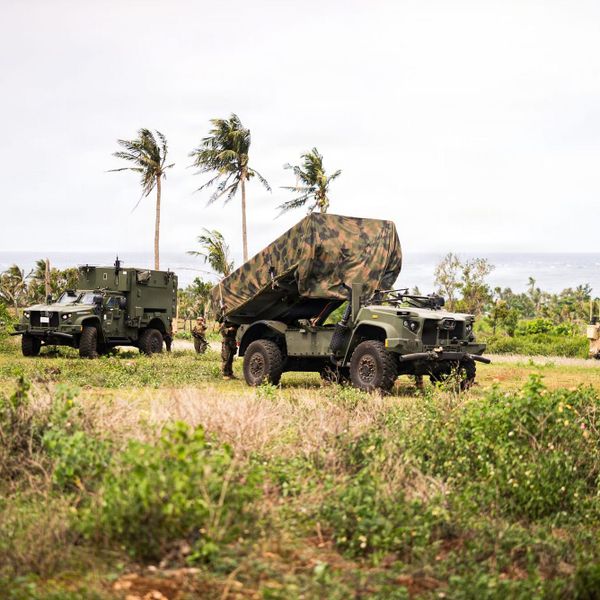
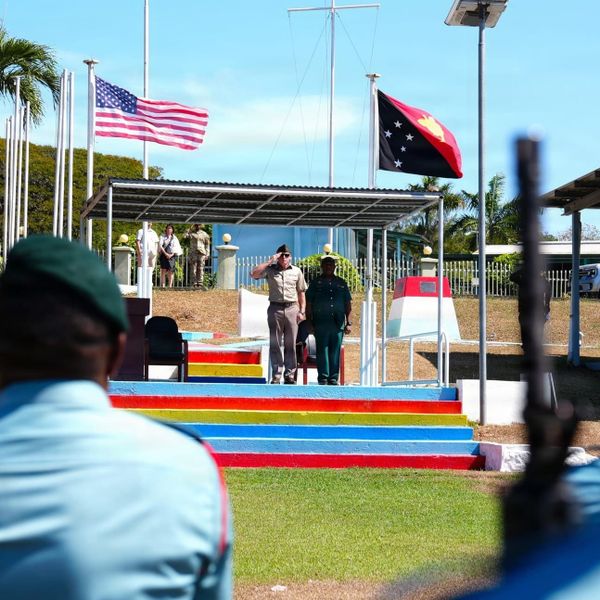
Soldiers from the Papua New Guinea Defence Force and US Army stood together at Murray Barracks in Port Moresby on 13 July for the opening of Tamiok Strike 26. The exercise, led by the PNGDF and US Army Pacific, runs across three locations until 24 July and includes Australian and New Zealand personnel.
The ceremony came five days after the Australia–Papua New Guinea Mutual Defence Treaty, known as the Pukpuk Treaty, entered into force on 8 July. Signed in October 2025, the agreement declares that an armed attack on either country would endanger both and commits them to act against the common danger.
It also establishes a framework for greater integration and interoperability between their defence organisations, including compatible equipment and joint training.
The treaty keeps the PNGDF distinct from the Australian Defence Force and leaves Port Moresby in control of its own military. Its text repeatedly recognises both countries as sovereign, while seeking to make their forces capable of operating together during a crisis.
Tamiok Strike is not itself an Australian-led exercise, and Canberra is one of several partners taking part rather than the organiser. Its timing nevertheless places the annual US-PNG training activity within a rapidly changing regional structure in which Papua New Guinea is deepening military links with several of Washington’s closest Pacific partners at once.
Training is spread across Port Moresby, Lae and Wewak. At Murray Barracks, US and PNG personnel are conducting a battalion-level command exercise and military police field training. Engineers at Igam Barracks in Lae are renovating classrooms while medical teams participate in a bilateral health programme. Infantry forces will train at Moem Barracks in Wewak.
The exercise is the seventh iteration of Tamiok Strike and reflects a US relationship that has grown alongside PNG’s alliance with Australia. The Wisconsin National Guard entered a formal State Partnership Program with Papua New Guinea in 2022, drawing on historical links to the 32nd “Red Arrow” Division, which fought in New Guinea during the Second World War.
Washington separately signed a Defence Cooperation Agreement with PNG in 2023, giving US forces a framework for access to designated facilities and support for activities including training and maritime security.
Australia’s commitments are considerably broader. Canberra has allocated A$600 million over four years from 2026–27 to implement the Pukpuk Treaty, support integration between the forces and expand defence infrastructure in the Pacific. Eligible Australian permanent residents who are PNG citizens have also been permitted to apply to join the ADF since January.
Australia has agreed to help train PNGDF pilots and aircrew as Port Moresby attempts to develop a force constrained by limited funding and infrastructure. Greater compatibility with the much larger ADF could give PNG access to capabilities it would struggle to sustain independently.
Papua New Guinea’s location gives that cooperation significance beyond the size of its military. The country occupies the approaches immediately north of Australia and sits between the Coral Sea and the island chains leading into the western Pacific. Its territory was a major battleground during the Second World War and would again be strategically important in any conflict disrupting maritime and air routes across the region.
The United States and Australia have intensified engagement with Pacific island states since China signed a security agreement with Solomon Islands in 2022, raising fears in Canberra and Washington that Beijing could eventually secure a military foothold in the region.
PNG maintains diplomatic and economic relations with China, and its government has stressed that cooperation with Australia does not prevent relationships with other countries. The Pukpuk Treaty, however, places its most consequential defence commitment firmly within the US-aligned regional network.
Tamiok Strike remains a training exercise rather than evidence that the Australian and PNG militaries have already achieved operational integration. But its multinational participation illustrates the environment in which the treaty will be implemented: PNG forces working repeatedly with Australia, the United States and New Zealand across their own territory.