
Australia Accelerates Missile Shield After Live-Fire Success at Woomera
Photo courtesy of the Australian Department of Defence

Australia Accelerates Missile Shield After Live-Fire Success at Woomera

Share this post

Australia and the United States shot down a cruise missile target in a first-of-type live-fire test of a prototype ground-based air defence system, as Canberra accelerates work on a missile shield to guard against growing threats in the Indo-Pacific.

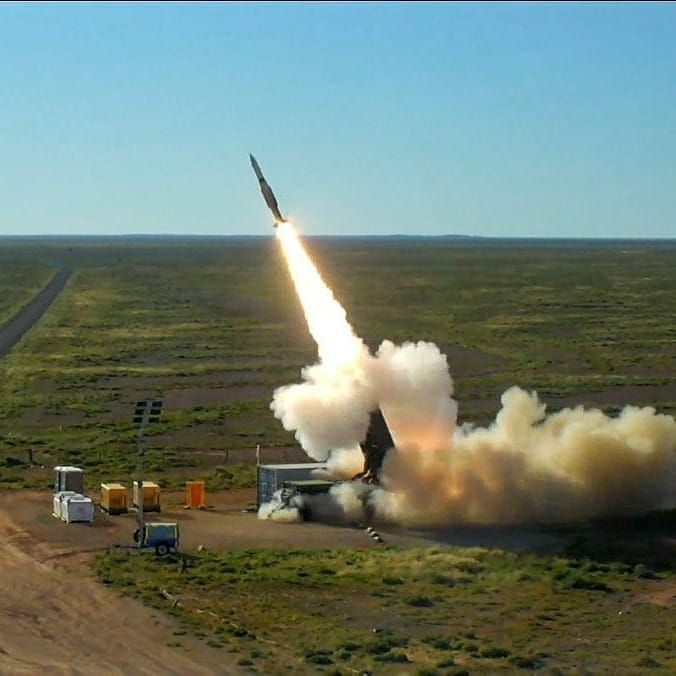
The Australian Defence Force fired a Standard Missile-2 at an airborne target last month at the Woomera range in South Australia, during Exercise Taipan Strike 26, the government said on Thursday. The prototype paired an Australian radar with a United States weapon control system and launcher to track and destroy the target.

The engagement marked the first integration of a radar built by Canberra-based CEA Technologies with the Aegis Combat System, produced by Lockheed Martin Corp. CEA worked with the American firm over several months to complete the link ahead of the firing.

The test forms part of Australia's largest peacetime build-up of air and missile defences. The 2026 National Defence Strategy names integrated air and missile defence as a priority, and the government has directed officials to speed up a medium-range, ground-based system to counter long-range and high-speed weapons.

Australia expects to spend between A$7 billion and A$10 billion ($4.9 billion to $6.9 billion) on missile defence over the next decade.

The disclosure came days after China fired a nuclear-capable ballistic missile from a submarine into the South Pacific on 6 July, its first known launch of a sea-based strategic weapon into the region. The launch drew condemnation from Australia and New Zealand, and stirred fresh concern in Canberra about the country's ability to intercept such weapons.

Defence Minister Richard Marles said the firing demonstrated how the country was working with partners and local industry on capabilities that grow national sovereignty.

"This first of type live-fire test is a practical demonstration of how the Australian Defence Force is working with its partners, and local industry to deliver crucial defence capabilities," Marles said.

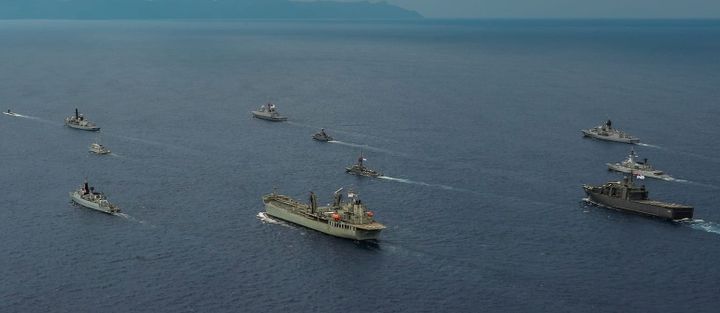
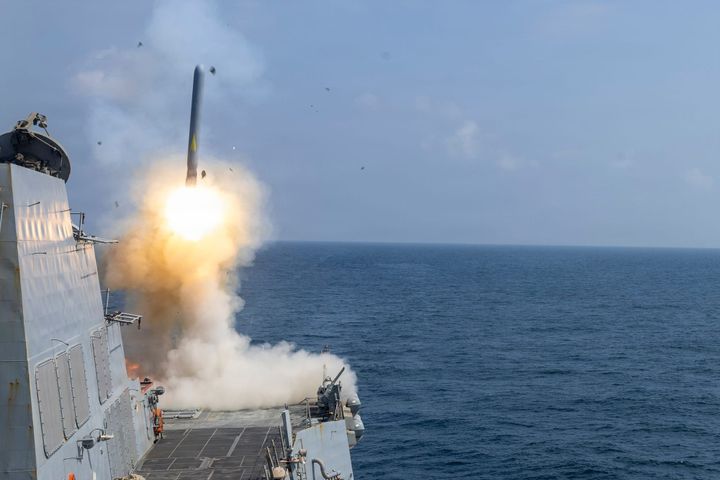
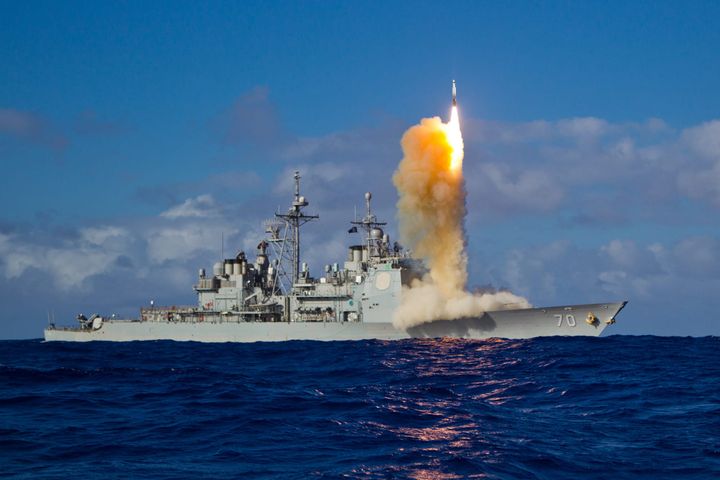
Australia already fields the Aegis system aboard its navy's Hobart-class destroyers, and the Woomera test extends that American combat system to a land-based role for the first time using a home-grown sensor. The approach is designed to give Australia a sovereign radar backbone while drawing on proven United States fire-control technology.

Air Marshal Stephen Chappell, the chief of the Air Force, said the exercise was built to shape future purchasing.

"Taipan Strike 26 is an Air Force-led Integrated Air and Missile Defence activity designed to explore medium range air defence capability options to inform capability acquisition decisions," Chappell said.

The government has signalled that decisions on the medium-range system are likely this year, part of a wider push to harden the continent against strikes from beyond its shores.
Share this post
Comments

Be the first to know

Join our community and get notified about upcoming stories

Subscribing...
You've been subscribed!
Something went wrong
Papua New Guinea Opens Allied Military Drill Days After Australia Defence Pact Takes Effect

Papua New Guinea Opens Allied Military Drill Days After Australia Defence Pact Takes Effect

Papua New Guinea has formally opened a multinational military exercise with forces from Australia, the United States and New Zealand, days after a new mutual-defence treaty elevated Port Moresby and Canberra to allies committed to integrating their armed forces more closely. Soldiers from the Papua New Guinea Defence Force and US Army stood together at Murray Barracks in Port Moresby on 13 July for the opening of Tamiok Strike 26. The exercise, led by the PNGDF and US Army Pacific, runs across


MGG Geopolitics

MGG Geopolitics

How US Missile Deployments Near Taiwan Are Becoming a Fixture in the Philippines

How US Missile Deployments Near Taiwan Are Becoming a Fixture in the Philippines

A chain of Philippine islands stretching south from Taiwan is becoming a recurring operating ground for American and allied missile forces, as temporary exercises evolve into longer rotations designed to defend strategic waters from China. The Hawaii-based 3rd Marine Littoral Regiment spent roughly three months in the Philippines this year, moving anti-ship launchers and air-defence systems through the country during the Balikatan and KAMANDAG exercises. In the northernmost Batanes and Babuyan


MGG Geopolitics

MGG Geopolitics

US Deepens Guam Submarine Support Amid China Missile Threat

US Deepens Guam Submarine Support Amid China Missile Threat

The US Navy is building Guam into a more capable submarine hub, able to keep its boats ready closer to potential flashpoints in Asia. The arrival of USS Tucson this month—an outwardly routine exchange of one vessel for another—highlights the supporting network behind that effort. USS Tucson, a Los Angeles-class nuclear-powered attack submarine commissioned in 1995, reached its new home port at Naval Base Guam in July. Navy photographs and captions show the boat arriving on 10 July, although the


MGG Geopolitics

MGG Geopolitics

Canada’s TKMS Submarine Bet Comes With Strategic Costs

Canada’s TKMS Submarine Bet Comes With Strategic Costs

Canada has chosen a highly capable German submarine and a partnership that fits comfortably within its established NATO role. It has also passed up a rarer opportunity to connect its Arctic defence requirements with its ambitions in the Indo-Pacific. Prime Minister Mark Carney announced on 6 July that TKMS had been selected as the preferred supplier for as many as 12 new submarines, beating South Korea’s Hanwha Ocean in the largest defence procurement Canada has attempted. The German shipbuild


MGG Geopolitics

MGG Geopolitics