A chain of Philippine islands stretching south from Taiwan is becoming a recurring operating ground for American and allied missile forces, as temporary exercises evolve into longer rotations designed to defend strategic waters from China.
The Hawaii-based 3rd Marine Littoral Regiment spent roughly three months in the Philippines this year, moving anti-ship launchers and air-defence systems through the country during the Balikatan and KAMANDAG exercises. In the northernmost Batanes and Babuyan island groups, Marines established simulated expeditionary bases across three islands capable of monitoring and threatening traffic through the Luzon Strait.
The deployment was temporary, and neither Washington nor Manila has announced a permanent Marine missile base. But it forms part of a clear progression since the regiment was activated in 2022. Each year the Marines have returned under a dedicated rotational force, bringing increasingly capable weapons to a widening set of locations.
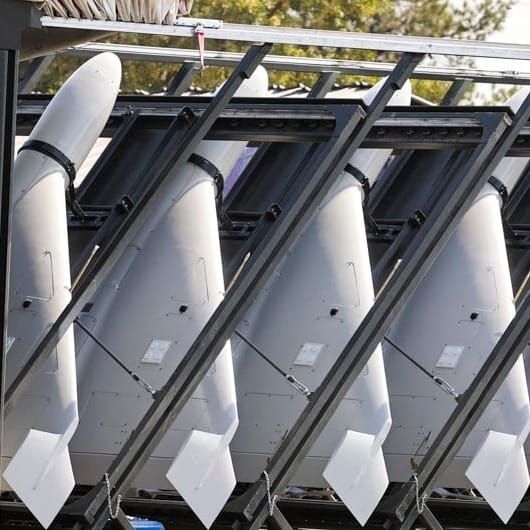
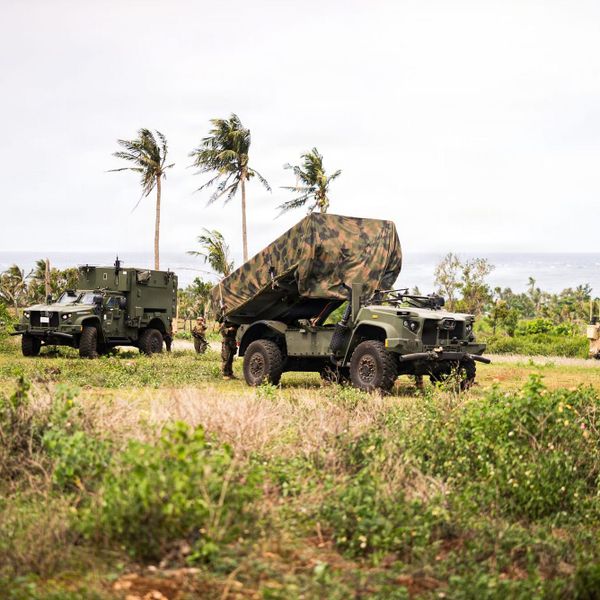
In 2025, the Marines introduced the Navy-Marine Expeditionary Ship Interdiction System, known as NMESIS, to the Philippines. Its unmanned launchers carry Naval Strike Missiles able to hit ships more than 100 nautical miles away, allowing small ground units to contest surrounding waters without relying on a warship or combat aircraft.
That initial deployment placed launchers on Batan Island. In 2026, the regiment expanded operations to Batan, Calayan and Itbayat, creating separate positions around the Luzon Strait rather than concentrating the system in one location. Marines also deployed the truck-mounted Marine Air Defense Integrated System to protect the missile batteries from aircraft and drones.
During KAMANDAG, the units practised linking those dispersed positions into what the regiment described as a larger sensor-and-fire network. Information collected from one island could contribute to a shared operating picture used to identify maritime targets and coordinate strikes by forces elsewhere.
The exercises therefore tested more than whether a missile launcher could reach a remote island. They rehearsed the command and logistics needed to keep several small, dispersed units fighting across an archipelago while under threat.
Japan's participation widened that network beyond the US-Philippine alliance. During Balikatan in May, Japanese forces fired Type 88 surface-to-ship missiles from Ilocos Norte for the first time on Philippine soil. US and Philippine systems contributed to the broader maritime strike scenario, demonstrating how the allies could coordinate separate sensors and weapons against a common target.
Mobility remains an obvious weakness. The Marines used contracted Philippine ferries to carry NMESIS launchers and air-defence vehicles between islands, an improvised solution while the purpose-built Landing Ship Medium remains unavailable. The first of those beachable ships is not expected until 2029.
The exercises are now organised under the Littoral Rotational Force–Luzon, which debuted in 2025 and links successive training events into a broader seasonal deployment. The structure gives the Marines a repeatable mechanism for returning to the same terrain, working with the same Philippine units and refining operations around the country's northern approaches.
That pattern is enabled by the Enhanced Defense Cooperation Agreement, which grants US forces rotational access to designated facilities while leaving the sites under Philippine ownership and control. Manila added four locations in 2023, including Naval Base Camilo Osias and Lal-lo Airport in the northern province of Cagayan.
The arrangement allows equipment and recurring deployments to accumulate without creating a permanent American base. It also preserves Manila's formal authority over access, a distinction Philippine officials emphasise when rejecting Chinese claims that the expanding US presence compromises the country's sovereignty.
The Marine rotations sit alongside a separate and more politically sensitive US Army missile deployment. Washington brought its Typhon Mid-Range Capability to the Philippines in 2024 for an exercise, but the system remained after the training ended and was later repositioned within the country.
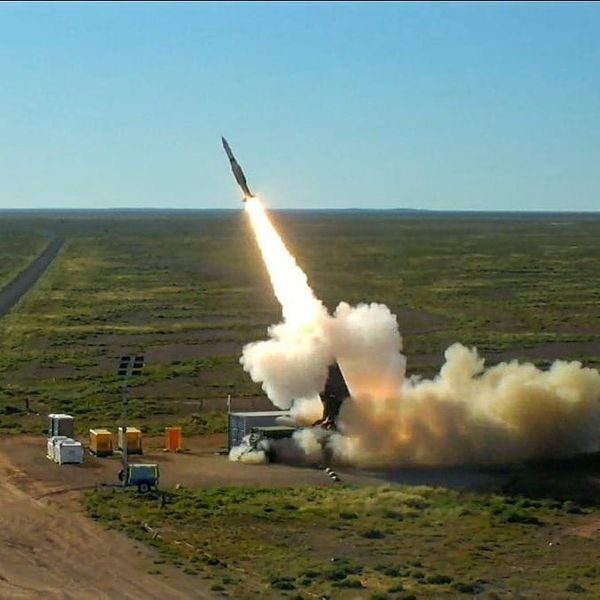
Typhon moved beyond a demonstration of deployability during Balikatan this May, when the US Army fired a Tomahawk from Tacloban Airport on Leyte. The missile struck a training target in Nueva Ecija more than 600 kilometres away in the system's first live launch in the Philippines.
The firing demonstrated that long-range US weapons could operate across the archipelago rather than from a fixed position in northern Luzon. Typhon can also launch the SM-6, while the Tomahawk's range places targets on the Chinese mainland within reach.
Beijing argues that the deployments increase confrontation and turn the Philippines into a platform for containing China. Manila has rejected repeated demands to remove Typhon, maintaining that decisions over deployments are sovereign matters and that the systems strengthen deterrence in the South China Sea.
The northern exercises also carry an unavoidable Taiwan dimension. The Batanes Islands overlook routes connecting the South China Sea with the Philippine Sea. Forces positioned there could monitor or threaten ships moving through the Luzon Strait during a blockade or invasion.
President Ferdinand Marcos Jr has said fighting over Taiwan would inevitably affect the Philippines because of geography and the roughly 200,000 Filipinos living and working on the island. Philippine planning is publicly framed around defending national territory and evacuating those citizens, rather than joining a war over Taiwan.
None of this amounts to permanent American basing. NMESIS still arrives only for exercises, and access remains dependent on Philippine approval.
But permanence is not the only measure of military presence. Through longer rotations and increasingly complex live-fire exercises at designated access sites, American missile operations are becoming routine. What began as occasional training is turning into a standing pattern, now involving not only the United States and the Philippines, but Japan as well.