
Why Europe Is Turning to Ukraine for Missile Production
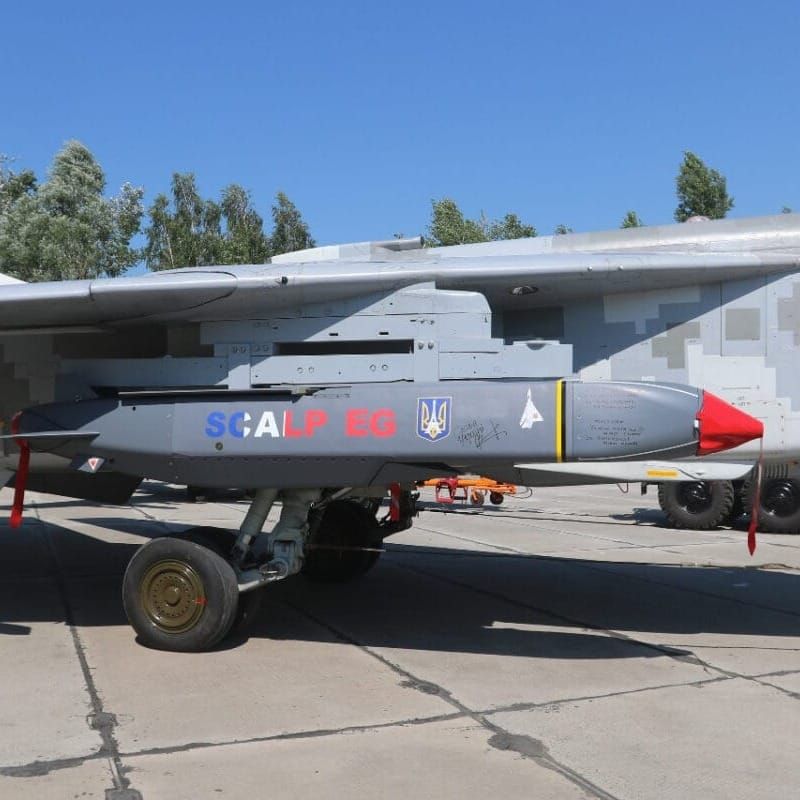
Ukraine and France are negotiating a licence that would allow Kyiv to build SCALP cruise missiles on its own soil, the clearest sign yet that European missile production is moving toward the country those weapons were recently built to supply.
Defence Minister Mykhailo Fedorov confirmed the talks on 29 June, saying there had been steady progress on intellectual property and the mechanics of standing up a production line, while cautioning that no deal was final. The negotiations followed a meeting between President Volodymyr Zelensky and President Emmanuel Macron, and built on a G7 statement issued at Évian in mid-June that committed the group to consider licences expanding Ukraine's weapons output.
The talks point to a larger shift. Ukraine is becoming an anchor of Europe's missile rearmament: the fastest place on the continent to build and battle-test the weapons that strike deep, and the interceptors meant to stop them. Two forces are driving that shift.
The first is Europe's scramble to escape American control. SCALP is attractive because it carries no US components, leaving Paris free to decide how it is produced and exported. The contrast with the Patriot interceptor is stark. Kyiv has spent months trying to secure a US licence to build Patriots at home and has not obtained one, even as President Donald Trump has signalled he may press American firms to grant it.
That difference matters. France can give Ukraine a path toward offensive autonomy. Washington has so far declined to give it defensive autonomy. Increasingly, that gap defines who really controls European strike power.
Evidence is piling up on the offensive side. France restarted SCALP production in 2025 after a fifteen-year gap, and a Ukrainian licence would allow Kyiv to supply its own war effort while building an industrial base Paris could later draw on. Kyiv has also tied the deal to its planned purchase of Rafale fighters, which carry the missile, giving France a commercial reason to move ahead.
Other European firms are moving in the same direction. MBDA has signed a strategic agreement with Ukrainian Armor on long-range strike, while Germany's Diehl Defense has opened talks with Fire Point about co-producing the FP-5 Flamingo, the low-cost 3,000 km cruise missile that Kyiv rushed into service last year.
Germany turned to the Ukrainian option after the Trump administration cancelled a planned deployment of US Typhon launchers on German soil, closing Berlin's nearest route to ground-launched deep strike. The economics are also attractive. A Flamingo costs about $500,000, compared with more than $2 million for a Tomahawk, and Fire Point claims it could build hundreds each month with sufficient demand and financing. Netherlands-based Destinus, another new entrant, has been battle-testing its Ruta cruise missile in Ukraine since 2024, using the country as a proving ground from its base in western Europe.
The defensive side is beginning to move along the same path. Fire Point is developing a ballistic missile interceptor codenamed Freyja, built around its own FP-7X rocket. Last month it signed a memorandum with German radar maker Hensoldt, which will supply its TRML-4D radar, while Zelensky has signed a separate agreement with Germany to develop a European interceptor jointly. Fire Point says the first interceptors could be ready by the end of this year if European governments move quickly.
Speed is the second force pulling production toward Ukraine, and it may be the harder one for established European primes to match. Fire Point's chief designer, Denys Shtilierman, has said wartime rules have stripped away the regulation that slows European testing. "We need one day," he told Reuters, compared with the six months to a year he estimates a European counterpart would need. Combat supplies the feedback loop. The Flamingo's guidance has improved over a year of live strikes in a way no European test range could easily replicate.
The case for caution is real. Even with a licence, serial SCALP production would take years, and small batches will not transform the current battlefield. Ukrainian accuracy remains unproven. Of at least twenty Flamingos fired in the missile's first year, only four caused damage, though a June strike on an electronics plant at Cheboksary landed two of five. Dependency also does not disappear. Ukrainian systems still rely on European seekers and command-and-control technology that Kyiv cannot yet build, while the Patriot licence remains in Washington's gift.
The model also rests on the war continuing to justify the deregulated tempo that makes Ukraine attractive in the first place. A ceasefire could slow the very speed European firms are chasing. Russia, meanwhile, still out-produces the West on the measure that matters most for air defence, turning out around 120 ballistic missiles a month against Lockheed Martin's roughly 600 Patriot interceptors a year.
None of that changes the direction of travel. For years, Europe treated Ukraine as the place its weapons went to be used. It is now becoming the place they are made.
Comments ()