
US Marines Use Civilian Ferries to Haul China-Deterrent Missiles Near Taiwan
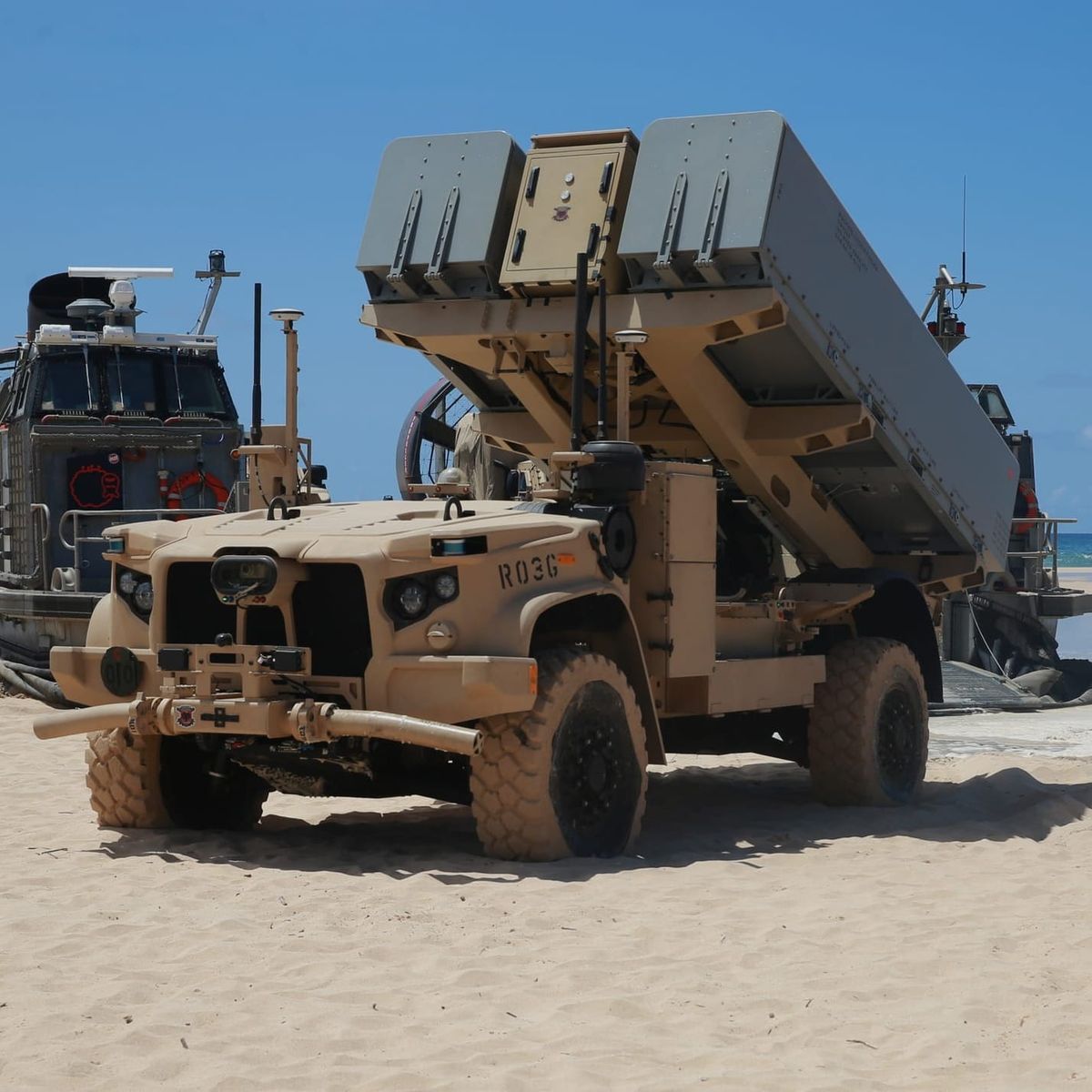
US Marines moved land-based anti-ship missile launchers across islands near Taiwan aboard contracted Philippine commercial ferries this month, a workaround that underscores how far Washington's plan to counter China at sea has run ahead of the ships built to carry it.
During the KAMANDAG exercise, the 3rd Marine Littoral Regiment loaded its Navy-Marine Expeditionary Ship Interdiction System, known as NMESIS, and accompanying air defence vehicles onto civilian roll-on, roll-off vessels to reach Calayan Island in the Luzon Strait, the US Marine Corps said in a release dated 20 June. The regiment rehearsed dispersed movement across the Babuyan and Batanes island groups, the scattered archipelagos that sit astride the sea lane separating the Philippines from Taiwan.
The reliance on hired shipping reflects a capability the Marines have fielded years before the purpose-built vessels meant to move it. The service intends to shuttle its missile batteries between islands aboard the McClung-class Landing Ship Medium, but the first of those beachable ships is not due for delivery until 2029, with construction only expected to begin late this year.
"The modern littoral environment requires us to rapidly move our forces across challenging maritime terrain," said Major Robert Moore, a logistics officer with the regiment.
To close the gap, the Marine Corps and the Navy have leaned on a patchwork of interim shipping. Alongside contracted local ferries, the services have drawn on US Army logistics support vessels and leased offshore support craft modified with stern ramps to beach vehicles directly onto shorelines. The Marines have also ordered two Ancillary Surface Craft-Medium from Australian-headquartered Birdon as a bridging measure ahead of the larger fleet, part of an effort running more than five years since the distributed operating concept was first unveiled.
Getting the launchers onto remote islands is central to how Washington plans to blunt China's navy in any conflict over Taiwan. From the Luzon Strait, NMESIS can threaten shipping up to 100 nautical miles away with Naval Strike Missiles, handing ground troops a means of closing one of the maritime chokepoints the People's Liberation Army would need to pass. The regiment can field up to 18 of the unmanned launchers, divided into sections of three, protected against drones and aircraft by the truck-mounted Marine Air Defense Integrated System that travelled with them on the Philippine ferries.
The drills form part of a broader push to seed the first island chain with mobile firepower. The Okinawa-based 12th Marine Littoral Regiment formally received its own NMESIS and air defence vehicles in June, planting forward-based anti-ship missiles on the anchor of a Japanese island chain that runs to within about 110 kilometres of Taiwan at its western end. The US Army has separately flown its Mid-Range Capability, armed with Tomahawk and SM-6 missiles, into both the Philippines and Japan, giving the joint force overlapping means of holding maritime traffic at risk.
Marine and Army commanders view ground-based launchers as a way to complicate the movement of China's larger fleet, dispersing small, hard-to-target teams across the archipelagos rather than massing them at fixed ports. That concept depends on being able to reposition units quickly, which is precisely what the missing landing ships are supposed to provide once they enter service.
The shortfall has dogged the effort for years. Originally conceived as the Light Amphibious Warship under the Marines' Force Design overhaul, the programme stalled in 2024 when the Navy cancelled a tender over bids it judged too costly. The service later selected the Dutch LST-100 design from Damen Shipyards Group as a cheaper, ready-made basis for the McClung class, and plans to buy between 18 and 35 of the ships. Its recent shipbuilding record, including the cancelled Constellation-class frigate programme, has fed doubts about whether even the revised 2029 target will hold.
The lead vessel, USS McClung, is named for a Marine public affairs officer killed in Iraq in 2006. Pressure to move faster has reached the top of the department: John Phelan was removed as navy secretary in April amid friction over the pace of shipbuilding, with Under Secretary Hung Cao since serving in an acting capacity.
Comments ()