
US-Italy Military Ties Deepen Even as the Trump-Meloni Feud Sours the Alliance
When President Donald Trump and Prime Minister Giorgia Meloni arrive in Ankara next week for the NATO summit on 7-8 July, it will be the first time they have shared a room since their relationship dissolved into public insult. The optics will be studied closely. Yet the more revealing story runs beneath the diplomacy: the military relationship between Washington and Rome has rarely been deeper, and much of its recent growth materialised just before the politics fell apart.
The quarrel has been bitter and personal. Trump told an Italian broadcaster that Meloni had "begged" him for a photograph at this month's G7 in Évian-les-Bains; she called the claim fabricated and replied that Italy does not beg. Her foreign minister, Antonio Tajani, scrapped a planned trip to Washington in protest.
But the bad blood reaches back further, to Trump's attack on Pope Leo XIV in April, which Meloni branded unacceptable, and to Rome's refusal to let American aircraft use the Sicilian base at Sigonella for the war on Iran without parliamentary approval. With an election due within the year, Meloni has discovered that pushing back on Trump plays well at home.
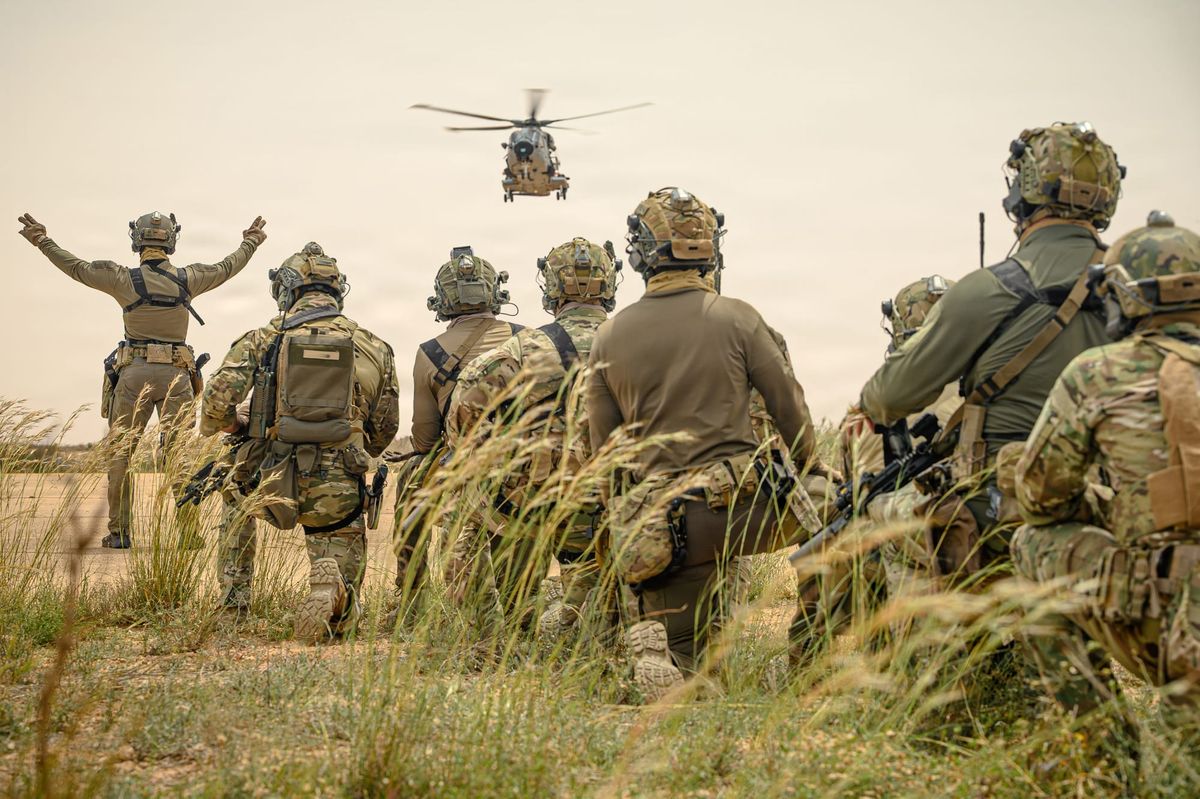
Yet the institutional ties have moved in the opposite direction. In 2020 the Italian Army relocated its special forces command into Camp Darby, sharing the site of one of the largest American arsenals outside the United States. In April this year, just before the feud deteriorated, the Italian Air Force's 17th Stormo became the first NATO unit accredited to US Air Force Special Operations Command standards for the demanding business of slipping into hostile territory and opening an airfield for the forces coming in behind. And last year the US Air Force began training some of its own pilots in Sardinia, the first time it has qualified aircrew outside American soil.
This layer explains the paradox. The two militaries are bound by interests that neither leader created and neither can easily unpick. Italy is the rare Western power still expanding in Africa while others retreat. Its special forces have been embedded in Niger since 2018, training more than eleven thousand local troops, and they stayed put through the coups of 2023 and 2024 that swept Western and United Nations missions out of the Sahel.
In April, Italian planning and diplomatic weight made it possible to hold Flintlock, US Africa Command's largest annual special operations exercise, on Libyan soil for the first time, drawing in more than thirty nations and bringing the country's two rival governments to train side by side. Underwriting all of it is the Mattei Plan, a five-and-a-half-billion-euro push led by the energy giant Eni, already the biggest foreign gas producer on the continent.
As Washington's attention shifts towards the Indo-Pacific, that southern reach is growing more valuable. America brings global scale; Italy brings the access and the regional permanence that Washington no longer holds on its own.
The nature of these shared interests frames the question now hanging over the alliance. After pulling five thousand troops from Germany in May, Trump named Italy as a candidate for cuts of its own, asking why he should not, given what he called Rome's lack of help. Whether Italy is genuinely in the crosshairs is an open question. The troop reductions have fallen on the conventional, Russia-facing mission in the alliance's east, while the assets Washington prizes in Italy are the command centres and surveillance hubs that the cuts leave (in relative terms, at least) untouched.
Even so, none of this makes the relationship safe. A partnership drained of political goodwill can still see new initiatives wither, and a leader fighting for re-election may keep her distance from an unpopular ally. But the machinery beneath the quarrel keeps running on its own logic, and the imperatives of the alliance keep pulling the two governments back together. Reporting before the summit already has Meloni set to take a prominent role in Ankara, where the agenda (heavier defence spending and the future of the alliance's southern flank) basically points in the same direction as the integration their officials have spent years building.
Comments ()