
US Deepens Guam Submarine Support Amid China Missile Threat
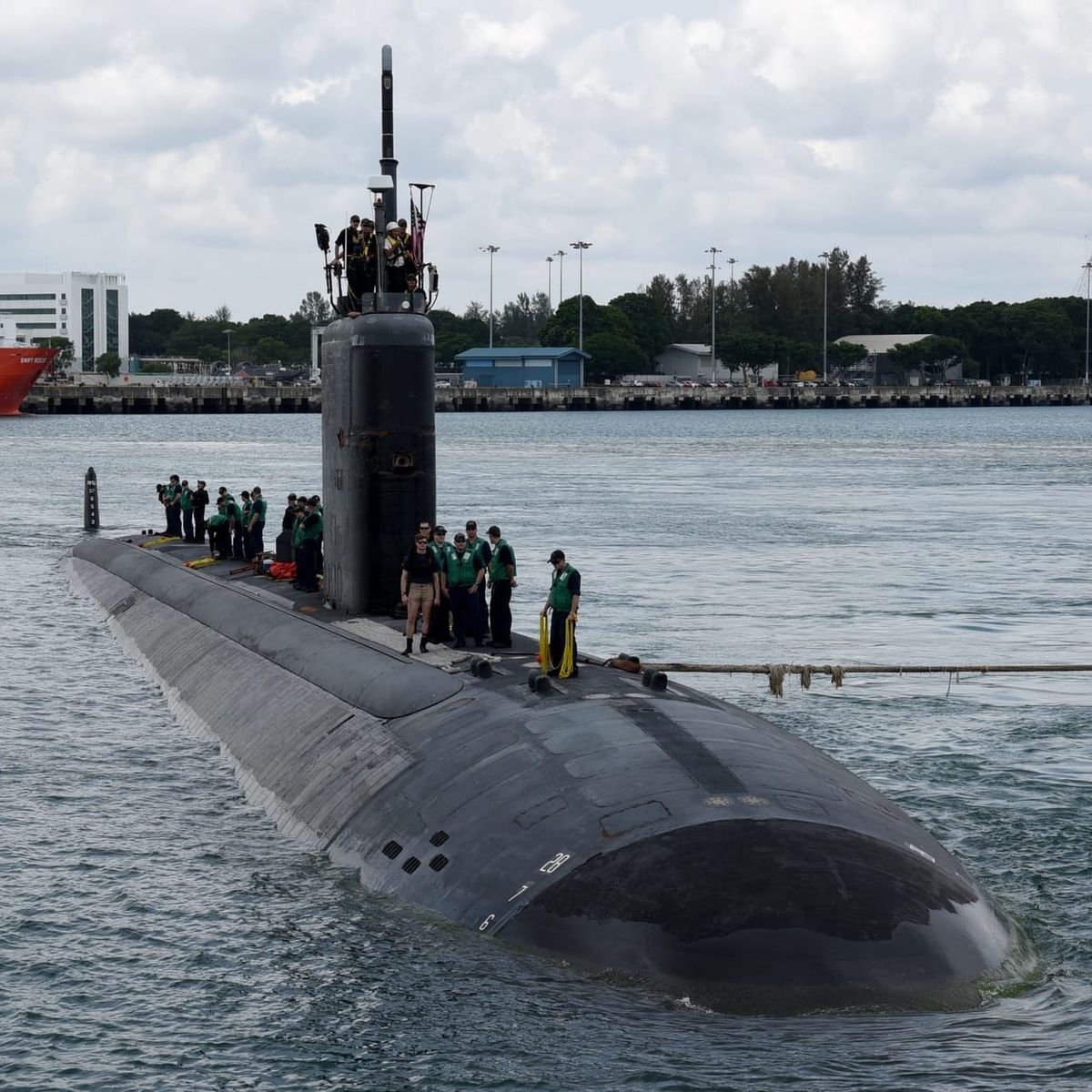
The US Navy is building Guam into a more capable submarine hub, able to keep its boats ready closer to potential flashpoints in Asia. The arrival of USS Tucson this month—an outwardly routine exchange of one vessel for another—highlights the supporting network behind that effort.
USS Tucson, a Los Angeles-class nuclear-powered attack submarine commissioned in 1995, reached its new home port at Naval Base Guam in July. Navy photographs and captions show the boat arriving on 10 July, although the text of the accompanying announcement gives 10 June. Its transfer followed the departure of USS Jefferson City, another boat of the same class, for Pearl Harbor. Tucson joined three submarines already based on Guam, leaving the island with four.
The Navy describes the move as part of its “strategic laydown” in the Pacific. On paper it is a straightforward exchange of one hull for another, but the more consequential change is taking place ashore.
At Polaris Point, Submarine Squadron 15 keeps Guam-based and visiting boats trained and ready. The island is home port to the Navy’s only two submarine tenders, USS Frank Cable and USS Emory S. Land, which alternate between servicing vessels in Apra Harbor and supporting ships farther forward.
The Navy has also been expanding its maintenance footprint on Guam. Polaris Point is the primary site for intermediate maintenance and repair of submarines deployed in the western Pacific, according to Navy documents. During Valiant Shield 2026, US Indo-Pacific Command opened a forward multi-domain training and experimentation facility on the island, equipped with command-and-control, communications and intelligence systems.
Not all those elements are new, nor has the Navy presented them as a single programme tied to Tucson. Together, however, they show how Guam is becoming more than a place to berth submarines. The objective is to keep boats ready farther forward and reduce the need to return to Hawaii for some maintenance and support.
That matters because counting hulls captures only the visible part of undersea power. A submarine’s real value rests on the trained crews and maintenance capacity that keep it at sea and available when commanders call.
Guam’s force includes USS Minnesota, which in November 2024 became the first Virginia-class attack submarine forward-deployed to the island. Its presence alongside older Los Angeles-class boats points to a gradual refresh rather than a sudden expansion. The current tally is not unprecedented: Guam has hosted three, four and, in 2022, five attack submarines, according to the Congressional Research Service.
The island is well placed for its widening role. Guam lies closer than Hawaii or the continental US to potential operating areas around Taiwan and the South China Sea. As American territory, it also avoids some of the political conditions that can accompany operations from an ally’s bases.
That geography is also a liability. China fields missiles capable of reaching Guam, while North Korea may also be able to threaten it. The US is developing an integrated air-and-missile defence system on the island in response to increased Chinese military activity, according to the Government Accountability Office.
The build-up remains incomplete. The watchdog found in 2025 that the Pentagon had not fully determined how many personnel would be needed to operate and sustain the defence system or completed their deployment schedule, complicating plans for housing and related services.
Guam therefore faces a built-in tension. Every layer of defence and maintenance makes the island more useful while concentrating people and military capability on a small, exposed territory. Its civilian infrastructure must also support the growing mission.
Tucson arrives in a very different Guam from the one earlier submarines knew: a forward base being equipped to keep boats ready for longer without sending them back to Hawaii for every repair or support requirement. Whether that network will be complete before it is tested remains unclear.
Comments ()