
New Pentagon Drone ‘Czar’ to Close Gap With US Rivals
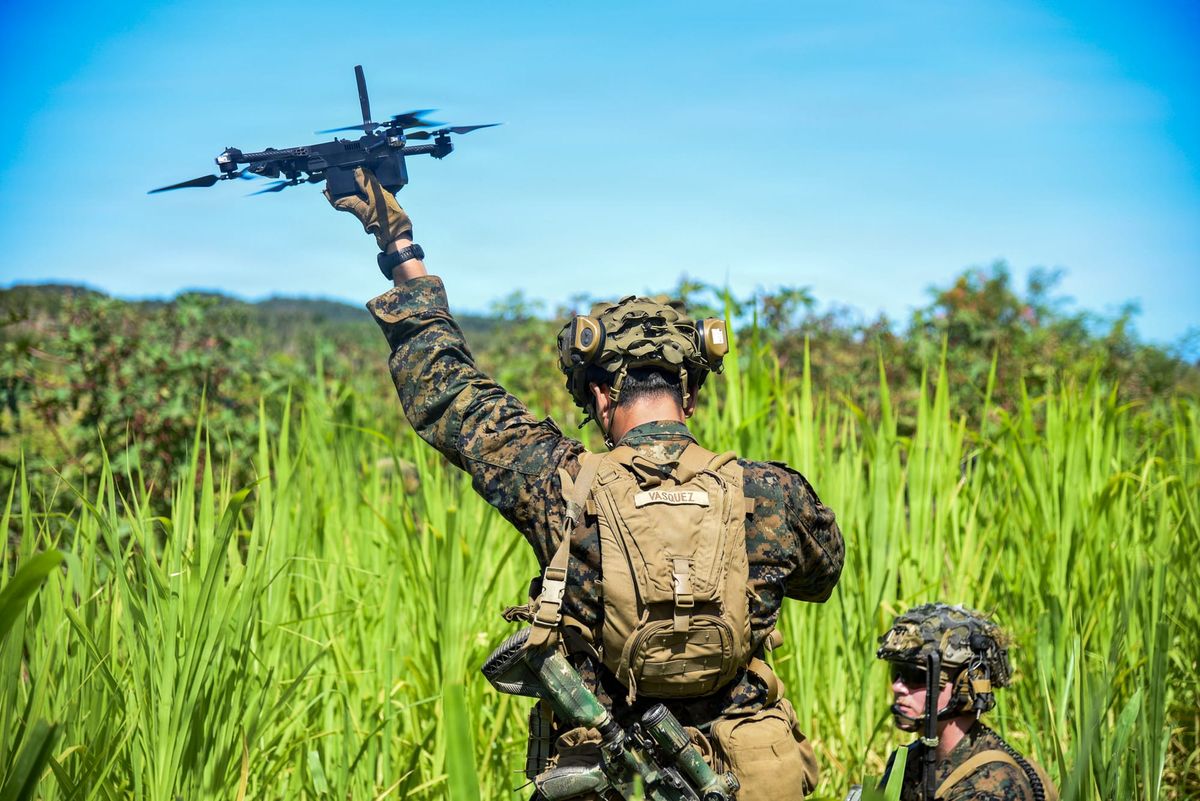
The United States has consolidated oversight of almost all of its military drone and autonomous-systems programmes under a single new office, as the Pentagon races to close a fielding gap with rivals it now openly concedes are producing unmanned weapons at far greater speed.
US Secretary of War Pete Hegseth signed a memorandum, dated 29 June and released on Wednesday, establishing the Direct Reporting Portfolio Manager for Unmanned Systems, known as the DRPM-UxS. The office will report directly to Deputy Secretary of War Stephen Feinberg and serve as the department’s single joint integrator for unmanned and autonomous programmes across every warfighting domain.
Hegseth wrote in the memo that the United States “has been slow to field these capabilities at scale”, even as global production of military drones surged over the past three years. The reorganisation is intended to cut through service-level bureaucracy and give the new office overriding influence over acquisition, technical standards and budget alignment for unmanned systems.
The Pentagon framed the move as the implementation of decisive administration action. “Drones and autonomous systems represent the most consequential battlefield innovation of this generation,” Chief Pentagon Spokesman Sean Parnell said in a statement.
The urgency reflects lessons drawn from the war in Ukraine, where mass-produced attack drones have reshaped frontline combat, and an assessment that adversaries collectively manufacture millions of unmanned systems each year. American officials have warned that the domestic industry remains vulnerable to Chinese control of the rare-earth magnets essential to the technology.
The new office places the Defense Autonomous Warfare Group and Joint Interagency Task Force 401 under DRPM-UxS oversight as subordinate deputy elements, while leaving their current personnel arrangements in place. The Defense Innovation Unit becomes the primary point of engagement with commercial industry. The Defense Autonomous Warfare Group grew out of the Biden administration’s Replicator effort to field cheap drone swarms capable of blunting a Chinese assault on Taiwan.
Consolidation stops short of total control. Large unmanned aircraft remain outside the portfolio: the memo covers UAS Groups 1–3, leaving Group 4 and 5 aircraft outside the new office, including the Air Force’s collaborative combat aircraft programme and larger systems such as the Navy’s MQ-25 aerial tanker. The Navy’s medium unmanned surface vessel, restructured earlier this year under a separate acquisition executive, also stays outside the new office, while underwater vehicles will be managed in coordination with the Pentagon’s submarine portfolio manager.
The DRPM-UxS is the fourth such portfolio manager created under Feinberg. Earlier offices were established to oversee the Golden Dome missile-defence initiative and the submarine force, among other priority programmes. The model, which reports straight to the deputy secretary rather than through the services, is designed to accelerate efforts the administration regards as too urgent for the normal chain.
Feinberg, a former private-equity executive, has driven the approach as a lever for acquisition reform. Defence commentators have taken to describing the new post as a drone “czar”, reflecting the sweep of its remit. A dedicated drone office had been widely anticipated as spending on unmanned systems swelled in the fiscal 2027 budget.
The reorganisation follows executive orders signed by President Donald Trump last year that directed the department to procure and train with low-cost, American-made drones and to strengthen defences against hostile unmanned aircraft. Hegseth issued an implementing memorandum in July 2025 committing to expand the domestic manufacturing base and to arm combat units with inexpensive systems.
The Secretary of War has said the Pentagon intends to deliver tens of thousands of small drones to US forces this year, with hundreds of thousands more expected in 2027, while rewriting doctrine to weave unmanned systems through frontline units.
An interim director for the new office had not been named, a Pentagon spokesperson said.
Comments ()