
Canada’s TKMS Submarine Bet Comes With Strategic Costs
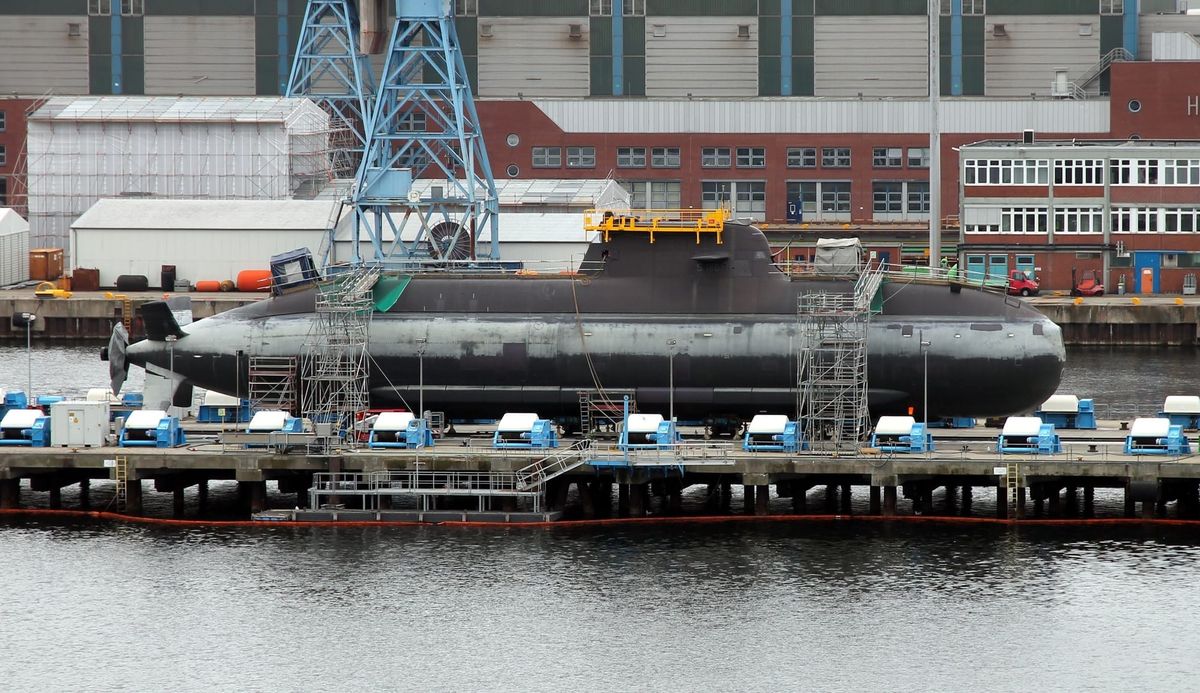
Canada has chosen a highly capable German submarine and a partnership that fits comfortably within its established NATO role. It has also passed up a rarer opportunity to connect its Arctic defence requirements with its ambitions in the Indo-Pacific.
Prime Minister Mark Carney announced on 6 July that TKMS had been selected as the preferred supplier for as many as 12 new submarines, beating South Korea’s Hanwha Ocean in the largest defence procurement Canada has attempted.
The German shipbuilder is offering the Type 212CD, developed jointly with Norway and already ordered by both countries. A final contract has yet to be signed, with negotiations now expected to settle the cost, delivery schedule and industrial package.
There are solid reasons for Ottawa’s choice. The 212CD brings a mature German submarine pedigree, close integration with two NATO partners and a design promoted specifically for operations in the North Atlantic and under Arctic ice.
Canada will gain access to a common German-Norwegian programme rather than once again operating an orphan fleet that must sustain itself largely alone.
The choice also serves Carney’s immediate political priorities. Canada is trying to rebuild its credibility within NATO, reduce its dependence on the United States and secure a place in Europe’s expanding defence-industrial base.
Selecting TKMS strengthens ties with Germany and Norway while giving Ottawa a clear answer to allies asking what its higher defence spending will produce.
Viewed through an Atlantic lens, the decision is readily defensible.
Canada’s security geography, however, no longer fits neatly within that lens.
The country’s future submarines must operate across the Atlantic, Pacific and Arctic oceans, with the range, endurance and persistence to monitor some of the largest maritime approaches on earth. Canada’s own requirement calls for a fleet capable of operating in all three oceans and contributing to deterrence, surveillance and combat operations far from home ports.
Hanwha’s bid offered an unusual way to join those demands together. Its KSS-III submarine was presented as a long-range, in-service design backed by one of the world’s largest and most active shipbuilding industries. South Korea demonstrated that reach by sending a KSS-III more than 14,000 kilometres across the Pacific to British Columbia during the competition.
More importantly, a Korean selection would have given Canada a permanent defence-industrial anchor in the Indo-Pacific, tying the Royal Canadian Navy for decades to a country with advanced shipbuilding, battery, electronics, weapons and manufacturing capacity.
That would have filled a gap in Canadian strategy.
Canada already has dense military and industrial relationships across the North Atlantic. It exercises with NATO partners, operates within allied command structures and is now seeking deeper access to European defence programmes.
Its Indo-Pacific strategy is far thinner. Even as Canadian ships deploy to the region and Ottawa has expanded defence ties with partners including Japan, South Korea and the Philippines, those relationships remain modest beside the institutional weight of NATO.
The submarine competition offered a chance to change that without abandoning the Arctic mission.
South Korea did not offer Canada an Indo-Pacific partnership instead of an Arctic-capable fleet. Hanwha offered an Indo-Pacific partnership through a submarine intended to meet Canada’s Arctic, Pacific and Atlantic requirements.
That overlap is distinct and it's important to emphasise because the threats confronting Canada are increasingly connected.
Russia is both an Arctic and Pacific power. China is expanding its navy while declaring itself a stakeholder in Arctic affairs. North Korean weapons development affects Canada’s Pacific allies, while Asian shipyards and manufacturers have become increasingly important to the wider Western effort to rebuild military capacity.
Canada’s three oceans therefore cannot be treated as separate strategic compartments. The country needs partners able to connect them.
TKMS strengthens an Atlantic-Arctic axis Canada already possesses. Hanwha offered to build the missing bridge between the Arctic and the Indo-Pacific.
The technical trade-offs reinforce that geopolitical concern. The KSS-III is a larger submarine designed for long deployments and substantial payload capacity, with room for future weapons and systems growth.
Its existing Korean configuration includes vertical-launch cells, although Canada would not necessarily have acquired the same weapons fit. The attraction lay in the space, endurance and growth margin available to a navy expected to operate across enormous distances.
Hanwha also made delivery speed central to its campaign. The company said it could provide four submarines before 2035 and complete all 12 by 2043, allowing Canada to retire its ageing Victoria-class boats earlier and avoid further sustainment costs.
Those were company claims rather than contractual guarantees, but they were backed by an active production line and South Korea’s record of building complex warships at scale.
TKMS now says it can deliver Canada’s first 212CD in 2033, a schedule that would meet Ottawa’s requirement and blunt Hanwha’s strongest argument. Yet that date will need to survive contract negotiations and the pressure of an expanding order book. Germany and Norway are already enlarging the programme, with Norway increasing its planned purchase from four boats to six in January.
Canada must establish where its submarines sit in that production sequence, how much the design will be modified and what happens if German or Norwegian requirements change. A promise of early delivery has value only if it can be converted into enforceable milestones.
The industrial comparison is equally important. TKMS has assembled Canadian partnerships and plans a sovereign sustainment structure, including work with Seaspan and Canadian manufacturers.
Hanwha, however, was offering entry into a much broader Korean manufacturing ecosystem. Its campaign linked submarines to ship repair, advanced manufacturing, vehicles and Canadian maintenance facilities.
South Korea has shown an unusual ability to deliver defence equipment rapidly while transferring production and creating long-term industrial relationships with buyers.
For Canada, which needs to rebuild military capacity after decades of slow procurement, that industrial culture may have been as valuable as the submarine.
Carney insisted that rejecting Hanwha did not signal any retreat from Canada’s Indo-Pacific strategy. Diplomatically, that may be true. Ottawa can pursue other projects with Seoul in ship repair, energy, critical minerals, munitions and military technology.
Yet none is likely to carry the strategic weight of a 12-submarine programme.
Canada used its largest-ever defence procurement to deepen relationships that were already deep. It strengthened NATO interoperability, reinforced its European turn and selected a submarine well suited to the North Atlantic and Arctic.
What it surrendered was the opportunity to make South Korea a foundational partner in Canadian hard power, connecting the country’s Arctic requirements with the region where the global balance of naval and industrial power is shifting fastest.
Canada may receive an excellent submarine from TKMS. The harder question is whether it chose the partnership best suited to the full geography of its future security.
Comments ()