
UK Scraps Destroyer Plan for Hybrid Drone Warships in Naval Overhaul
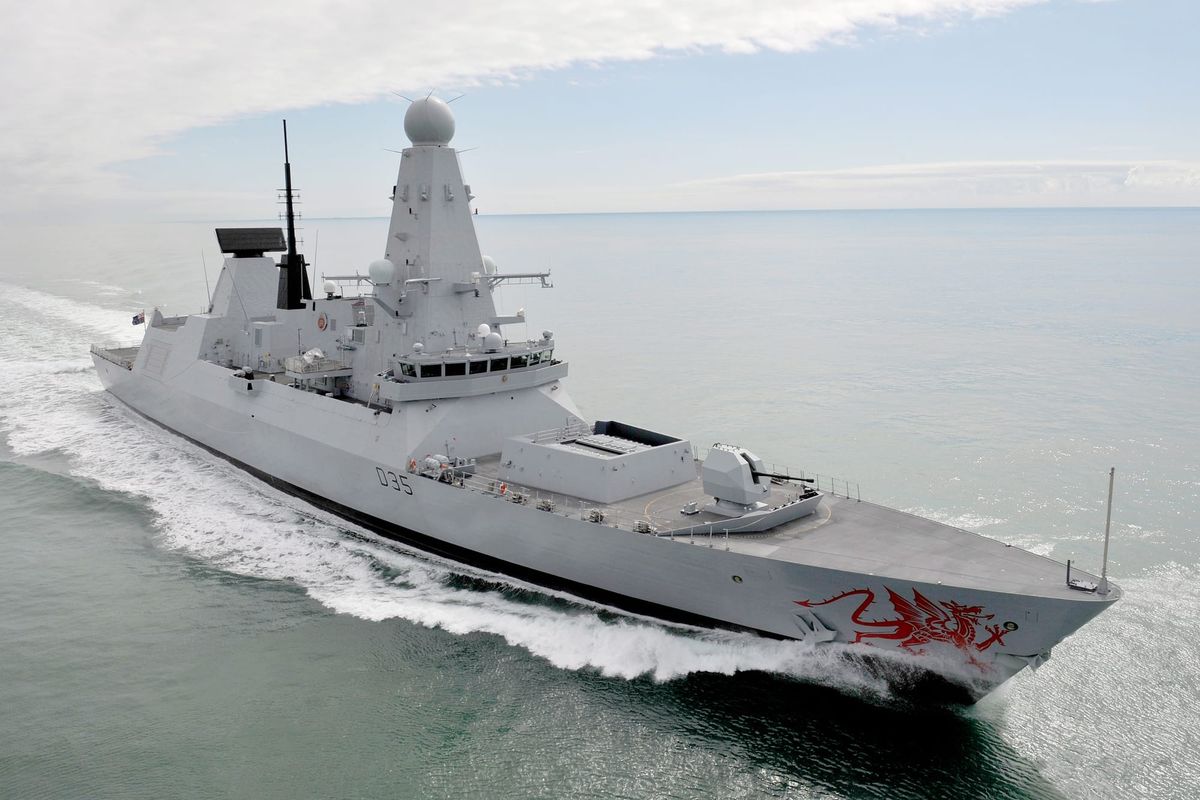
Britain will build at least six new warships designed to command fleets of drones across the air, surface and seabed, moving away from earlier plans for a next-generation destroyer in favour of a “hybrid” navy built around crewed and uncrewed systems.
The Royal Navy will procure a minimum of six Common Combat Vessels to replace its six ageing Type 45 air-defence destroyers, with the first ships expected from the early 2030s, the Ministry of Defence said on Monday. The decision shelves earlier plans for the Type 83 destroyer, long earmarked as the Type 45’s successor, and steers the fleet towards a mix of crewed and uncrewed platforms better suited to the pace of modern warfare.
The Common Combat Vessel will be the Royal Navy’s first hybrid warship, acting as a control hub that coordinates drones in the air, on the water and beneath it to support maritime air defence. Ministers cast the move as a way to extend the fleet’s reach and firepower without a matching rise in crew numbers or cost, a central concern for a service contending with personnel shortages and the smallest escort fleet in generations.
Defence Secretary Dan Jarvis said the vessels would provide sailors with “hybrid ships that are designed and built for the increasing threats we face,” and said they would be British-built. When in service, the CCVs will operate alongside crewed Type 26 and Type 31 frigates as well as a new family of uncrewed missile and sensor platforms, an arrangement the department described as a once-in-a-generation investment in maritime capability.
The announcement forms part of the Defence Investment Plan, the long-delayed spending blueprint that has become a flashpoint inside government. The plan was held back for months amid a funding row that prompted former defence secretary John Healey to resign in protest. His successor, Jarvis, is reported to have secured additional funding for the armed forces, taking the package to roughly £14.5 billion to £15 billion, still well short of the sums defence officials had argued were needed. Prime Minister Keir Starmer is expected to set out the wider plan in the coming days.
The pivot follows years of difficulty with the Type 45s, whose propulsion systems have suffered repeated faults traced to a design flaw in their gas turbines. One ship, HMS Daring, has not put to sea for more than 3,000 days. The fleet is being upgraded in the interim, including work to address its propulsion problems, improvements to its air-defence missile system and the planned fitting of the DragonFire directed-energy weapon on Type 45 destroyers. The ships are due to leave service by the end of the 2030s.
The funding allows the National Armaments Director Group to begin the design work that will underpin the change. Britain’s two largest warship builders have spent the past year manoeuvring for the requirement. BAE Systems has set out a vision built around a large air-warfare command ship paired with smaller, leaner combatants, while Babcock has separately promoted an adapted version of its Type 31 frigate as a possible controlling node for a dispersed force of autonomous surface vessels.
The new ships are also intended to anchor three new Atlantic programmes aimed at countering Russian submarine and surface activity in the North Atlantic and High North, and at protecting the undersea cables and pipelines that carry data and energy. The effort dovetails with NATO’s growing focus on the security of critical infrastructure on the alliance’s northern flank.
For the government, the programme carries an industrial message as much as a military one. The MoD said it would sustain tens of thousands of jobs and keep British yards working for decades, framing defence spending as an engine for growth at a time when shipbuilding has been designated a priority sector for procurement reform. Ministers pointed to the CCV’s adaptable design as a further export opportunity. The Type 26 frigate has already secured orders from Australia and Canada, with Norway the most recent country to select the British design.
Questions remain over how quickly the Navy can deliver. Industry has warned that the repeated deferral of orders has left suppliers short of certainty, and analysts note that shipbuilding cannot easily be accelerated even when funding is found. With the first vessels still the better part of a decade away, the hybrid fleet remains, for now, a design ambition rather than a capability at sea.
Comments ()