
US Builds Up Australia as Forward Base to Counter China
The US military is expanding its footprint across Australia at a pace not seen in decades, building the country into a forward base for a possible conflict with China.
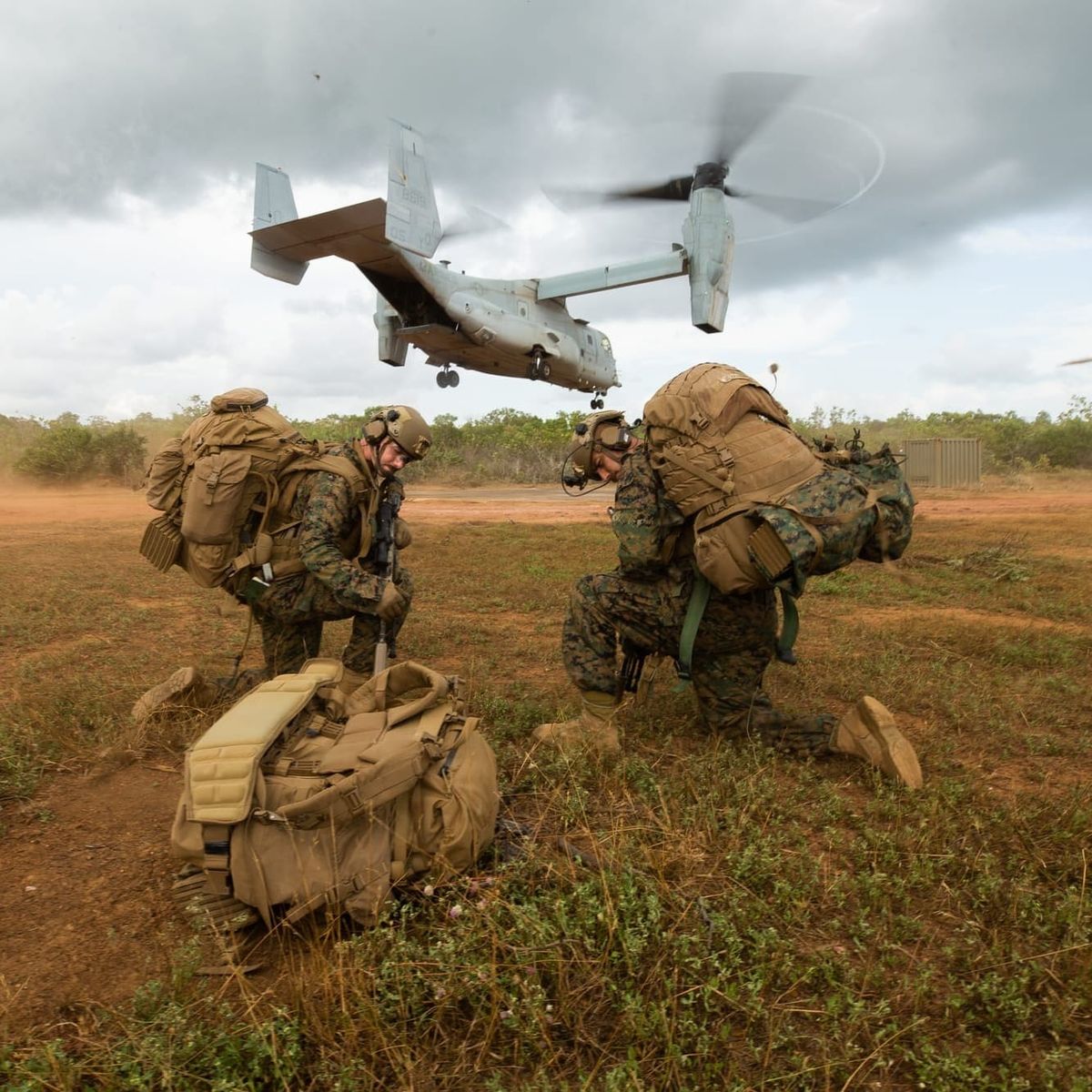
US Secretary of War Pete Hegseth set out the scope at annual AUSMIN talks with Australian ministers in Washington in December. He pointed to upgraded airbases in Queensland and the Northern Territory for more American bomber rotations, and to expanded logistics in Darwin so more Marines could rotate through and keep their MV-22 Osprey aircraft on Australian territory. Hegseth said the effort would establish "new and resilient logistics networks across Australia".
The latest step came in June, when tender documents showed the Marine Corps would include Australia in its global weapons pre-positioning network for the first time. An initial stockpile held in Melbourne will move to US warehouses to be built next year at the Bandiana army base in rural Victoria, Agence France-Presse reported. The store is expected to reach full capacity by 2028, and a global contractor would employ about 110 engineers and specialists to run the site, which would hold ready-for-issue equipment and crew-served weapons.
Deputy PM and Defence Minister Richard Marles told reporters in Western Australia that the plan was part of a "growing US footprint" that was important for national security. He said an American logistics presence formed part of Washington's overall force posture in the country.
Much of the build-up is concentrated in the north. About 2,500 Marines now rotate through Darwin for six months each year, and Canberra approved the permanent storage of their Ospreys between rotations in September 2025, cutting from months to days the time needed to surge them toward flashpoints such as the South China Sea. The US Army has established one of only two Indo-Pacific distribution hubs at Townsville in Queensland, with the other in the Philippines, to move equipment and supplies at speed.
That posture is already operational. In August 2025 Darwin Marines and their Ospreys deployed from a US Navy sea base into the Philippine Sea, the first time the rotation had projected power from inside the region's island chains. The Darwin rotation was certified as a Special Purpose Marine Air-Ground Task Force in May 2026, a first for the unit that gave it the authority to mount independent crisis operations across the region.
The expansion reaches the west coast as well. At an AUKUS meeting in Singapore in May, Marles and Hegseth, alongside Britain's defence secretary, finalised arrangements to base a rotating force of US and British nuclear-powered submarines at HMAS Stirling near Perth from 2027.
The two countries are deepening cooperation in weapons manufacturing at the same time. At the December talks, Hegseth pointed to joint production of guided weapons in Australia and to plans for co-sustaining munitions such as air-to-air missiles. The forces also train together at growing scale, with Exercise Talisman Sabre in 2025 the largest yet, drawing forces from 19 nations.
The siting of the Marine stockpile is deliberate. A Lowy Institute report in June warned that China could strike northern Australia with ballistic missiles launched from its South China Sea outposts, and placing the store in the far southeast keeps it beyond the range of most of them. Marles cast the wider American presence as a counterweight to Beijing's military build-up.
Australia does not permit foreign military bases on its soil. US forces operate on a rotational basis under a 2014 Force Posture Agreement, at Australia's invitation and under Australian law, according to the Australian Submarine Agency. Even so, the growing presence has fed domestic debate over how far Australia's north is being shaped around American plans.
China has expanded its armed forces and built military outposts on contested reefs in the South China Sea, where its maritime forces have harassed vessels from other claimant states, despite a 2016 international tribunal ruling that rejected most of Beijing's claims. Australia is among several US allies lifting defence spending as tensions in the region rise.
Comments ()