
Japan Uses NATO Summit to Build Defence Links With Europe
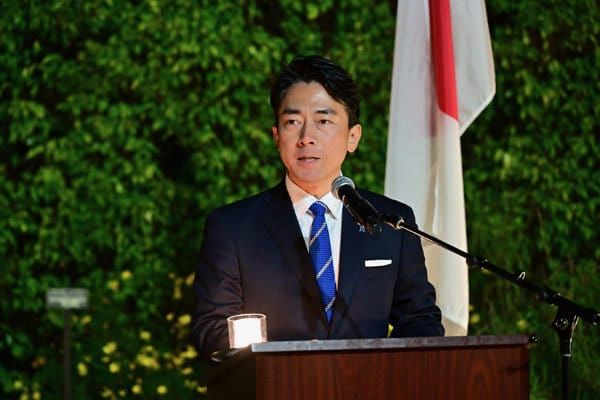
Japan used the NATO summit in Ankara to deepen defence ties with European partners, moving beyond symbolic alignment with the alliance as Tokyo seeks a larger role in the security architecture linking Europe and the Indo-Pacific.
Defence Minister Shinjiro Koizumi met counterparts from Denmark, Sweden, the Netherlands and Turkey on the sidelines of the summit, while also joining NATO Secretary General Mark Rutte and Indo-Pacific partners Australia, New Zealand and South Korea for talks on Ukraine, China, North Korea and defence-industrial cooperation.
The meetings showed how quickly Japan’s relationship with NATO has changed. Once a distant partner to a transatlantic alliance focused on Europe, Tokyo is now being drawn into a wider network of governments that see Russia’s war in Ukraine, China’s military pressure in Asia and North Korea’s weapons programmes as parts of the same strategic problem.
Koizumi told the NATO-Indo-Pacific partners meeting that the security of the Indo-Pacific and Euro-Atlantic regions was now indivisible, and that no country could defend itself alone. Rutte said NATO wanted to strengthen relations with its Indo-Pacific partners to respond to international challenges, according to Japan’s Defence Ministry.
The most concrete step came in Koizumi’s meeting with Danish Defence Minister Jeppe Bruus. The two governments agreed to begin drafting a memorandum on defence cooperation and exchanges, and to launch a new consultation framework between defence authorities. It was the first Japan-Denmark defence ministers’ meeting in seven years.
That gives Japan a new opening with a northern European state whose strategic concerns increasingly overlap with its own. Denmark is focused on Russia, the Baltic Sea, the Arctic and the defence of undersea infrastructure. Japan is focused on China, North Korea and the Western Pacific. Both sit near contested maritime routes and depend on American power, even as they look for more resilient networks among US allies.
Koizumi’s meeting with Swedish Defence Minister Pål Jonson was less specific, but pointed in the same direction. The two ministers welcomed progress in bilateral cooperation, including defence equipment and technology, and agreed to keep working together on the basis that Euro-Atlantic and Indo-Pacific security are inseparable.
The Netherlands meeting added another piece to the same pattern. Koizumi and Dutch Deputy Prime Minister and Defence Minister Dilan Yeşilgöz-Zegerius welcomed steady progress in Japan-Netherlands defence cooperation and agreed to strengthen it further. The two ministers also reaffirmed that Euro-Atlantic and Indo-Pacific security are indivisible, and said they would work together to create a security environment that does not tolerate unilateral attempts to change the status quo by force.
Turkey also emerged as more than the host. Koizumi and Turkish Defence Minister Yasar Guler agreed to work toward a new memorandum on defence cooperation and exchanges, expanding a statement of intent signed in 2012. The two sides also pointed to growing cooperation in high-level visits, unit exchanges and defence equipment and technology.
The wider NATO meeting gave those bilateral moves a broader frame. Rutte and the Indo-Pacific partners discussed Russia’s invasion of Ukraine, China-related challenges, North Korea, Iran, cyber, strategic communications, technology and defence-industrial cooperation. NATO also thanked Japan and the other Indo-Pacific partners for their support for Ukraine.
Japan’s separate meeting with NATO Deputy Secretary General Radmila Sekerinska underscored that practical dimension. The two sides welcomed progress in Japan-NATO defence cooperation, including defence equipment and industrial cooperation and the dispatch of Self-Defence Forces personnel to NATO Security Assistance and Training for Ukraine, the alliance’s Ukraine support and training organisation.
For Tokyo, the logic is both diplomatic and operational. Japan wants Europe more engaged in Asia, but it is also positioning itself as a defence partner to Europe, not merely a regional state asking for attention. The NATO summit gave Koizumi a platform to reinforce that message with several governments at once.
Comments ()