
Israel's SPYDER Keeps Winning Europe's Air-Defence Race
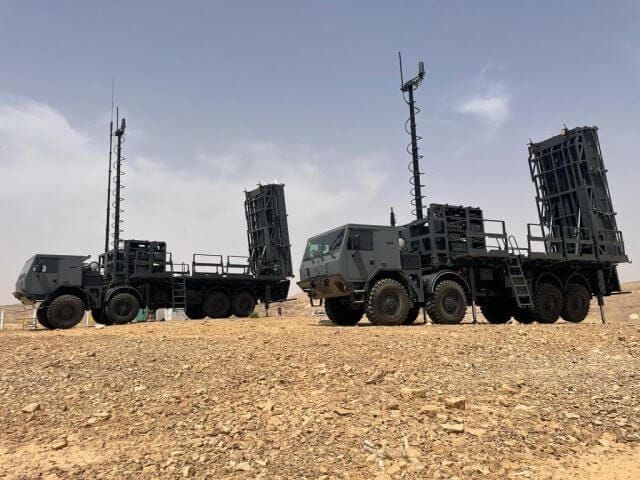
Romania's agreement to buy Israel's SPYDER air-defence system in a framework worth more than €2 billion, signed in late June, is the largest export contract in the history of Rafael Advanced Defense Systems and the second-largest deal ever recorded by Israel's defence industry. It confirms that Israeli air defence has secured a durable place in the European market, and it points to the quality that increasingly sets SPYDER apart from its competitors. The system can be sold without American permission.
The framework, concluded through Romania's state procurement company Romtehnica, provides for a phased build-up of air-defence systems, with interceptors and radars supplied over several years and the first deliveries due within 36 months. Rafael won the Romanian tender ahead of European and South Korean rivals, which underlines that the award followed a competitive process. Yoav Tourgeman, Rafael's chief executive, described the agreement as "the largest deal in the company's history."
The freedom to sell SPYDER without American approval carries growing weight. Rafael developed the system without American funding, so its export requires no sign-off from Washington. The systems that made Israel famous in air defence, from Iron Dome to the Arrow interceptor, were built in close cooperation with the United States, and their sale abroad depends on American approval.
For a buyer, independence of that kind removes a familiar risk, namely that a supplier's government could delay a sale or restrict resupply during a crisis for reasons of its own. At a moment when European governments are wary of American export leverage, a capable system that carries no such condition holds an obvious attraction.
Demand for these systems has been driven by the war in Ukraine, where Russian drone and missile strikes have made mobile short-range air defence the most sought-after ground-based system in Europe. Romania has suffered repeated drone incursions along its Black Sea border, and SPYDER is built for that problem.
It is a short-range system designed to stop low-flying threats such as drones and cruise missiles, and it can also engage aircraft and helicopters. It is not built to catch the long-range ballistic missiles that a Patriot battery handles. SPYDER works alongside those heavier systems, filling the shorter-range layer that guards troops and fixed sites, and Rafael has agreed to build part of it inside Romania to help win the work.
Romania is not the first NATO member to choose SPYDER. The Czech Republic signed for the system in 2021, well before the current round of Middle East fighting, and Finland turned to Rafael's David's Sling in 2023. Germany bought the Israeli-made Arrow 3 for about $3.5 billion in the same period. Romania now extends that run and gives SPYDER what Rafael has called a European standard.
Further deals may follow. Greece is weighing a multi-layered package that pairs SPYDER with longer-range Israeli systems, an arrangement that could exceed $3.5 billion and become the largest in Israel's export history if Athens signs. Switzerland has opened talks over a second Israeli air-defence system. Neither purchase has been concluded, and both will take time to move through national approvals.
Israel's lead is narrowing, however. Its own Ministry of Defence has acknowledged that the combat-proven advantage it long enjoyed is fading, as Western systems earn their reputations in Ukraine and European manufacturers expand production. Firms such as MBDA and Germany's Diehl are sharpening their own offers, and buyers now have more credible choices than they did a few years ago.
Rafael still points to the speed with which its systems integrate and to its readiness on industrial cooperation as reasons to choose Israeli equipment, and those arguments carry weight. The edge remains, though it has become harder to press home in a crowded market. A stronger shekel has added to the pressure by squeezing exporters' margins.
The politics of Israel's war in Gaza have added friction. France barred Israeli firms from the Eurosatory exhibition in Paris, and several Western European governments have cancelled deals or sanctioned Israeli companies. Much of that resistance has come from states that face no immediate military threat, and in some cases from those whose own firms compete with Israel for the same contracts.
The buyers form a different group. Romania and Finland sit within reach of Russian power, and they have bought the systems that have proved themselves in combat. Europe still took 36 per cent of Israel's record $19.2 billion in defence exports in 2025, worth about $6.9 billion, according to the Israeli defence ministry.
The countries reaching for combat-proven air defence are those with the most to lose, and they are buying Israeli systems on capability. Romania has turned a single NATO foothold into a pattern, and Greece may follow with a deal that could set a record if Athens signs. The objections of governments far from any front line have not slowed the sales.
Comments ()