
HMS Prince of Wales in NATO's High North: What Britain's Carrier Mission Achieves
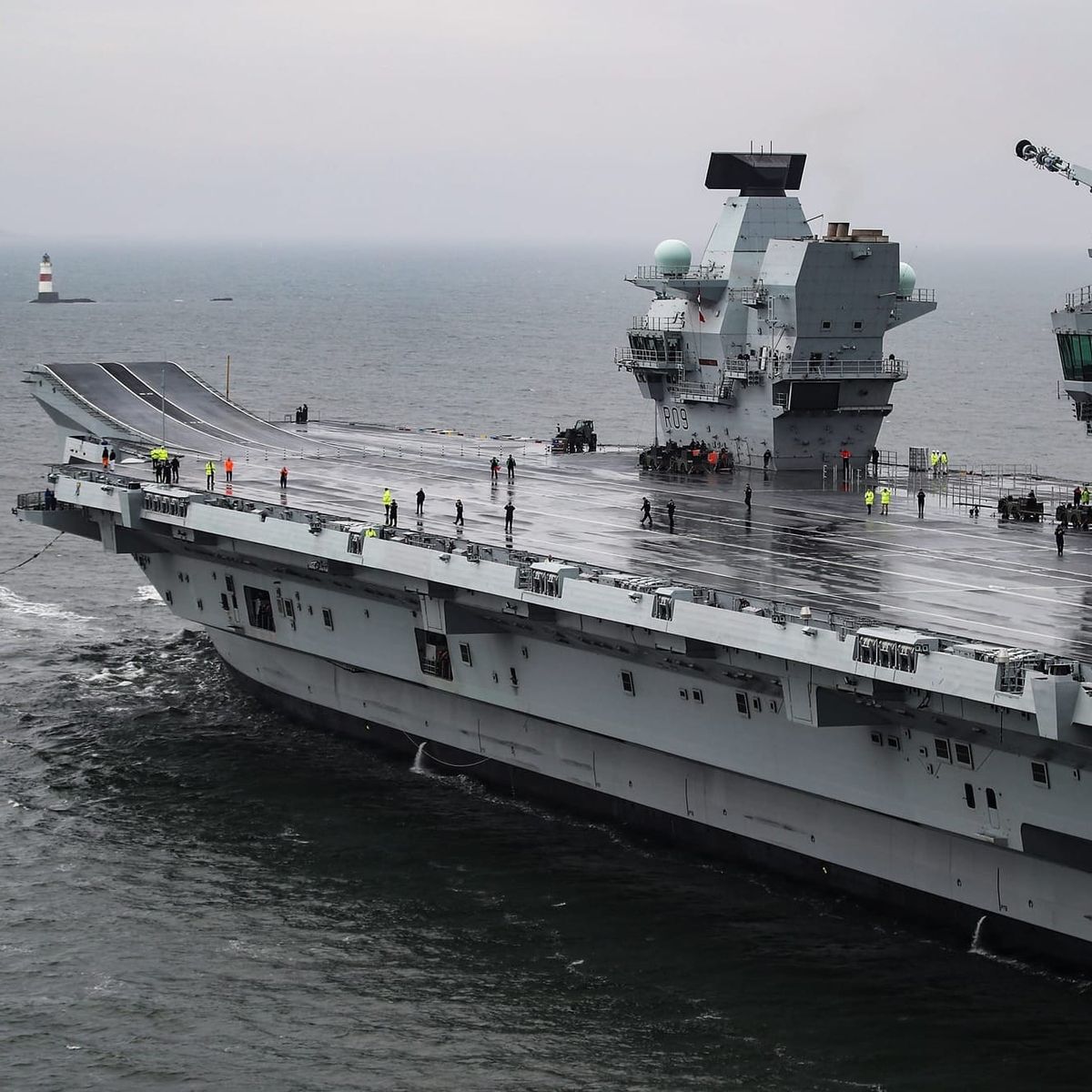
British F-35B jets have flown NATO air policing missions from HMS Prince of Wales off Iceland, the first time the alliance has generated such patrols from a European aircraft carrier. The deployment places the Royal Navy flagship at the centre of collective defence in the High North.
The Ministry of Defence announced the mission on 6 July, as Defence Secretary Dan Jarvis visited the carrier alongside Icelandic Foreign Minister Þorgerður Katrín Gunnarsdóttir. Operating under NATO command as part of Operation Firecrest, the carrier is accompanied by the Type 45 destroyer HMS Duncan and the tanker RFA Tidespring, with more than 1,500 personnel embarked. The F-35Bs, drawn from 809 Naval Air Squadron and 617 Squadron, are patrolling the skies above Iceland and the wider region.
The patrols have already moved beyond routine policing. On 2 July, two F-35Bs were scrambled to intercept a Russian Tu-142 Bear-F that repeatedly approached the group in the Norwegian Sea, passing close to the carrier at low altitude and dropping a large number of sonobuoys nearby. An MoD spokesperson described the activity as "unsafe and unprofessional".
Iceland holds a pivotal place in the North Atlantic. It has no military of its own and has relied on allied aircraft flying from Keflavik in rotational detachments since 2008. Basing the mission on a carrier at sea marks a departure from that model. It gives NATO a sovereign air node that does not depend on a fixed runway or host-nation clearance, a point of real weight in a region where weather and geography already complicate operations, and where land bases can be targeted.
The timing is deliberate. The deployment coincides with Britain taking command of two elements of NATO's Allied Reaction Force, the alliance's high-readiness crisis response. On 1 July, UK Special Operations Forces assumed leadership of the Special Operations Component Command for the first time. Days earlier, at a ceremony near Milan, Rear Admiral Mark Anderson took command of the maritime component from the Spanish Navy. HMS Queen Elizabeth, freshly out of refit at Rosyth, would serve as the afloat headquarters for that force later this year, giving both British carriers an alliance role.
Taken together, the moves show a country shifting from contributor to framework nation in NATO's north. The carrier has become the visible instrument of that shift, a mobile airbase able to generate combat air power close to the point of tension without waiting on host-nation runways. The approach fits the direction set by the 2025 Strategic Defence Review, which called for the carriers to anchor an "Atlantic Bastion" and to evolve towards a hybrid air wing of crewed jets and drones.
Yet the show of strength carries a caveat that has drawn little attention. The group sailed with a lighter surface escort than the carrier's 2025 Indo-Pacific mission, Operation Highmast, which deployed with the Type 23 anti-submarine frigate HMS Richmond and an Astute-class submarine in company. The Iceland deployment has no dedicated Type 23 frigate. Navy Lookout reports that the Royal Navy was unable to spare one, leaving anti-submarine work resting mainly on the carrier's embarked Merlin helicopters.
That gap matters given who is watching. The Bear-F is a maritime patrol and anti-submarine aircraft, and its sonobuoy drops close to the carrier read as a deliberate test of the group's underwater defences. A flagship generating air policing sorties while short of dedicated sub-hunting escorts sits awkwardly against the ambition on display around it.
The wider backdrop is a sharper Russian posture in the north. The MoD points to a 30% rise in Russian naval vessels near UK waters over the past two years. The High North carries weight because Russia's Northern Fleet operates from the Kola Peninsula into the Norwegian Sea, astride the routes that link North America with Europe. Control of the air and the water there shapes how quickly reinforcements could cross the Atlantic in a crisis.
The deployment also stands as a marker on a longer path. Last week's Defence Investment Plan confirmed £240 million for drones to build a hybrid carrier air wing, with jet-powered types intended to fly alongside the F-35B. Jarvis linked the mission to a wider £298 billion of defence spending planned over four years, warning of "an increasingly dangerous and uncertain time". Gunnarsdóttir called the strike group's presence "a clear demonstration of NATO's enhanced presence" in the region.
The full hybrid capability lies ahead. For now, HMS Prince of Wales off Iceland shows both the reach the Royal Navy can project into NATO's north and the thinness of the escort force sailing behind it.
Comments ()