
Germany Expands Its Arrow 3 Shield as Europe's Air Defence Autonomy Slips
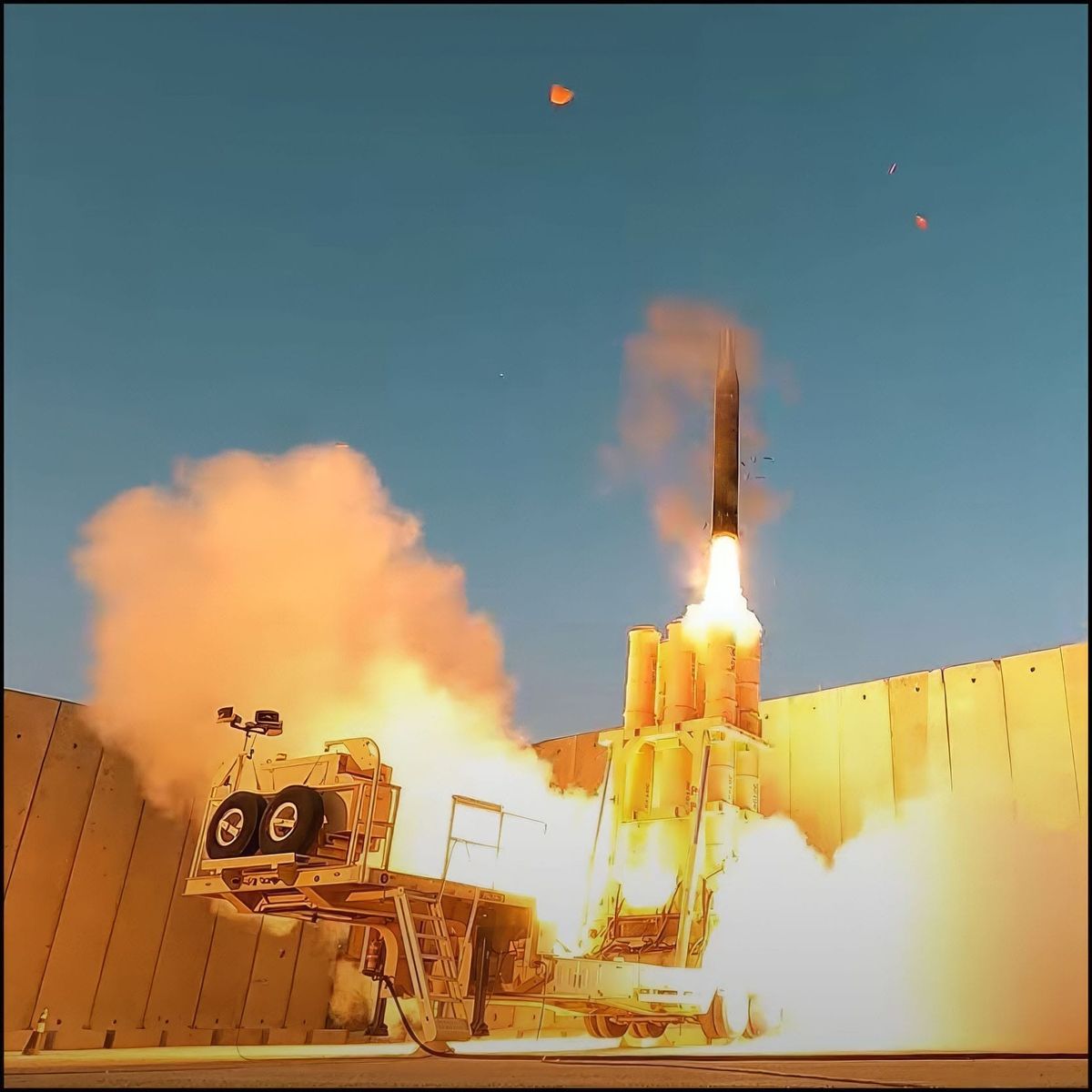
Germany has confirmed plans for a second site for its Arrow 3 missile shield (July 1), the interceptor that will guard its cities against ballistic attack from beyond the atmosphere.
The system is Israeli-led and needed American approval to be sold. It is not European, and that is the dilemma of Europe's rearmament.
The continent's most ambitious territorial missile defence, fielded by its wealthiest power, is not built in Europe. Germany dreams, as the rest of the continent does, of arming itself from its own factories and shaking off its dependence on outside suppliers.
In air and missile defence, the field where Europe is most exposed, that ambition is close to a fantasy. For the upper tiers, against ballistic missiles, the fastest systems to field are foreign, and the governments within range of Russia's missiles have stopped pretending otherwise.
The divide over how to respond is as much about geography as doctrine. In Paris, and in capitals comfortably behind the front, sovereignty is a principle worth some delay, and France has pushed hard for European designs such as the Franco-Italian SAMP/T over foreign kit.
In Bucharest or Helsinki, where Russian missiles are a live and near threat, the argument barely lands. A working interceptor with a credible delivery schedule counts for more than the flag stamped on it.
So the frontline has bought what works. Since 2022 Europe has spent a reported $50 billion on air defence, most of it on American systems, as countries stripped their stocks to arm Ukraine and rushed to replace Soviet-era kit.
The capability they lack most, defence against medium- and long-range ballistic missiles, is the one Europe cannot yet supply at scale. The mainstay is the American Patriot.
The nearest European equivalent, SAMP/T, has sold in far smaller numbers and runs off a line that cannot keep pace. For threats from beyond the atmosphere, Germany had to go to Israel.
The result is a fragmented market, pulling in several directions at once. There is no orderly march towards autonomy. The Americans are locked in, through the Patriot fleets already in service and a fresh round of co-production deals.
The Israelis are locked in too: German purchases of Arrow have passed $6.5 billion and will roll out across the country to the end of the decade, and Romania has bought the shorter-range SPYDER. Home-grown European designs are emerging, slowly, from French and multinational interceptor programmes. And the South Koreans are pushing in behind all of them.
South Korea's rise is the most telling. It was already the second-largest arms supplier to European NATO members over the past five years, by the count of the Stockholm International Peace Research Institute, and it is now moving into air defence.
Instead of selling from afar and falling foul of Europe's buy-at-home instincts, it is building on the continent. In June, Germany's Rheinmetall and South Korea's LIG agreed to form a venture, majority German-owned, to build Korean interceptors in Europe and pair them with German radars and launchers.
Korean lines already turn out missiles faster than European ones, so the venture offers frontline buyers depth of stock now, while counting as European enough to satisfy the rules.
Against this current, Brussels is trying to pull the money back home. On 3 July the European Commission proposed a joint air and missile defence project as part of a planned European shield, one of five projects behind a combined ambition the Commission puts at around €190 billion by 2036, though only a fraction is committed money.
A €150 billion loan scheme behind the push caps how much of a funded system can be bought from outside the bloc, a rule aimed squarely at the American and Israeli suppliers who have been winning the orders. Industry is already designing around it, from the Korean venture to American firms weighing how much of their production could shift to Europe.
The NATO defence industry forum in Ankara, where allied governments this week lined up deals to build and maintain American missiles in Europe, did not create this dislocation. It only made it visible.
According to planning documents reported by Politico, the deals covered European production of the Stinger missile and a study into building Raytheon's AMRAAM on the continent. Another would set up a site to maintain the interceptor at the heart of the Patriot system.
Even these leave real control in Washington's hands, since the United States would license the work while keeping the export rules that govern final sales and the software that keeps Patriot running. The Atlantic Council has noted that some European officials fear Washington could slow deliveries or freeze support in a crisis. That fear is the strongest case for autonomy, and it still does not make autonomy achievable soon.
The pressure is not letting up. The war with Iran drained American interceptor stocks, and arming Ukraine has thinned Europe's own. Kyiv is still pleading for more, with President Volodymyr Zelensky asking Washington for licences to build Patriots at home and calling the shortfall "absurd".
When the need is that urgent, buyers reach for whatever is already rolling off a line, and little of that is European.
None of this means Europe should abandon the goal. Dependence on a single ally carries the very risks that make Paris uneasy, and over ten or twenty years a real European industry may close the gap.
But that is a long horizon, and the threat is present now. Germany's answer, an Arrow shield expanding site by site towards the end of the decade, is the shape of the compromise the continent has actually made.
In the short and medium term, Europe will defend itself with other people's weapons, some assembled on European soil to make dependence look more like sovereignty.
The luxury of holding out for a home-grown shield belongs to those who do not yet feel the threat at their border.
Comments ()