
Four NATO States Order Up to Five MQ-4C Triton Surveillance Drones
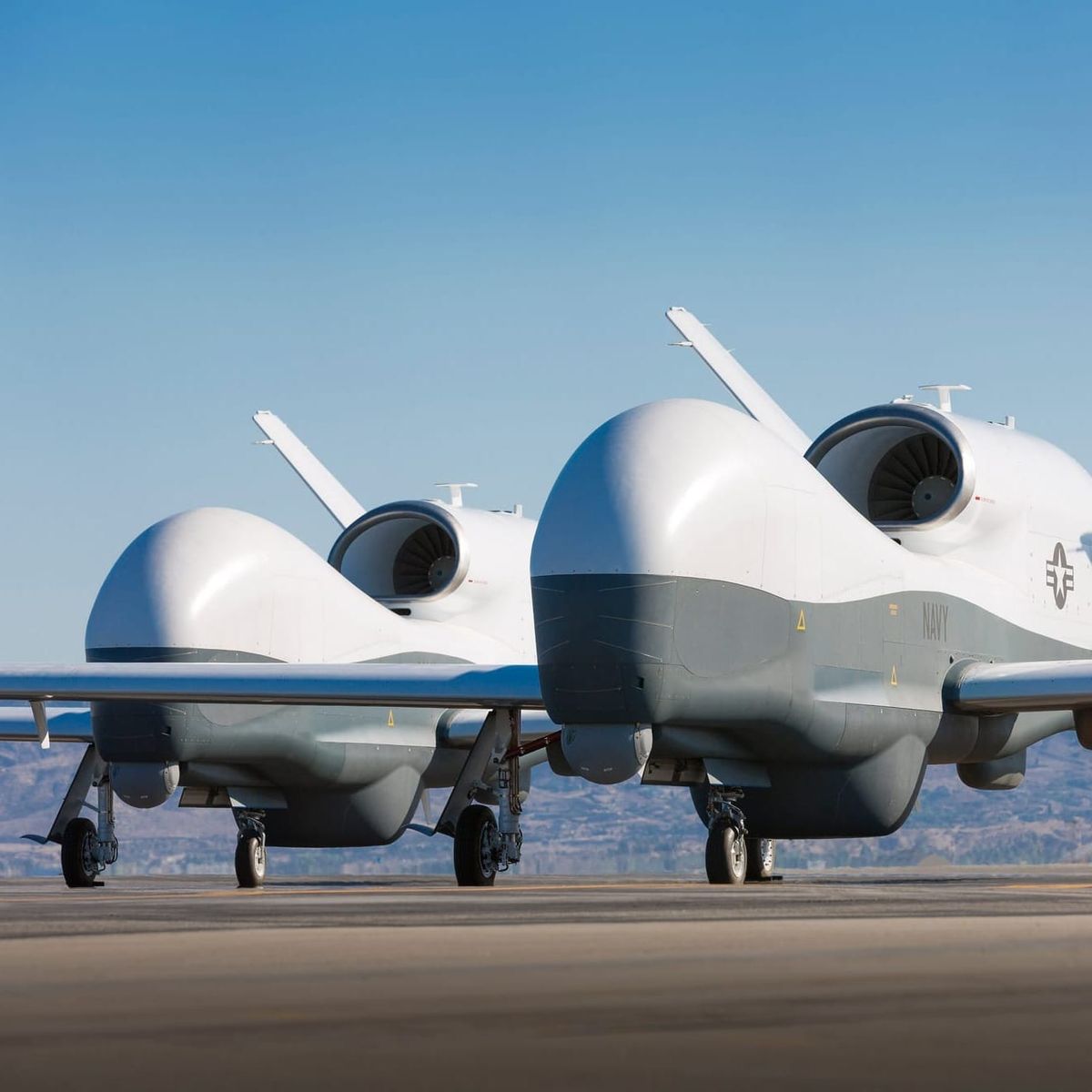
Denmark, Finland, Germany and Norway agreed to acquire up to five Northrop Grumman Corp. MQ-4C Triton surveillance aircraft for NATO, signing a letter of intent on Tuesday at the alliance's annual summit in Ankara.
The high-altitude drones would join NATO's alliance-owned intelligence force and watch the seas from the Mediterranean to the Arctic, giving commanders a persistent maritime picture as Russian naval and submarine activity rises across the North Atlantic. Northrop would build the aircraft, while Airbus SE and other European firms would supply the ground stations and data systems.
NATO Secretary General Mark Rutte announced the plan at a defence industry forum on the sidelines of the summit, describing a first wave of purchases worth billions of dollars. The Triton commitment accompanied a separate decision to buy up to ten Saab AB GlobalEye radar aircraft and a multinational project to expand the A400M transport fleet.
The MQ-4C flies for more than 24 hours at above 50,000 feet, with a range of 7,400 nautical miles. Northrop built the aircraft for maritime patrol, hardening it against ice and weather so it can descend through cloud to identify ships close to the surface.
"Triton is poised to provide NATO new levels of capability and operational flexibility to monitor and protect maritime interests from the Mediterranean to the High North," said Jane Bishop, who leads Northrop's global surveillance division.
The new drones would complement five RQ-4D Phoenix aircraft that NATO already flies from Sigonella in Sicily. Both types descend from the Global Hawk family, letting the alliance share maintenance and training across the fleets. The Phoenix flies land surveillance, and the Triton would add a maritime role.
The purchase lands as the United States pares back the forces it commits to NATO in a crisis. The Department of War told allies in May it would shrink that pool to end what officials called an unhealthy co-dependence on American power, as Washington prepares for the possibility of simultaneous conflicts in the Pacific and elsewhere.
Under the revised NATO Force Model, the number of US maritime patrol aircraft available to the alliance would fall to 15 from 26, according to figures a military source provided to Reuters. Committed drones would halve to 12 and destroyers would drop to nine from 17. The only cruise-missile submarine would leave the roster entirely.
European allies moved quickly to cover the shortfall. General Alexus Grynkewich, NATO's Supreme Allied Commander Europe, said member states had filled most of the gaps within weeks, with strategic bombers the main capability still short. In the few areas where no like-for-like replacement exists, he said planners were seeking alternatives with a matching effect.
The maritime domain is among the hardest of those gaps to close. The North Atlantic has seen a resurgence of Russian submarine activity since 2022, and European navies have not fully restored the anti-submarine skills that faded after the Cold War. Fewer American patrol aircraft and the loss of the committed submarine leave the alliance thinner in the waters that matter most for detecting undersea threats.
The Triton order shows how Europe intends to shoulder more of that burden. Member states would buy American-designed hardware and operate it under NATO command through a European support chain, keeping ownership of the surveillance data within the alliance. A transatlantic consortium is being formed to deliver the aircraft and the systems behind them.
The four buyers sit at the centre of the exposed northern theatre. Finland and Norway share long borders and coastlines with Russia, and the High North has become a focal point for the alliance as it tracks Russian ships and undersea infrastructure. Long-range sensors on the Triton would let allies detect movements earlier across those waters.
The letter of intent commits the four governments to a joint acquisition rather than a signed contract, and NATO did not disclose a value or a delivery timeline.
The alliance meets in Ankara under strain. Several members remain wary that President Donald Trump could pull US forces further back from the continent, and the summit was arranged in part to show that European capitals are ready to carry a heavier load.
Comments ()