
Denmark’s P-8 Buy Shows Boeing Is Winning Europe’s Submarine-Hunting North
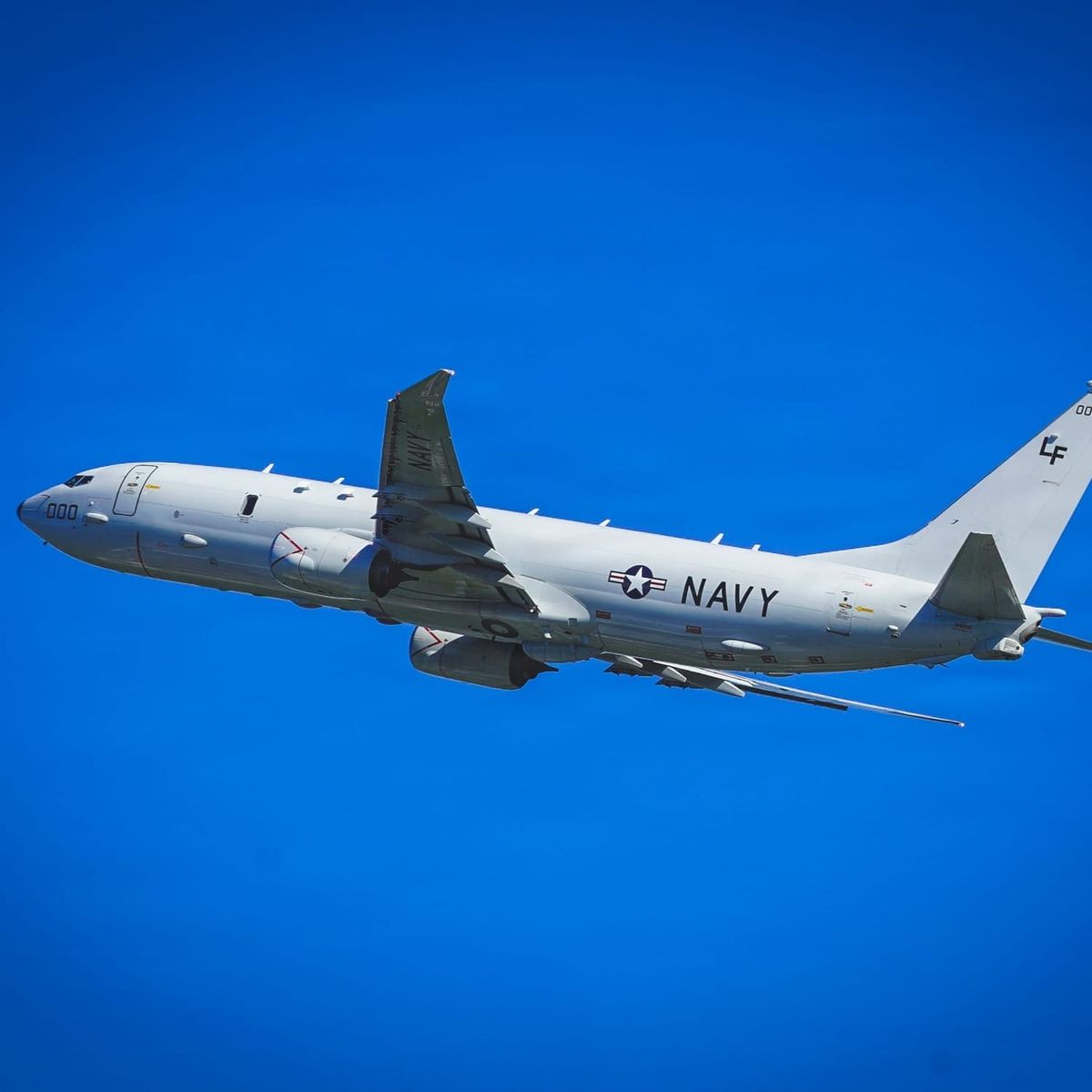
Denmark is buying Boeing P-8A Poseidon maritime patrol aircraft, joining a northern group of NATO allies that are standardising around the same American submarine-hunting jet as Russia’s undersea threat returns to the centre of European defence planning.
Copenhagen said on Tuesday it would acquire two P-8As from Boeing to strengthen surveillance around Greenland, the Faroe Islands and Danish waters. The decision follows a US State Department approval in December for a possible sale of up to three aircraft, with equipment, training and support valued at about $1.8 billion.
On paper, the order is small. In strategic terms, it matters more than the number suggests.
The United Kingdom already operates nine P-8As from RAF Lossiemouth in Scotland. Norway flies five from Evenes, watching the approaches to the Barents Sea and the Norwegian Sea. Germany has ordered eight, with its first aircraft delivered last year as it replaces ageing P-3C Orions. Canada has ordered up to 16, extending the same aircraft family across the North Atlantic and Arctic.
Denmark now plugs into that network. The result is a loose but increasingly coherent northern Poseidon bloc, stretching from Canada and Greenland through the GIUK Gap to Britain, Norway, Germany and the Baltic approaches. It is not a formal alliance within NATO, but it increasingly looks like one in practice.
That's because these countries face the same challenge: Russia's growing submarine force.
For NATO, the geography has old Cold War names and new urgency. The waters between Greenland, Iceland and the United Kingdom remain the route Russian submarines would use to move from Arctic bases into the North Atlantic.
The Norwegian Sea and Barents Sea are once again central to monitoring Moscow’s nuclear and conventional undersea forces. The Baltic and North Sea have become more sensitive after attacks and sabotage fears around pipelines, cables and other seabed infrastructure.
Denmark sits across several of those seams. Greenland and the Faroe Islands give the kingdom responsibility for vast Arctic and North Atlantic spaces, but its current airborne patrol force is not built for high-end anti-submarine warfare.
Denmark has relied on three Bombardier Challenger aircraft better suited to surveillance, fisheries patrol and sovereignty missions, supported by shipborne MH-60R helicopters. Those aircraft can watch but they cannot hunt in the same way a P-8 can.
Based on the Boeing 737, the P-8 is designed for long-range maritime patrol, anti-submarine warfare, anti-surface warfare and intelligence collection. It carries modern radar, electro-optical sensors, acoustic systems and sonobuoy processing equipment, and can be armed with torpedoes and anti-ship missiles.
For Denmark, it is a leap from constabulary surveillance into the front rank of NATO maritime patrol.
It also answers a political problem. Denmark has faced pressure to do more in the Arctic, especially as Greenland has become a more visible strategic prize. Buying the same aircraft used by the US Navy and northern NATO partners is a way for Copenhagen to show seriousness quickly.
That speed is part of Boeing’s advantage. Europe has alternatives, but few that match the P-8’s combination of range, maturity and alliance integration in the high-end anti-submarine role. France is pursuing an Airbus A321 maritime patrol aircraft as a sovereign successor to its Atlantique 2 fleet, but that programme is still years away. Denmark, like Germany before it, needs capability now.
This is where the European market divides. Boeing is not taking over all maritime patrol aviation in Europe. Airbus and Leonardo remain strong in the medium and coastal segments, where governments need cheaper aircraft for surveillance, search and rescue, fisheries patrol and missions closer to shore. Spain’s large C295 order shows that European industry can still win when the mission and politics line up.
The P-8 sits in another category. It is the aircraft countries choose when the job is blue-water anti-submarine warfare against a peer threat, over large distances, in bad weather, close to Russian operating areas, and alongside the United States. That is why the northern map matters. Britain, Norway, Germany and Denmark are essentially buying into the same operating system.
For Boeing, that is the prize. Each additional European P-8 customer makes the next one easier to justify. A Danish Poseidon can train with Norwegian crews, operate from British facilities, share lessons with Germany and fit naturally into US Navy procedures. Maintenance and support can also cluster.
Boeing and Denmark’s Terma signed a memorandum of understanding last year to explore P-8 support work in Denmark, raising the possibility that Copenhagen could become part of a wider Nordic sustainment network.
Nevertheless, there are limits. The US approval covered aircraft, systems, training and support, but weapons and sonobuoys are separate. Denmark will still need to buy the consumables and munitions that make the aircraft a serious anti-submarine platform.
Two aircraft also do not create a large national fleet. Availability, crew training and basing will determine how much persistent coverage Denmark can actually generate around Greenland and the Faroes.
That is why the northern bloc matters more than the Danish fleet alone. Denmark does not need to cover the Arctic and North Atlantic by itself if it can operate as part of a wider NATO patrol architecture. The same aircraft type makes that easier.
It allows countries to pool experience, rotate through each other’s bases and build a common picture across the waters where Russian submarines still matter most.
Europe still talks about strategic autonomy. Around the North Atlantic, it is standardising on Boeing.
Comments ()