
China's Submarine Missile Test in the Pacific: Why It Matters
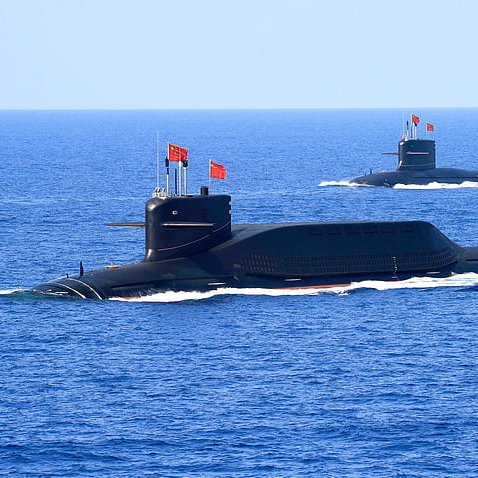
China test-fired a submarine-launched ballistic missile into the South Pacific on Monday, dropping a dummy warhead inside the South Pacific's nuclear-free zone within hours of Australia and Fiji signing a mutual defence pact.
The People's Liberation Army Navy described the launch as routine annual training that complied with international law and was aimed at no particular country. State media reported the missile struck its designated target in the open ocean after a launch at 12:01pm local time.
The diplomatic response was quick and pointed. Australian Foreign Minister Penny Wong said Canberra regarded the test as destabilising to the region. New Zealand's Winston Peters warned that a second test in barely two years risked becoming a recurring pattern that the region should not allow to be normalised.
Japan asked Beijing to reconsider firing missiles on paths that could pass near its territory. The missile came down inside the geographic bounds of the South Pacific Nuclear Free Zone, established by the Treaty of Rarotonga, which entered into force in 1986.
China signed the treaty's relevant protocols in 1987 and ratified them the following year, undertaking not to test nuclear explosive devices in the zone. Monday's dummy warhead was obviously not nuclear, so the launch strained that commitment without actually breaching it.
Beijing fielded its first ballistic-missile submarine in the 1980s, yet a meaningful undersea deterrent arrived only with the Type 094 Jin-class boat and the patrols that began in late 2015. The navy now operates six Jin-class submarines, each able to carry up to 12 submarine-launched ballistic missiles, on near-continuous deterrent patrols, primarily in the South China Sea and the Bohai Gulf.
The Pentagon describes this as a sustained operational presence rather than an occasional show of force.
For years the value of that force was capped by geography. The JL-2 missile carried by the early Jin boats reached roughly 7,000 to 8,000 kilometres, enough to threaten Alaska or Hawaii from home waters, though it could not reach the continental United States.
To hold eastern American cities at risk, a Chinese submarine would have needed to sail deep into the Pacific, shedding the very stealth that gives the platform its purpose. Every extra day at sea in open water raised the odds of being tracked by American sensors.
That relatively long-standing limit is now being erased. The JL-3, which China displayed publicly at its Victory Day parade in September 2025, is assessed to exceed 10,000 kilometres and to carry multiple warheads. According to the Pentagon and US naval intelligence, the missile allows a Jin-class boat to strike portions of the American mainland from bastion waters close to China, sheltered beneath the country's dense anti-access defences.
The change matters because it removes the old trade-off between reach and survivability. In other words, a Chinese submarine no longer has to swap concealment for range.
Rear Admiral Michael Brookes, commander of the US Office of Naval Intelligence, told a congressional commission in March that the JL-3 already lets the Jin fleet hold parts of the United States at risk from inside the first island chain, allowing patrols in protected bastions rather than exposed transits through contested water.
The next platform is designed to widen the gap. The Type 096, expected in service across the late 2020s and into the 2030s, would be quieter and harder to track, and would carry a new missile, the JL-4.
Brookes told the commission the class would be able to "target large portions of the U.S. from protected waters". Chinese noise levels remain a genuine weakness, and successive Jin variants still sit on an ageing hull design, so the promised leap in stealth is not guaranteed.
The direction of travel, however, is clear.
The undersea build-out is broad. China operates more than 60 submarines today, one of the world's largest submarine fleets by number, and US naval intelligence expects that total to reach about 70 by 2027 and roughly 80 by 2035, with around half nuclear-powered. Brookes has described a strategic turn away from diesel-electric towards all-nuclear construction, backed by a decade of shipyard expansion that has sharply lifted production capacity.
The sea leg sits inside a wider nuclear expansion. The Pentagon put China's stockpile above 600 operational warheads in mid-2024 and expects it to pass 1,000 by 2030. An earlier projection of about 1,500 warheads by 2035 has not been repeated in recent official reports, and now stands as a conditional estimate rather than a settled figure.
Beijing still maintains a declared no-first-use policy and is believed to keep the bulk of its warheads in storage, apart from their missiles, though US assessments now describe parts of the force moving towards higher readiness under an early-warning counterstrike posture, akin to launching on warning of an incoming attack.
This is where the wider reading turns. Chinese strategists have long treated the submarine as the most survivable part of a deterrent, able to hide across vast oceans and to complicate an adversary's planning.
A credible sea-based force gives Beijing greater confidence that it could absorb a first strike and answer it, which lowers the pressure to escalate early in a crisis. Seen from Beijing, that is a stabilising development.
Seen from Washington and its allies, it narrows a long-held American advantage beneath the water at the very moment US shipbuilding is wrestling with labour shortages and delivery delays on its own Columbia and Virginia programmes.
Comments ()