
China-Russia Bombers Patrol Sea of Japan Again as Joint Missions Become Routine
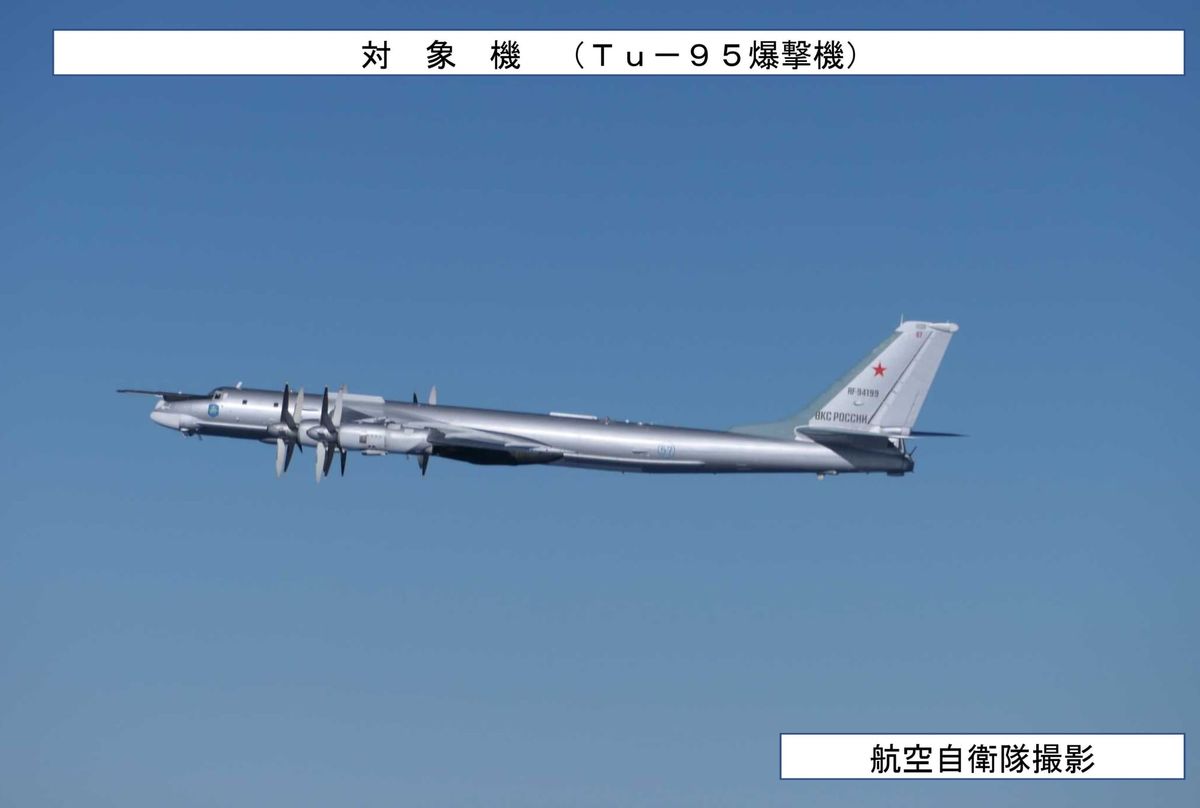
The 11th joint strategic air patrol flown by China and Russia on June 27, over waters near Japan and South Korea, will read to many in the region as just another entry in a lengthening logbook. That sense of routine is the point. What began in 2019 as a single, attention-grabbing flight of Chinese H-6K and Russian Tu-95MS bombers close to Japanese airspace has settled into a fixture of the regional calendar, and the steady accumulation of these missions has become the message that Moscow and Beijing most want to send.
China's defence ministry framed Saturday's patrol over the Sea of Japan and the western Pacific as a demonstration of the two countries' "determination and capability" to safeguard regional peace. By flying the eleventh of these missions barely six months after the tenth in December 2025, the two militaries are normalising an activity that once drew sharp diplomatic reactions, and they are doing so at an increasing tempo.
South Korea's response on Saturday illustrates the problem facing US allies. Seoul detected more than ten Chinese and Russian aircraft before they entered the Korea Air Defence Identification Zone, scrambled F-15K fighters, and confirmed that no sovereign airspace had been violated. It was a measured, professional reaction to an event Seoul has now rehearsed many times. Yet measured reactions are exactly what Beijing and Moscow are counting on. The same December incident that prompted South Korea to lodge formal protests with both capitals, and drew expressions of "serious concern" from Tokyo, produced no change in behaviour. Six months later the bombers were back.
This is the uncomfortable strategic logic at the heart of the patrols. The political value to China and Russia rises precisely because the activity causes anxiety in the region and because regional states cannot stop it. Australian analysts at ASPI have argued that neither power is constrained by the unease its exercising generates, and that both are therefore incentivised to carry out more flights, not fewer. Each patrol that ends without escalation reinforces the signal to Washington and Tokyo that protest is the ceiling of what the West can muster. The very predictability that makes these missions seem unremarkable is what makes them effective.
A second, quieter argument deserves more attention than the headline manoeuvres usually receive. These patrols are profoundly important training exercises. For China in particular, flying alongside Russian strategic aviation offers operational experience that cannot easily be acquired any other way. Russian air power and tactics appear to have improved markedly since the invasion of Ukraine, and that battlefield-tested knowledge is now flowing into joint activity with the People's Liberation Army. The plausible hypothesis is that China gains more from this partnership than Russia does, harvesting combat lessons from an ally that has spent four years at war while paying little in return.
The June patrol also sits within a widening pattern of military cooperation that goes well beyond bombers. The two countries flew a joint mission near Alaska in July 2024, intercepted by US and Canadian fighters. They conducted a joint submarine patrol in August 2025 that reportedly included the exchange of sonar data, a far more sensitive form of cooperation than a coordinated flight. In December they resumed anti-missile drills after an eight-year pause. Read together, these activities suggest a relationship moving cautiously towards genuine interoperability, the point at which two militaries can plan and operate as something closer to a combined force. Whether the partnership reaches that threshold is now one of the more consequential open questions for defence planners in Canberra, Tokyo and Washington.
Saturday's flight followed President Vladimir Putin's visit to China in May, and the cadence of these patrols has tended to track the broader warming of ties between the two leaders. The military activity functions as the visible expression of a partnership that both sides describe in increasingly close terms, a way of converting summit-level rhetoric into concrete demonstrations over contested seas.
Comments ()