
Belgium's €3.1 Billion Skyranger Deal Puts Rheinmetall at the Centre of Europe's Air Defence
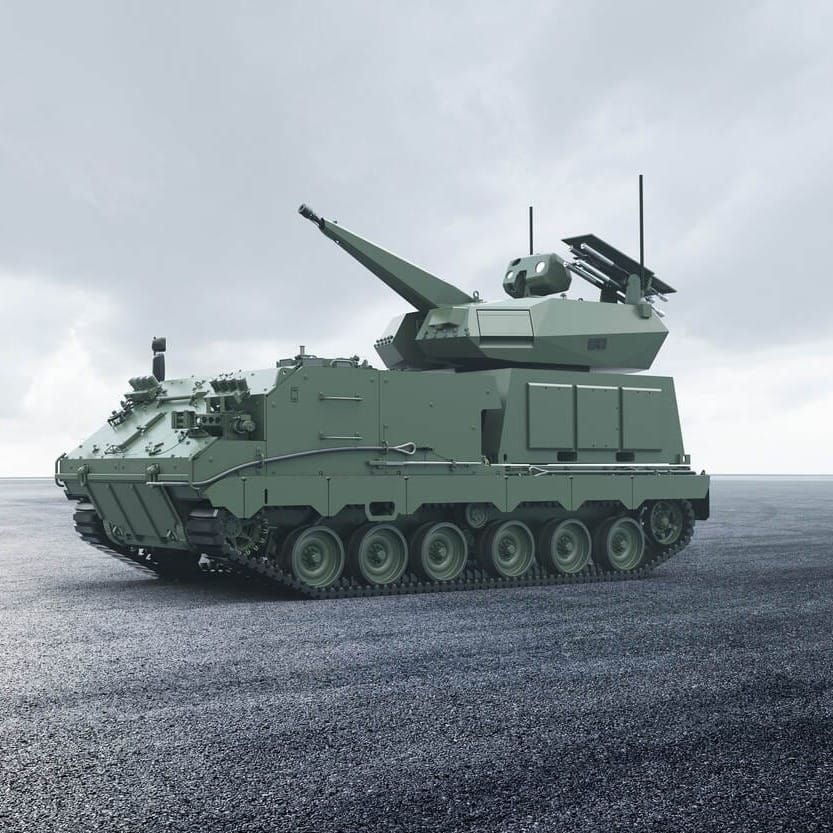
Belgium confirmed a €3.1 billion air-defence package at the NATO summit in Ankara on 8 July, built around 20 Rheinmetall Skyranger short-range systems. The deal also takes in 10 NASAMS launchers and 14 Ground Master 200 radars, bought through existing Dutch framework contracts to speed delivery. Defence minister Theo Francken set out the plan as the country's first serious rebuild of a mobile air-defence layer it has largely gone without since the early 2010s.
The systems are meant to cover critical entry points such as the port of Antwerp and national logistics corridors, after a run of unexplained drone incursions over sensitive Belgian sites. By folding into a shared Benelux structure with the Netherlands rather than running a separate national tender, Brussels has put speed first. That choice is itself a measure of how urgent this layer has become.
Russia's war in Ukraine has turned cheap drones and low-flying cruise missiles into a daily problem for armies that once planned air defence around aircraft and ballistic missiles. Protecting forward troops and fixed infrastructure now means stopping weapons that can cost a small fraction of the interceptor fired to destroy them.
The Skyranger 30 is built to answer that problem at the bottom of the threat spectrum. At its core is a 30mm cannon firing programmable airburst rounds, paired with a sensor suite. The turret can also carry short-range missiles, and mounts on armoured vehicles such as the Boxer or the Pandur. It works beneath longer-range systems like Patriot and NASAMS, in the short-range band where armies need something mobile and cheap enough to fire in volume.
Ukraine has exposed why that band matters. Missile-based air defence can hold up tactically while proving unaffordable over a long campaign. A Shahed-type drone still has to be brought down, yet spending a scarce, costly interceptor on each one hands the attacker a cost-exchange advantage. Programmable cannon rounds do not erase that problem, though they change the arithmetic against the cheapest threats.
That logic explains why Skyranger has moved from an exhibition-hall system to a settled European choice. Germany placed a €595 million order in 2024 for 19 Boxer-based Skyranger 30 vehicles, a prototype plus 18 production systems, and is expected to follow with a far larger tranche; reporting points to a Bundeswehr requirement of 500 to 600 systems. Denmark has ordered 16 turrets for its own mobile system. The Netherlands has signed for mobile and static Skyranger 30 units. Austria was the European launch customer. Belgium now joins them.
Ukraine is a related, separate case. Rheinmetall is supplying Kyiv with Skyranger 35 systems mounted on Leopard 1 chassis, built in Italy and paid for by an unnamed EU state drawing on windfall profits from frozen Russian assets. The first vehicles reached Ukraine late in 2025. The variant differs, though the purpose holds: put a gun-based system close enough to the front to knock down drones before they reach their targets.
For Europe, the meaning runs past any single turret. The continent is recovering a category of defence it set aside after the Cold War, when Western armies leaned towards expeditionary operations and high-end missile defence and let short-range cover for manoeuvre forces slide down the priority list. Russia has made that omission hard to ignore.
The rush also marks a rare moment of European standardisation. Armies are mounting the turret on different vehicles, and each order carries its own national fit, yet several are converging on the same Rheinmetall family. Common hardware of that kind eases training and maintenance across several armies. It also pools ammunition demand, which matters as production scales.
That scaling puts Rheinmetall in a strong position. The German group is already among the clearest corporate winners of Europe's rearmament, and Skyranger adds a growth line tied straight to the lesson defence ministries most fear: the air threat is getting cheaper and more numerous by the year. The company is racing to lift Skyranger output from around 70 turrets a year towards 400, and existing orders have already booked much of that pipeline.
There are limits to what the system can do. Gun range is short, and missiles will still be needed against faster or higher targets. A large enough salvo can swamp any single system. Production capacity and ammunition supply will decide how fast these orders turn into usable mass on the ground.
Belgium's decision shows where the money is going. Europe is rebuilding the missing tier between small arms and strategic interceptors, and Skyranger has landed at the centre of it. Drones keep getting cheaper while interceptors stay scarce, and the gap between the two has become one of the most pressing procurement problems in NATO.
Comments ()