
Australia's New Spy Jet Patrols Northern Waters as China Pushes South
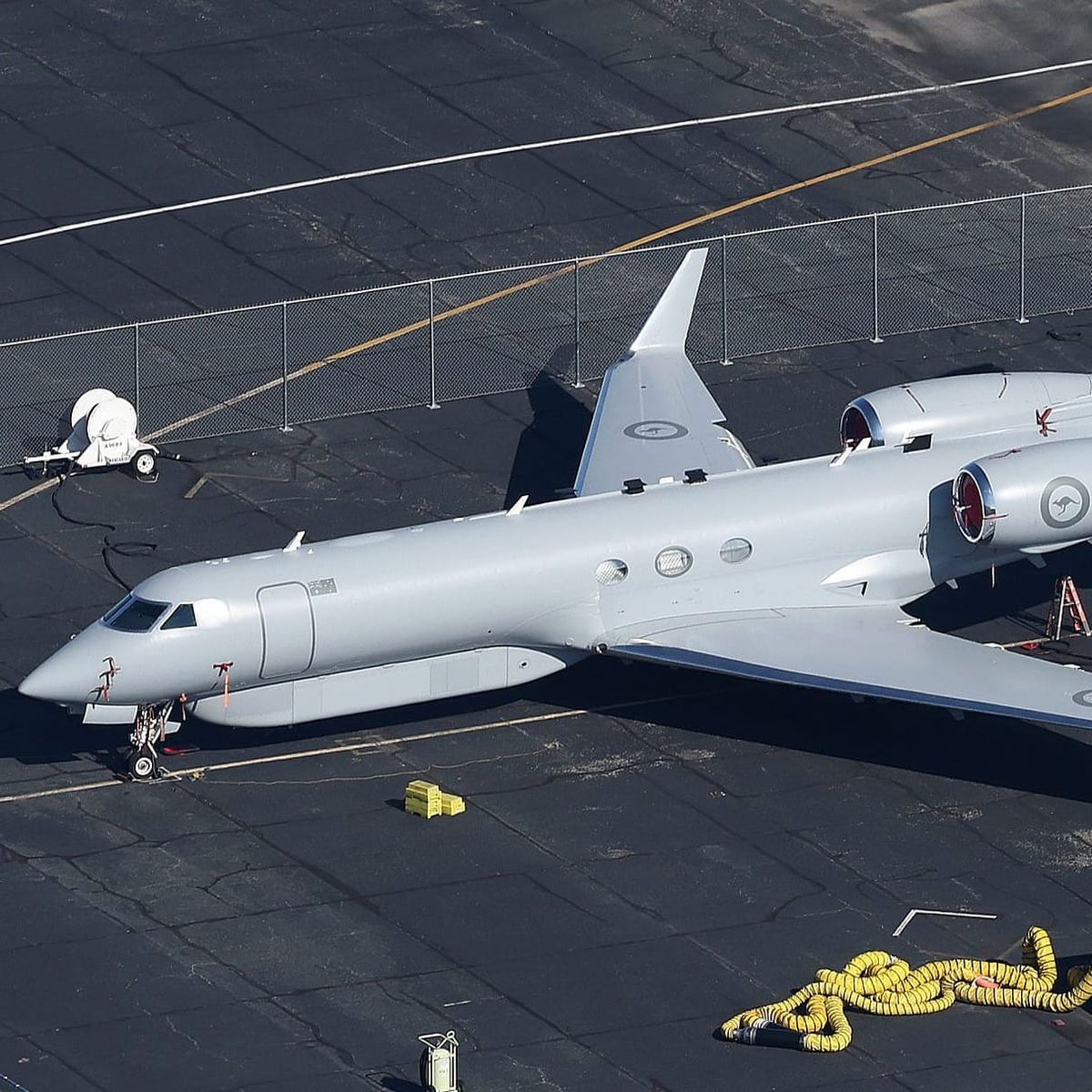
Australia has begun flying its newest surveillance and electronic-warfare aircraft from the country's north, widening its ability to track Chinese military movements through its maritime approaches as Beijing sends its navy further south.
An MC-55A Peregrine from the Royal Australian Air Force's 10 Squadron deployed to RAAF Base Darwin this month for its first operational test and evaluation flights, the Department of Defence said. The missions resemble the maritime patrols flown by the air force's P-8A Poseidons and feed a real-time picture of the region, including the sea lanes that approach Australia from the north.
The Peregrine gives Australia a first-of-type airborne capability for electronic warfare and surveillance, known in the air force as ISREW. Built by L3Harris on a heavily modified Gulfstream G550 business jet, it can detect and map electronic emissions across a wide area, letting it pinpoint warships and aircraft at long range, along with the radars that guide them. The air force took the first of four aircraft into service in January.
The platform marks a clear step up in capability. Where the Poseidon is built chiefly to hunt submarines and ships, the Peregrine is optimised to gather electronic intelligence, eavesdropping on radar and communications signals that can reveal an adversary's position and intent.
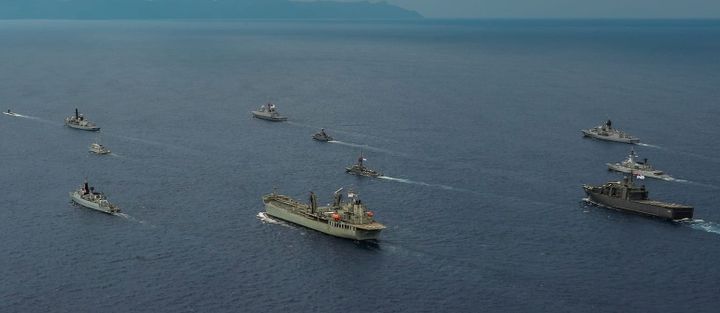
The deployment comes as Australia confronts a marked deterioration in its security environment. Early last year, a Chinese naval task group circumnavigated the continent and held live-fire drills in the Tasman Sea that forced commercial flights to divert. The voyage brought People's Liberation Army Navy warships within a few hundred nautical miles of major Australian cities and was shadowed for weeks by Australian and New Zealand forces. Chinese task groups have continued to range across the region since, keeping Canberra's surveillance assets in steady demand.
"The MC-55A complements existing capabilities like the P-8A Poseidon and the incoming MQ-4C Triton, allowing Defence to maintain a persistent situational awareness of our primary area of military interest," said Air Commodore Peter Robinson, Director General Air Command Operations.
The 2026 National Defence Strategy, released in April, named China as the main driver of shifting security dynamics in the Indo-Pacific and warned that Australia faces a level of exposure to coercion not seen since the Second World War. It commits up to A$38 billion ($25 billion) over the decade to electronic-warfare and cyber capabilities, part of an extra A$53 billion in defence spending that lifts the budget towards 3% of gross domestic product.
Defence Minister Richard Marles has said the Peregrine will integrate with allied systems and let Australia share intelligence with Britain and the US, reinforcing the Five Eyes network and the AUKUS pact. The aircraft will operate alongside the Northrop Grumman MQ-4C Triton, an uncrewed maritime surveillance drone whose final example is due for delivery next year.
Australia approved the purchase of the four MC-55As in 2017 under Project AIR 555, through a foreign military sales agreement with the US Air Force. L3Harris fitted the baseline jet with a long, canoe-shaped sensor housing beneath the forward fuselage, added antennas across the airframe and modified its Rolls-Royce engines to supply extra power. The company has set up a field service team in Australia to support the fleet with local industry.
The aircraft are based at RAAF Base Edinburgh in South Australia, which also hosts the Triton and Poseidon fleets.
Comments ()