
Australia-India Uranium Deal Would Test the Quad's New Energy Agenda
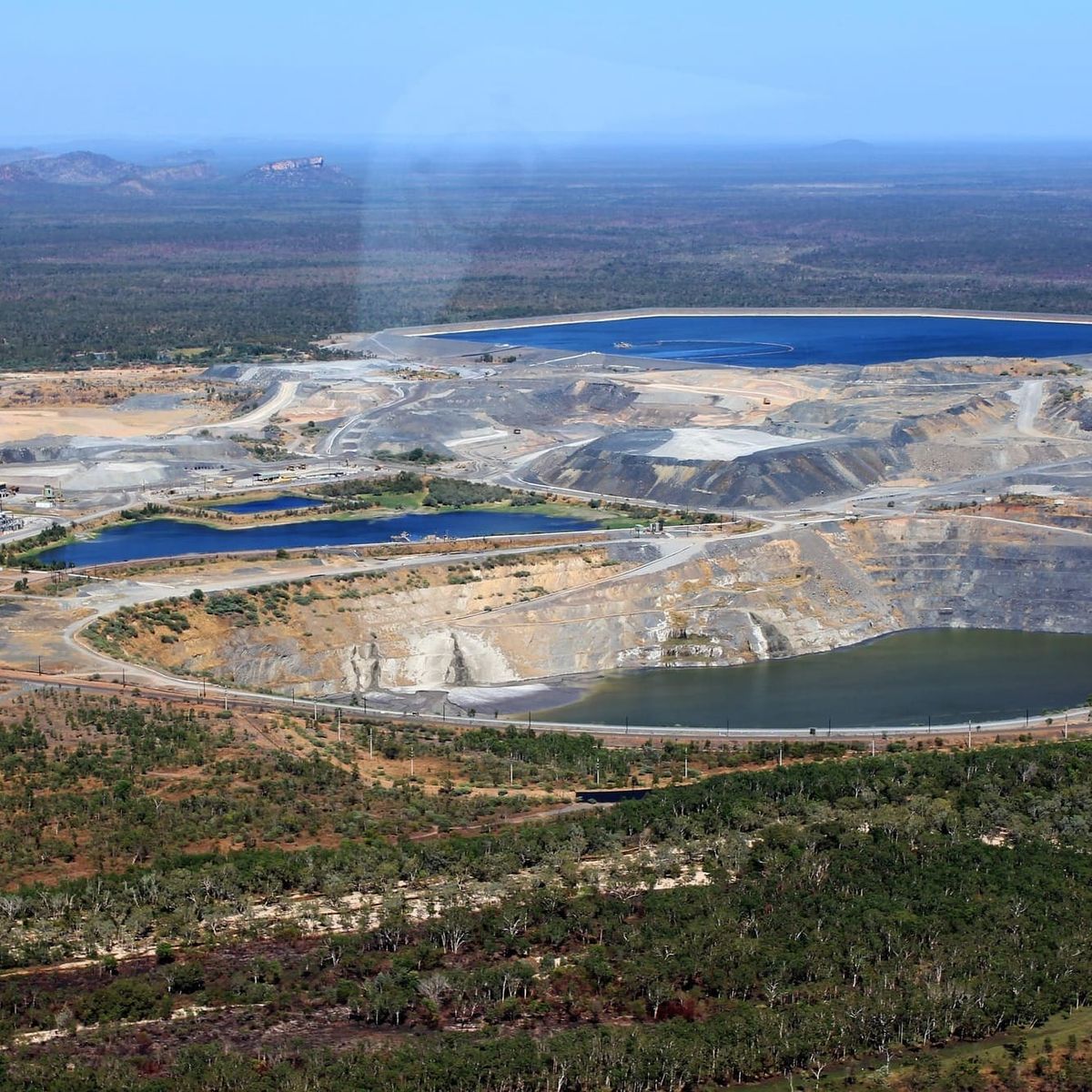
India is pushing to convert a decade-old nuclear agreement that has barely been used into a working uranium trade when Prime Minister Narendra Modi visits Australia this week.
Should a commercial supply deal follow, it would offer one of the first hard tests of whether the energy-security agenda the Quad declared in May can translate into trusted supply chains in a sensitive sector.
Modi is due in Melbourne for the third India-Australia Annual Summit, part of a three-nation tour that also takes in Indonesia and New Zealand between 6 and 11 July.
Ahead of the trip, India's Ministry of External Affairs said discussions on implementing the bilateral nuclear supply agreement had been substantive and forward-looking, with Joint Secretary Vishwesh Negi expressing hope that the talks would reach a "logical conclusion." Indian government sources cautioned that nothing had been finalised and that discussions remained ongoing, according to ThePrint.
The legal groundwork has been in place for years. Australia and India signed a Civil Nuclear Cooperation Agreement in 2014, and it entered into force the following year, making commercial uranium exports possible.
It was Australia's first such deal with a country outside the Nuclear Non-Proliferation Treaty, and it rested on a tailored set of safeguards. Yet trade has been negligible, with only small shipments recorded since a first delivery in 2017.
India now has reason to close that gap. The country is expanding its civil nuclear fleet to meet fast-growing electricity demand, with state-owned Nuclear Power Corporation planning to add 18 reactors by 2032 in a move expected to almost triple nuclear capacity, according to reports cited by Australian Mining.
New Delhi has set a target of at least 100 GW of nuclear capacity by 2047. Part of that appetite is tied to a data-centre boom, with Modi seeking Australian uranium to help power India's growing digital economy, the Sydney Morning Herald reported. New reactors take years to build, so the pull is for long-term baseload power to underpin a digitising economy.
Australia holds the world's largest known uranium reserves, according to the World Nuclear Association, which makes it an obvious long-term supplier.
Why this matters beyond the tonnage lies in what uranium represents. It is the most safeguards-sensitive commodity Australia sells, and Canberra hesitated for years before contemplating real exports to a partner outside the treaty.
A genuine flow to India would signal that Australia is prepared to treat New Delhi as a trusted long-term nuclear customer, even though India's position outside the treaty still requires a distinct safeguards regime. Australia already supplies uranium to Japan and the United States, so a real flow to India would complete a network of aligned suppliers and consumers within the Quad.
The timing points the same way. In New Delhi on 26 May, the Quad foreign ministers announced an Initiative on Indo-Pacific Energy Security aimed at strengthening regional energy resilience.
They also launched a separate Critical Minerals Initiative Framework, which set a target of up to $20 billion in public and private support for supply chains that run from mining to recycling, though that framework covers non-fuel minerals and does not name uranium.
A bilateral uranium deal would sit outside both mechanisms, yet it would test the logic behind them. Uranium demands the kind of trust and non-proliferation assurance that only close partners can offer, which makes an Australia-India trade a clear measure of whether Quad members can build trusted supply chains in a hard sector.
It would also give India another high-quality source alongside suppliers such as Kazakhstan and Canada, and strengthen a supply base of politically aligned partners as it scales up its fleet.
New Delhi has been locking in such sources. In March, Canada's Cameco signed a nine-year deal to supply India's Department of Atomic Energy with nearly 22 million pounds of uranium concentrate between 2027 and 2035, worth about C$2.6 billion (US$1.9 billion), during a visit by Canadian Prime Minister Mark Carney. An Australian contract would extend that pattern and reduce the collective exposure of the Quad in a sector now central to both clean energy and computing power.
The case should not be overstated. No deal has been signed, and Australia's long hesitancy is a reminder that domestic politics and safeguards can slow such trade. The $20 billion attached to the critical-minerals framework is a target rather than committed funding, as the Stimson Center has noted, and the Quad has often been better at announcing initiatives than delivering them. India's commitment to strategic autonomy also caps how tightly it will bind itself to any bloc, and a first uranium contract is likely to be modest in volume.
Even so, the signal would outweigh the tonnage. Rory Medcalf of the Australian National University has described the Quad as a "modern alignment," a grouping that constrains coercion by signalling long-term coordination among four maritime democracies.
Turning a dormant uranium agreement into a live commercial trade would be exactly that kind of signal. It would show that two Quad members can convert trust into supply in one of the most sensitive energy markets.
Comments ()