Northrop Grumman and Airbus Sign MOU on NATO MQ-4C Triton Fleet

Northrop Grumman and Airbus Sign MOU on NATO MQ-4C Triton Fleet


Share this post

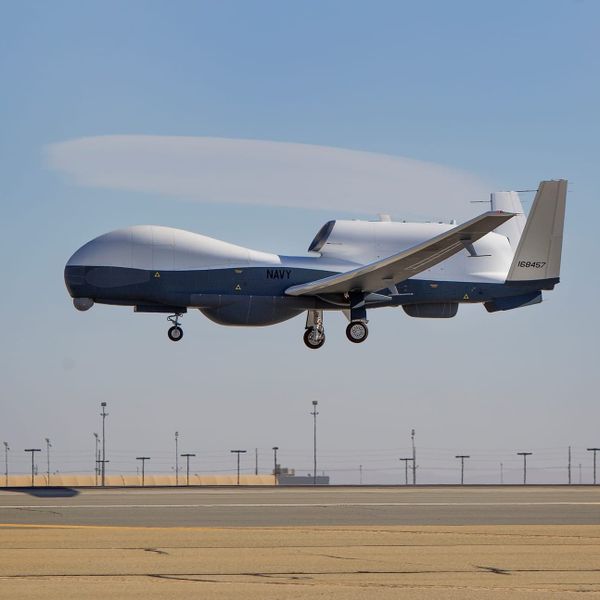
Northrop Grumman has signed a memorandum of understanding with Airbus Defence and Space covering plans to supply NATO with up to five MQ-4C Triton surveillance aircraft, formalising the role of a major European partner in the proposed programme.

The companies signed the agreement during the NATO Summit Defence Industry Forum in Ankara. It follows the 7 July announcement by Denmark, Finland, Germany and Norway that they intend to acquire the aircraft for NATO’s Intelligence, Surveillance and Reconnaissance Force. Neither NATO nor Northrop Grumman has announced a firm aircraft order, acquisition contract or programme value.

NATO has described the proposed acquisition as the procurement of up to five Tritons, while Northrop Grumman continues to refer to a Letter of Intent. The MOU begins establishing the industrial structure needed to deliver and support the fleet.

Northrop Grumman would build the aircraft, with Airbus and other European companies contributing the ground systems and supporting services. NATO said the European work would cover the ground segment, data management, command and control, infrastructure and mission support. Northrop Grumman said it would assess how the complementary capabilities of the two companies could support the aircraft and associated ground systems.

The wider team includes companies already working with NATO’s surveillance force. Northrop Grumman is coordinating with Kongsberg Defence & Aerospace of Norway, Terma of Denmark, Insta Advance of Finland and Exence of Poland.

The participating companies will draw on industrial relationships developed around NATO’s RQ-4D Phoenix fleet over the past decade. Northrop Grumman said this would provide proven expertise and help meet what it described as a challenging schedule.

“Our collaboration with Alliance members on the expansion of NATO’s ISR Force will bring the most advanced ISR capabilities to the Alliance, bolstering its regional security and enhancing Europe’s defense industrial base,” said Jane Bishop, Northrop Grumman’s vice-president and general manager for global surveillance.

NATO operates five RQ-4D Phoenix aircraft from Sigonella air base in Italy. Acquiring all five Tritons would increase its high-altitude uncrewed surveillance fleet from five aircraft to as many as ten. The Triton is designed for maritime surveillance and would complement the Phoenix fleet. NATO’s RQ-4Ds have also received maritime-mode software designed to improve their ability to detect and track surface vessels.

The MQ-4C is operated by the US Navy, while Australia is introducing the aircraft into Royal Australian Air Force service. It can remain airborne for more than 24 hours at altitudes above 50,000 feet, or approximately 15 kilometres. NATO said its long-range sensors would strengthen early threat detection and surveillance of sea lines of communication, including across the Arctic and High North.


Share this post
Comments

Be the first to know

Join our community and get notified about upcoming stories

Subscribing...
You've been subscribed!
Something went wrong
Papua New Guinea Opens Allied Military Drill Days After Australia Defence Pact Takes Effect

Papua New Guinea Opens Allied Military Drill Days After Australia Defence Pact Takes Effect

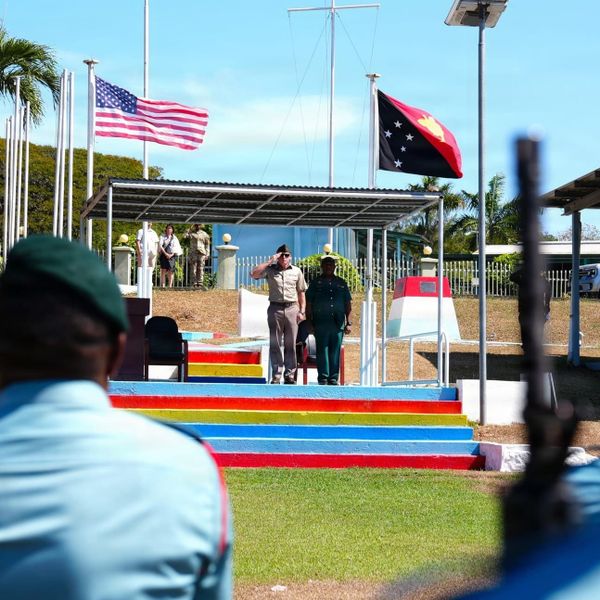
Papua New Guinea has formally opened a multinational military exercise with forces from Australia, the United States and New Zealand, days after a new mutual-defence treaty elevated Port Moresby and Canberra to allies committed to integrating their armed forces more closely. Soldiers from the Papua New Guinea Defence Force and US Army stood together at Murray Barracks in Port Moresby on 13 July for the opening of Tamiok Strike 26. The exercise, led by the PNGDF and US Army Pacific, runs across


MGG Geopolitics

MGG Geopolitics

How US Missile Deployments Near Taiwan Are Becoming a Fixture in the Philippines

How US Missile Deployments Near Taiwan Are Becoming a Fixture in the Philippines

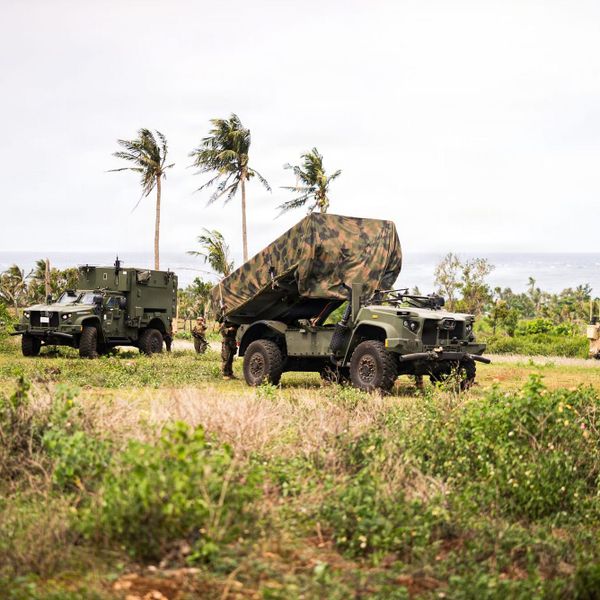
A chain of Philippine islands stretching south from Taiwan is becoming a recurring operating ground for American and allied missile forces, as temporary exercises evolve into longer rotations designed to defend strategic waters from China. The Hawaii-based 3rd Marine Littoral Regiment spent roughly three months in the Philippines this year, moving anti-ship launchers and air-defence systems through the country during the Balikatan and KAMANDAG exercises. In the northernmost Batanes and Babuyan


MGG Geopolitics

MGG Geopolitics

US Deepens Guam Submarine Support Amid China Missile Threat

US Deepens Guam Submarine Support Amid China Missile Threat

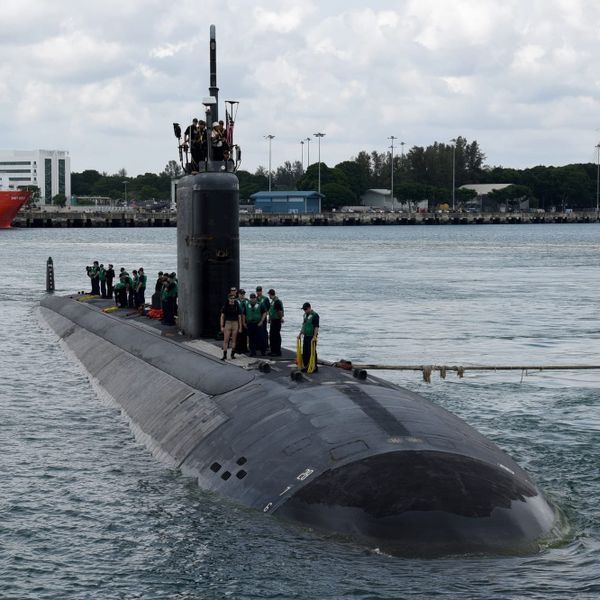
The US Navy is building Guam into a more capable submarine hub, able to keep its boats ready closer to potential flashpoints in Asia. The arrival of USS Tucson this month—an outwardly routine exchange of one vessel for another—highlights the supporting network behind that effort. USS Tucson, a Los Angeles-class nuclear-powered attack submarine commissioned in 1995, reached its new home port at Naval Base Guam in July. Navy photographs and captions show the boat arriving on 10 July, although the


MGG Geopolitics

MGG Geopolitics

Canada’s TKMS Submarine Bet Comes With Strategic Costs

Canada’s TKMS Submarine Bet Comes With Strategic Costs

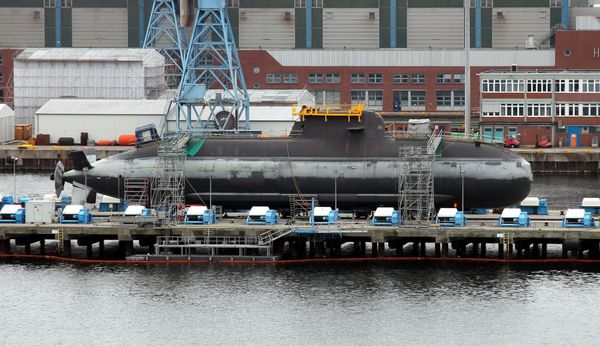
Canada has chosen a highly capable German submarine and a partnership that fits comfortably within its established NATO role. It has also passed up a rarer opportunity to connect its Arctic defence requirements with its ambitions in the Indo-Pacific. Prime Minister Mark Carney announced on 6 July that TKMS had been selected as the preferred supplier for as many as 12 new submarines, beating South Korea’s Hanwha Ocean in the largest defence procurement Canada has attempted. The German shipbuild


MGG Geopolitics

MGG Geopolitics