
US-South Korea alliance faces growing strain despite military cooperation
The US-South Korea alliance is facing a difficult test of political confidence, even as military cooperation between the two countries continues.
Disagreements over intelligence sharing, economic commitments and wartime operational control have complicated relations between President Donald Trump and South Korean President Lee Jae-myung.
The tension comes as North Korea continues developing its military capabilities.
Yet the allies' armed forces remain closely engaged, raising questions about how far military cooperation can offset disagreements between their governments.
Intelligence sharing exposes mistrust
One of the clearest signs of strain emerged during a South Korean parliamentary hearing in Washington on 12 October.
Ambassador Kang Kyung-wha acknowledged unresolved American concerns about intelligence cooperation and described difficulties communicating with senior White House officials.
South Korea's National Intelligence Service has acknowledged restrictions affecting some intelligence sharing, while maintaining that cooperation continues across areas including North Korean missile activity, cyber threats and counterintelligence.
The agency has also challenged elements of reporting about the dispute.
The distinction is important: publicly available evidence supports the existence of restrictions and diplomatic friction, but not a comprehensive suspension of intelligence cooperation.
For an alliance confronting North Korea's nuclear and missile programmes, uncertainty surrounding intelligence access raises concerns about trust and the speed of coordinated decision-making.
Alaska investment dispute adds pressure
Economic disagreements have become another source of friction.
The White House has publicly claimed that a South Korean energy investment package worth up to US$200 billion includes US$54 billion linked to an Alaska natural gas pipeline.
South Korean officials have disputed suggestions that participation in the project has been finalised, maintaining that investment decisions must be commercially viable.
The competing positions expose differences over how investment commitments are understood and presented.
Seoul is also pursuing sensitive security objectives, including expanded nuclear fuel-cycle rights and cooperation on nuclear-powered submarines.
There is no verified public agreement making those objectives conditional on the Alaska project. Nevertheless, the investment dispute complicates a relationship in which economic and security negotiations increasingly compete for political attention.
Wartime command highlights competing priorities
The transfer of wartime operational control, or OPCON, presents a different challenge.
South Korea wants a Korean general to assume command of the combined forces during wartime, replacing the existing US-led arrangement.
In an official presidential briefing on 1 October, Lee called for the early recovery of wartime command authority, linking it to South Korea's military sovereignty.
The transfer remains governed by conditions previously agreed between Washington and Seoul, including military capabilities and the regional security environment.
US Forces Korea commander General Xavier Brunson has emphasised the importance of meeting those conditions before changing the command structure.
His October comments about the evolving threat environment prompted objections in Seoul over whether the requirements were becoming harder to satisfy.
The disagreement reflects a longstanding tension between South Korea's desire for greater military autonomy and the alliance's conditions-based approach to transferring command.
Neither position necessarily implies opposition to the alliance itself. The difficulty lies in reconciling political expectations with military assessments.
Joint training continues despite political friction
The military relationship remains active.
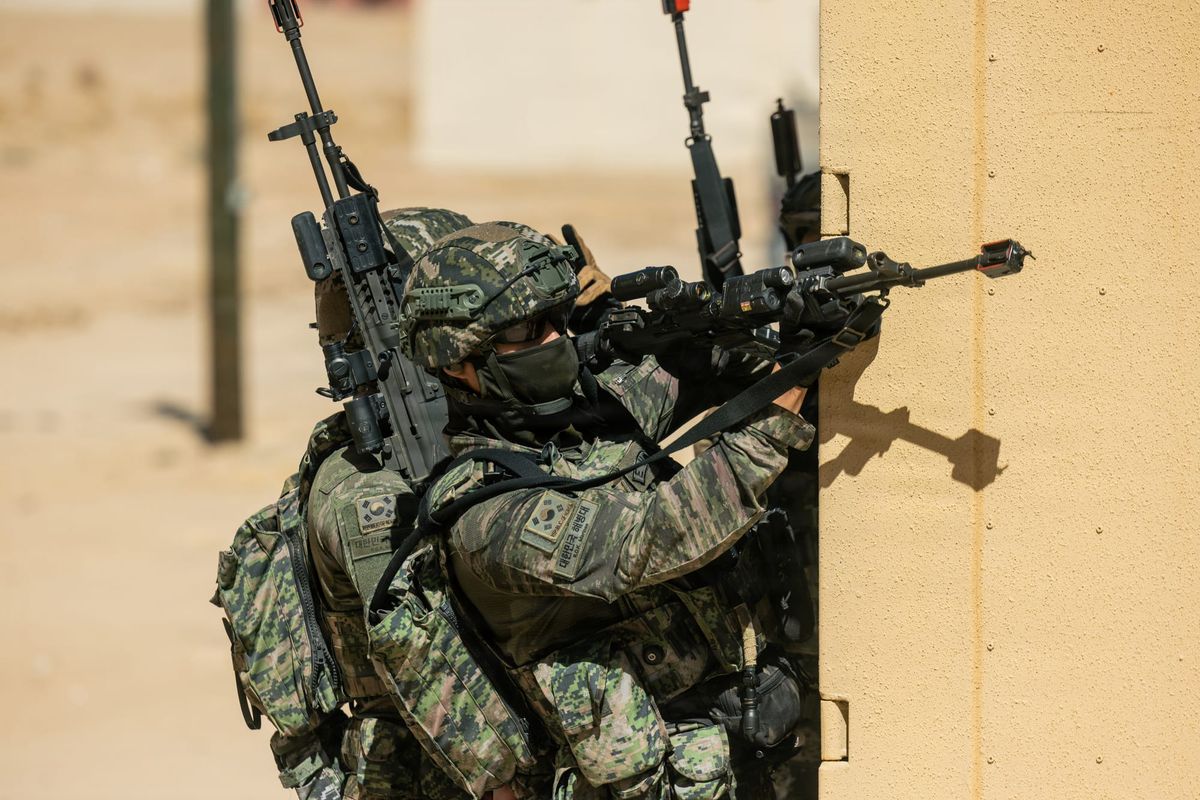
American and South Korean personnel began a multidomain reconnaissance course on 21 October, scheduled to run through 6 November. It is the first time this iteration of the course has been conducted in South Korea.
The training includes reconnaissance and coordination across multiple operational domains, supporting the readiness of US Marine forces and their South Korean counterparts.
In September, the United States, South Korea and Japan also completed Freedom Edge, a five-day exercise involving air, maritime, missile defence, cyber and medical capabilities.
Such activities maintain practical cooperation, established command relationships and familiarity between allied forces.
They do not resolve political disputes over sensitive information, investment or wartime authority.
The alliance retains substantial institutional strength. Its challenge is ensuring that disagreements between the two governments do not gradually undermine the trust required for their forces to operate together during a crisis.
The continuation of joint exercises demonstrates military commitment. The durability of the alliance will depend on whether Washington and Seoul can translate that operational cooperation into more stable political relations.

Comments ()