
UK-Australia-US space radar network awaits Welsh planning decision
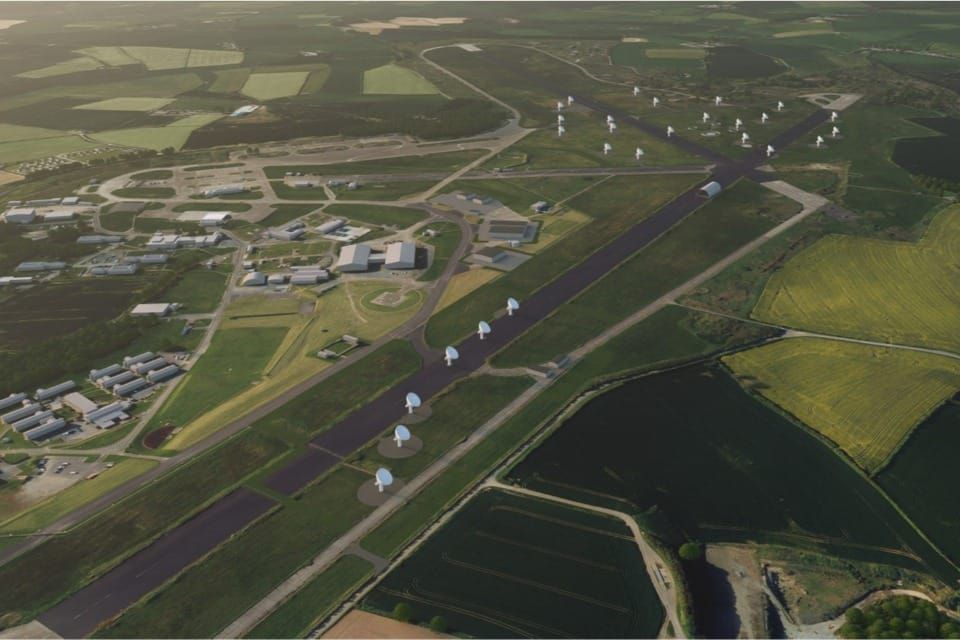
Britain's contribution to a major UK-US-Australian space surveillance network remains subject to planning approval in Wales, even as the first radar installation in Western Australia has entered early operations.
The Deep Space Advanced Radar Capability (DARC) programme is intended to provide continuous monitoring of satellites and other objects in deep space through three geographically separated installations.
The Ministry of Defence updated its guidance on 23 October, confirming that Welsh ministers will determine the application for the proposed British site at Cawdor Barracks in Pembrokeshire.
Four days earlier, Defence Minister Luke Pollard told Parliament that the Welsh Government had appointed a planning inspector to examine the proposal.
The application was transferred from Pembrokeshire County Council to Welsh ministers in July.
Australia already operating first DARC radar
The first DARC installation, near Exmouth in Western Australia, was completed in December 2024 and entered early-use operations in 2025.
US Space Force personnel currently operate the radar under an early-use arrangement, while testing and development continue.
The facility forms the first part of a planned global network designed to detect, identify and track objects at geosynchronous distances, where many communications and military satellites operate.
By combining observations from Australia, Britain and the United States, DARC is intended to provide more persistent surveillance across the sky, including at night and during poor weather.
That capability could help the allies identify potentially threatening satellite activity and monitor objects that pose risks to military and commercial space infrastructure.
US selects Texas location
The US Space Force selected Lake Kickapoo in Texas as its preferred location for the third DARC installation in September 2026.
Construction is expected to begin in 2027, subject to contract award and required approvals. The American site is scheduled for operational acceptance in 2030.
Earlier US Space Force documentation projected completion of the full three-site network by 2032.
The proposed British installation would provide the geographic coverage needed to complete that network.
However, no official evidence establishes that the Welsh planning process has delayed the overall programme.
Cawdor Barracks proposal faces scrutiny
The Ministry of Defence wants to redevelop part of Cawdor Barracks, including its former airfield, to accommodate radar antennas and supporting infrastructure.
The proposal could keep the military site in use beyond its previously planned closure in 2028 and create employment in technical operations, computing and facilities management.
It has also attracted local opposition over environmental effects, the installation's visual impact and the implications of hosting military space infrastructure.
Campaign group PARC Against DARC has opposed the development.
The MOD conducted public consultation between February and March 2026 and commissioned an environmental impact assessment.
It maintains that the radar would comply with applicable radiofrequency safety standards.
The planning process must consider the project's potential benefits alongside its local impacts.
A decision with wider implications
DARC was announced by the United Kingdom, United States and Australia in December 2023 as part of their growing cooperation on military space capabilities.
The network is intended to improve awareness of activity around satellites that support defence operations, communications and other essential services.
Australia's installation has already entered early use, while the American site is progressing through its development process.
Britain's contribution remains dependent on the Welsh planning decision.
Welsh ministers have not announced a final determination, and the MOD has not confirmed when construction could begin.
The outcome will determine whether the proposed Cawdor Barracks installation can proceed as planned and provide the British component of the trilateral surveillance network.



Comments ()