
UK to lead three AUKUS undersea drone payloads for 2027 deployment
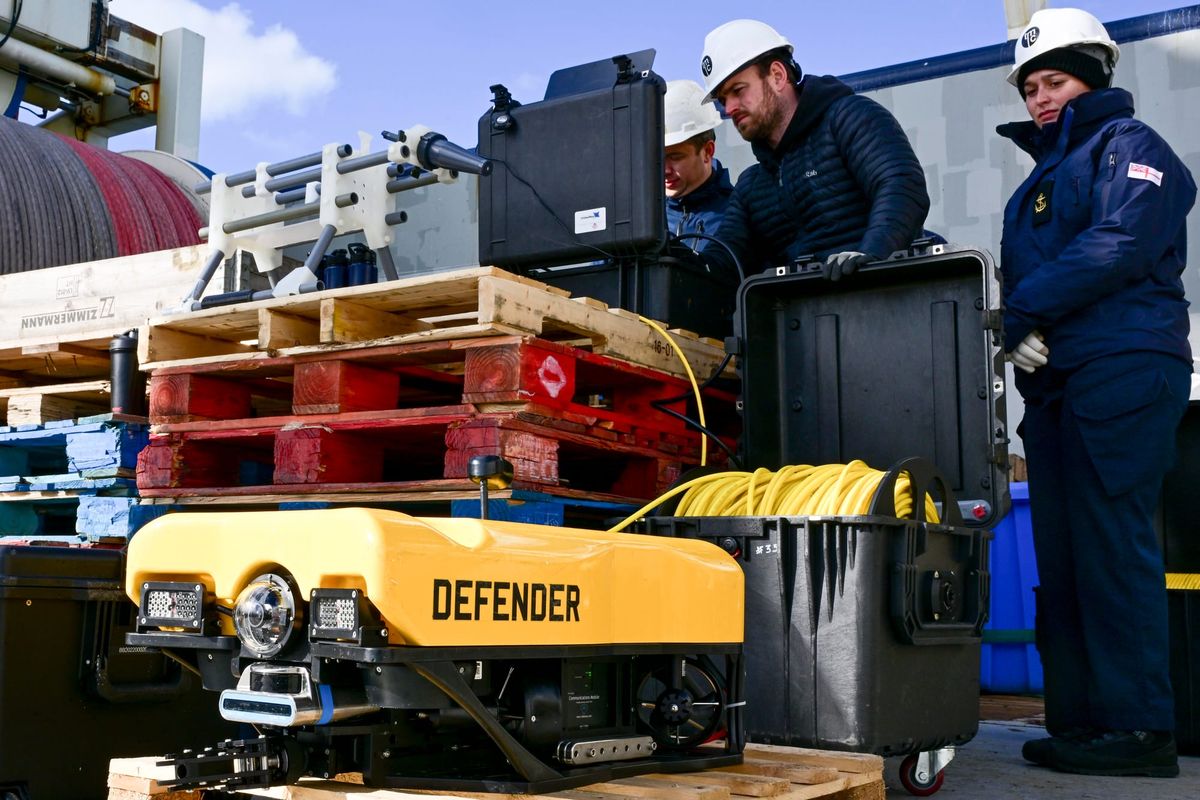
Britain will lead development of three undersea payloads for the AUKUS partnership, with the systems intended to become available across Australian, British and American uncrewed underwater vehicle fleets from 2027.
The Ministry of Defence announced the programme on 27 October following Maritime Big Play-Pacific, a trilateral exercise in San Diego testing autonomous maritime technologies.
The payloads are a Synthetic Aperture Sonar, a Deployable Anti-Submarine Warfare Sensor and a Deployable Non-Kinetic Effector.
Their development forms part of the first signature project under AUKUS Pillar II, which focuses on advanced military capabilities rather than Australia's acquisition of nuclear-powered submarines.
Three technologies for undersea operations
The proposed synthetic aperture sonar is intended to produce detailed underwater imagery, supporting surveillance and the identification of objects on or near the seabed.
The deployable anti-submarine warfare sensor would allow an uncrewed underwater vehicle to place sensors that detect and classify underwater threats.
The third payload, described as a deployable non-kinetic effector, is intended to generate effects underwater without relying on a conventional explosive weapon.
The Ministry of Defence did not disclose detailed operating characteristics of the non-kinetic system.
Together, the payloads are intended to expand the tasks autonomous underwater vehicles can perform, including monitoring large maritime areas and protecting critical undersea infrastructure.
The planned availability from 2027 does not mean that all three systems have completed development or entered operational service.
The MOD also did not identify the companies responsible for manufacturing the payloads, their acquisition costs or the first allied vehicles expected to carry them.
San Diego trials test allied interoperability
The announcement followed a week of Maritime Big Play-Pacific activity involving Australian, British and American personnel and industry.
The exercise examined how crewed and uncrewed maritime systems could operate together across anti-submarine warfare, offensive operations, contested resupply and seabed security.
Britain led the anti-submarine warfare component.
Its contribution included 13 uncrewed surface vehicles, two anti-submarine targets and four underwater gliders from six industry partners.
The exercise was intended to test not only individual platforms but also the command and control arrangements needed to coordinate autonomous systems from different countries.
That challenge is particularly relevant to AUKUS, whose three members are developing and acquiring different types of uncrewed vessels.
From demonstrations to operational capability
AUKUS defence ministers announced the first Pillar II signature project in May 2026, with delivery activities expected to begin in 2027.
The October announcement gives Britain responsibility for three identifiable capabilities within that programme.
It also follows a September demonstration in Scotland in which a US Mk 48 exercise torpedo was launched from the Royal Navy's XV Excalibur extra-large uncrewed underwater vehicle.
That test and the new payload programme are separate activities, but both illustrate efforts to expand the military roles available to autonomous underwater systems.
The next test for the partnership will be integrating the payloads onto operationally relevant vehicles and demonstrating their effectiveness across different national platforms.
For now, Britain's assigned development role represents a concrete division of responsibility within AUKUS Pillar II. Production arrangements, costs and operational fielding remain to be established.

Comments ()