
Thales opens Australian sonar facility for Hunter frigates and Collins submarines
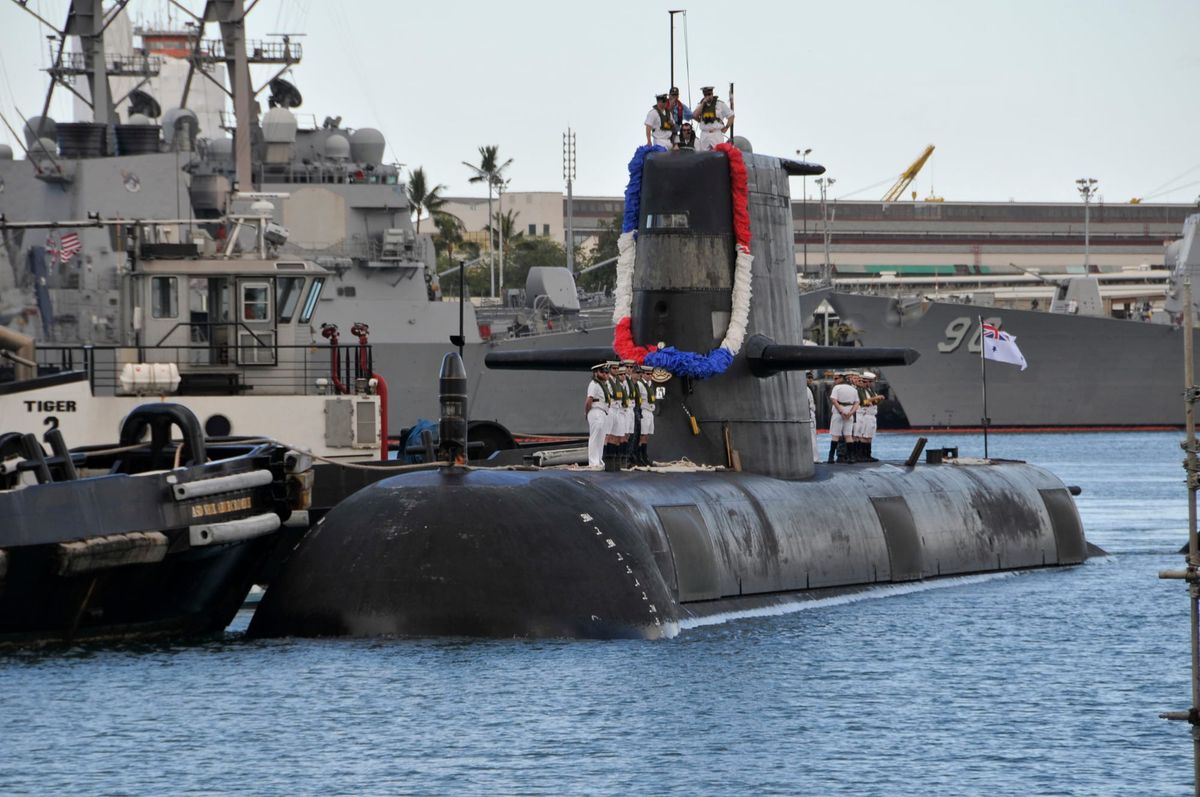
Thales Australia has opened a new sonar manufacturing and sustainment facility in Western Sydney, establishing domestic production capacity for acoustic systems intended for the Royal Australian Navy's Hunter-class frigates, Collins-class submarines and autonomous maritime platforms.
Defence Industry Minister Pat Conroy opened the facility at Rydalmere, following a multimillion-dollar investment jointly funded by Thales and the Australian government.
The development expands Australia's ability to manufacture, integrate and maintain towed-array sonar systems used to detect and track submarines and other underwater threats.
The new production hall is 100 metres long and forms part of Thales Australia's existing Acoustics Centre of Excellence.
Sonar manufacturing for Hunter frigates
The facility will manufacture towed-array sonar systems for Australia's six planned Hunter-class frigates, which are being built by BAE Systems Maritime Australia at Osborne in South Australia.
Based on Britain's Type 26 design, the Hunter class is intended to provide the Royal Australian Navy with specialised anti-submarine warfare capabilities.
Towed-array sonar systems use acoustic sensors deployed behind a vessel to detect underwater activity, helping operators track submarines while reducing interference from the ship's own noise.
The Australian Department of Defence identifies Thales Australia as a supplier to the Hunter programme, which is scheduled to deliver its first frigate in 2032.
The Rydalmere investment is intended to establish local manufacturing and sustainment capacity for a critical part of those ships' underwater detection systems.
Collins submarines and autonomous surveillance
Thales said the new facility would also support sonar systems for the Collins-class submarine fleet.
The company has supplied acoustic technology to the Royal Australian Navy for more than three decades, making the expansion part of an established domestic industrial capability rather than an entirely new industry.
The facility will also support BlueSentry, Thales's autonomous maritime surveillance technology.
BlueSentry combines thin-line fibre-optic towed-array sonar with uncrewed maritime platforms, allowing acoustic sensors to operate without a conventional crewed warship.
The announcement follows Australia's recent disclosure of a thin-line towed-array sonar payload for the BlueBottle uncrewed surface vessel.
However, the government has not established that the newly announced BlueBottle payload and Thales's BlueSentry product are the same system.
Together, the developments illustrate Australia's growing interest in deploying underwater sensors across both conventional naval vessels and autonomous platforms.
Expanding Australia's defence industrial base
The facility is expected to generate dozens of engineering and advanced manufacturing jobs in Western Sydney, alongside opportunities for domestic suppliers.
Thales said local sustainment would reduce reliance on overseas maintenance and allow naval equipment to spend more time available for operations.
Conroy described the investment as part of Australia's effort to establish sovereign manufacturing capacity for advanced acoustic systems.
The project aligns with Canberra's wider defence industrial priorities, particularly continuous naval shipbuilding, sustainment and technologies supporting maritime awareness.
It also reflects the increasing importance of undersea surveillance as Australia prepares for a larger surface combatant fleet and its longer-term transition to nuclear-powered submarines under AUKUS.
Neither Thales nor the government has disclosed the Commonwealth's exact financial contribution, the facility's annual production capacity or a delivery timetable for its first completed arrays.
Those details will help establish how quickly the new manufacturing capacity can support the Navy's major programmes.
For Australia, the investment adds a domestic source of critical sonar technology at a time when anti-submarine warfare is becoming increasingly important to its maritime defence planning.

Comments ()