
Saab Secures SEK 10.1bn GlobalEye Order From Unnamed Middle East Buyer
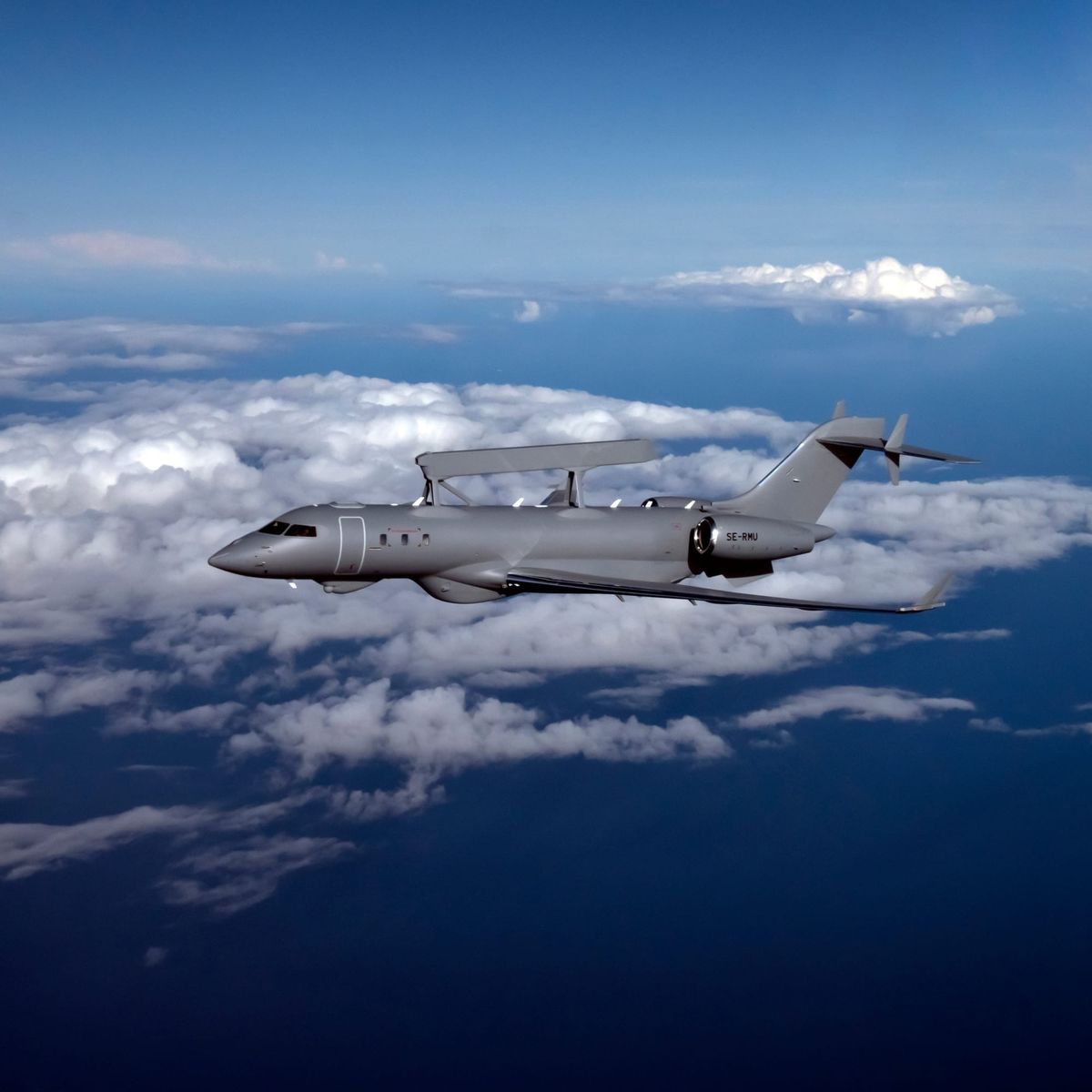
An unnamed Middle Eastern state has ordered two Saab GlobalEye airborne early warning and control aircraft, raising the possibility that the system has secured its second operator in the region.
Saab values the contract at SEK 10.1 billion, around $1.04 billion, with both aircraft due for delivery in 2030. The company said national security considerations prevented it from identifying the customer or releasing further details about the order. Saab announced the contract on 27 July.
The secrecy leaves two distinct possibilities. The buyer could be the United Arab Emirates, the GlobalEye launch customer and its only publicly confirmed Middle Eastern operator. The UAE received its fifth aircraft in September 2024, completing a fleet delivered over four years.
The order could also mark the entry of another Gulf air force. Saab disclosed in November 2025 that it had submitted GlobalEye offers to Qatar and Saudi Arabia, saying both countries had shown interest in the aircraft. Saudi Arabia already operates the older Saab 2000 Erieye surveillance system, giving it experience with the same family of radar technology.
Those campaigns place both countries among the plausible candidates, although no public evidence links either to the new contract. Reuters reported Saab’s offers to Qatar and Saudi Arabia.
The contract value provides no reliable clue. France agreed to pay approximately SEK 12.3 billion for two GlobalEye aircraft in December 2025, including ground equipment, training and support. Its aircraft will arrive between 2029 and 2032.
The lower value of the Middle Eastern order could reflect a narrower package or the use of existing infrastructure, although Saab has not disclosed its scope. The French contract also includes options for two more aircraft.
GlobalEye combines a Bombardier Global 6000 or 6500 business jet with Saab’s Erieye Extended Range radar, additional sensors and an onboard command-and-control system. It can detect and track activity in the air, at sea and over land, then distribute that information to fighters, warships and ground forces.
For Gulf governments, the attraction is clear. A high-flying surveillance aircraft can look beyond the limits of ground-based radar and provide earlier warning of approaching aircraft, drones and cruise missiles. It can also monitor maritime traffic across the Gulf and help coordinate a response across several branches of the armed forces.
The order comes as GlobalEye gains momentum internationally. Sweden has ordered three aircraft and France two. On 7 July, eleven NATO members announced plans to procure up to ten GlobalEyes to replace part of the alliance’s ageing Boeing E-3 fleet. Canada has separately entered discussions with Saab as its preferred AEW&C supplier, although no Canadian contract has yet been signed.
Firm GlobalEye sales now stand at 12 aircraft, including the five delivered to the UAE. A Saudi or Qatari order would give Saab a second regional operator and establish GlobalEye more firmly across the Gulf.
A UAE follow-on would expand an already mature fleet from five aircraft to seven. Both scenarios deepen Saab’s position in a market where airborne surveillance is becoming central to national air defence.
Comments ()