
Russian Shadow Fleet Escorts Drive 25% Rise in Royal Navy Monitoring
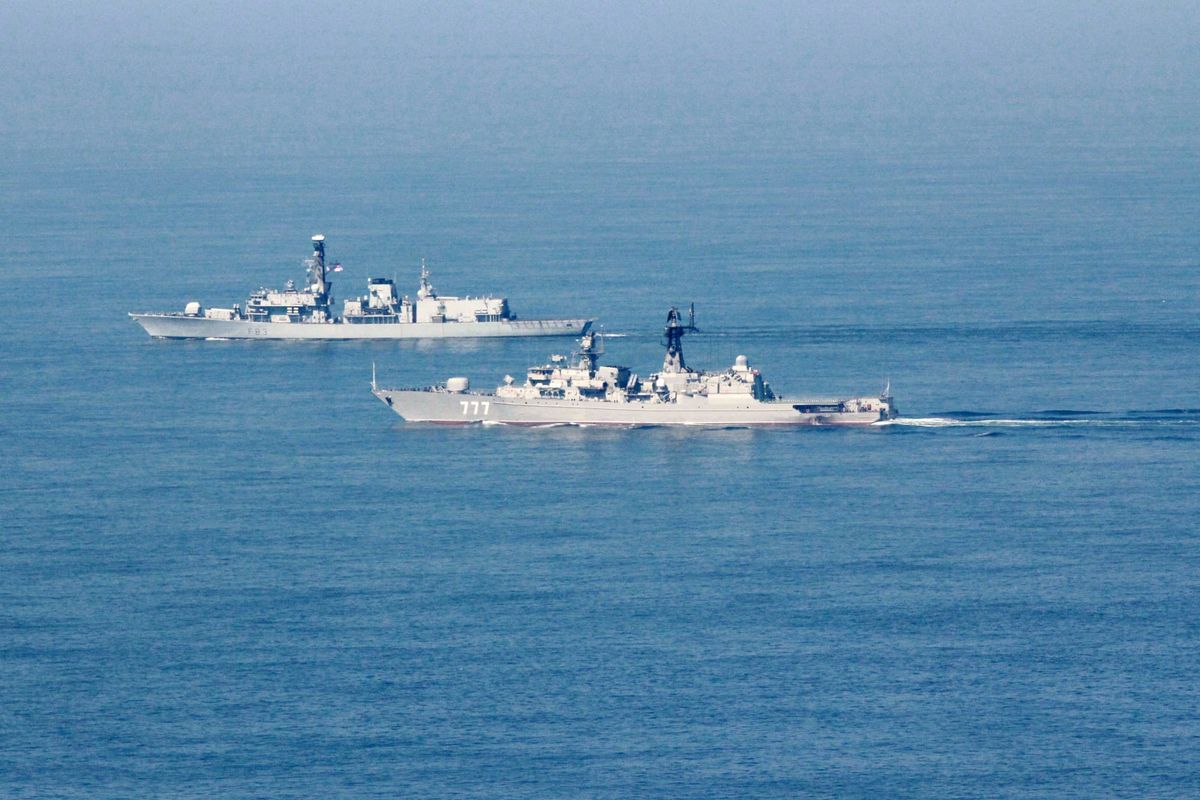
Russian warships escorting sanctioned oil tankers through British waters have driven a sharp rise in Royal Navy monitoring operations, with activations to track Russian movements up 25% over the first seven months of the year, the Ministry of Defence said.
The Royal Navy deployed four warships and naval helicopters over 21 days in July to report on the movements of Russian warships and submarines in UK waters and the North Atlantic. The increase reflects the operational cost of countering Russia's shadow fleet, the ageing tankers Moscow uses to move oil in defiance of Western sanctions.
Much of that effort has centred on the Russian frigate Neustrashimy, which has repeatedly crossed the UK's area of responsibility to escort shadow fleet tankers through recognised shipping lanes. The Ministry of Defence said the escort role was tying up valuable Russian operational capacity, while the British response has absorbed a growing number of ship-days.
Tension surfaced on 20 July, when Neustrashimy carried out gunnery firings outside UK and French territorial waters. The patrol ship HMS Tyne closed to five nautical miles and continued to gather intelligence as the Russian warship fired, observing around 20 rounds from its 100mm main gun and 30mm battery, according to the Ministry of Defence.
"Through sustained presence and close cooperation with allies, HMS Tyne was ideally suited to this task, providing reassurance and monitoring while enabling other Fleet units to continue their operational commitments," said Lieutenant Commander Sam Fields, the ship's commanding officer.
HMS Severn was activated twice during the month. It first shadowed the frigate Admiral Grigorovich as the Russian ship sailed from the French island of Ushant towards Dover. It was then sent on a three-day mission to track Neustrashimy as the frigate escorted the tanker Vulkan from the Baltic through the Dover Strait, taking over monitoring duties from HMS Mersey.
The pattern points to a sustained commitment. Russian escort missions run on Moscow's timetable, and each transit through the UK's area of responsibility pulls a British warship onto station to match it.
Britain has sanctioned more than 500 shadow fleet vessels and interdicted the tanker Smyrtos in the English Channel in June. The Ministry of Defence said Russian oil and gas revenues fell 24% year-on-year in 2025, and that disrupting the fleet was aimed at cutting the revenue sustaining Russia's war in Ukraine.
A fourth warship, the Type 23 frigate HMS Somerset, returned to Plymouth on Friday after a four-month North Atlantic deployment. The vessel tracked sub-surface activity and helped protect Britain's nuclear deterrent, having sailed more than 24,000 nautical miles with an embarked Merlin anti-submarine helicopter.
Wildcat helicopters from 815 Naval Air Squadron and Merlin submarine-hunting aircraft supported the surface ships through the month. The Ministry of Defence framed the workload as evidence of British resolve, though the rising tally of activations also marks the cost of holding the line against a persistent Russian presence.
Comments ()