
Iran War Strains US Pacific Readiness as Missile Stocks Fall
The US war with Iran is placing growing strain on Washington’s ability to prepare for a second, potentially larger conflict in the Pacific.
A new Congressional Budget Office assessment estimates that military operations against Iran had cost the Pentagon about $38bn by 1 August. More consequential for US strategy is its finding that the campaign has depleted missile-defence interceptors that would also be needed during a conflict with China.
The CBO describes the heavy expenditure of interceptors as the principal opportunity cost of the Iran war. It warns that reduced inventories could become especially problematic against an opponent with large numbers of ballistic and cruise missiles, identifying a possible conflict with China over Taiwan as the clearest example.
Replacing munitions used against Iran accounts for $21.7bn of the CBO estimate. That includes $13.1bn for missile-defence interceptors, $7.3bn for land-attack cruise missiles and $1.2bn for other weapons.
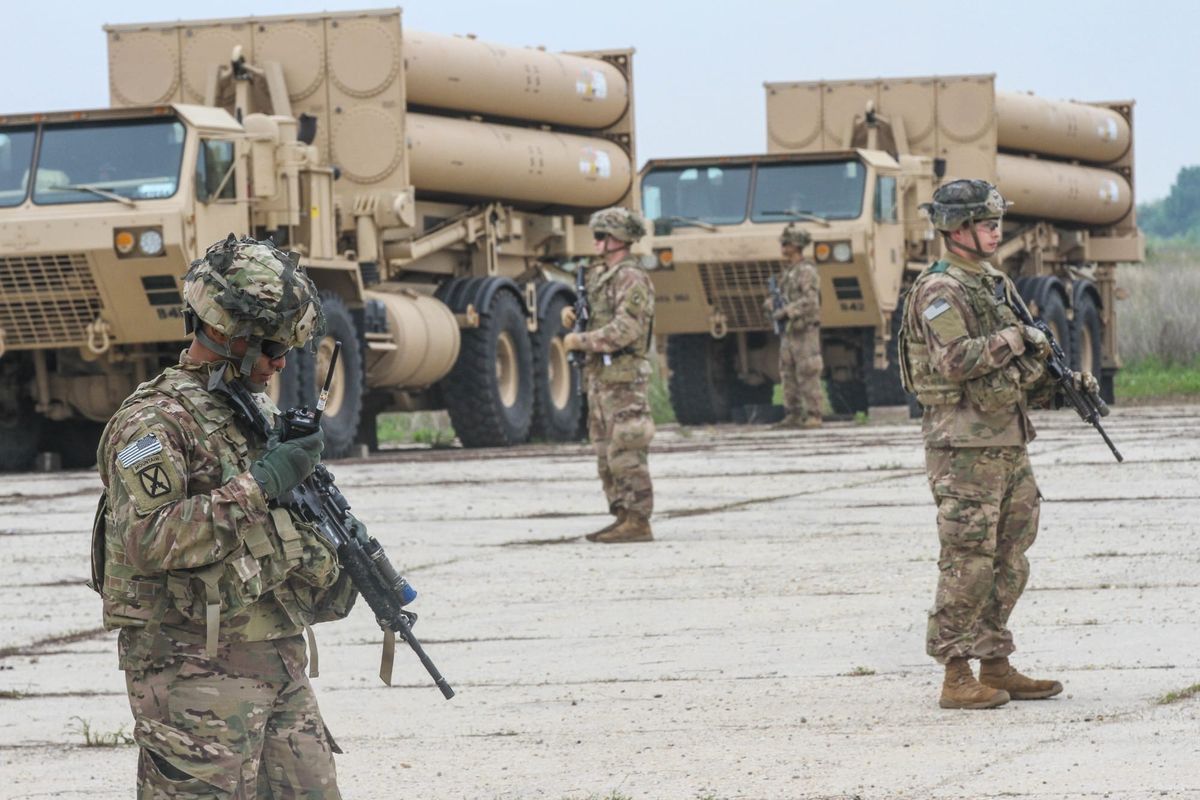
The defensive weapons consumed include Patriot, Terminal High Altitude Area Defense, Standard Missile 3 and Standard Missile 6 interceptors. Significant numbers were first used to defend Israel against Iranian attacks during the war in June 2025, before the current campaign reduced inventories further.
By comparing reported expenditure with the number of interceptors purchased, the CBO estimates that the United States has probably used between half and two-thirds of its inventory across the missile-defence weapons it examined since June 2025.
The estimate does not apply to the entire US missile-defence arsenal, but it covers several of the principal systems used to protect American forces, bases and warships from missile attack.
Those systems would have important roles in the Pacific. Patriot and THAAD batteries can protect land-based forces and critical infrastructure, while SM-3 and SM-6 interceptors are deployed aboard Aegis warships. In a conflict over Taiwan, such weapons could be needed to defend ships, airfields, logistics hubs, command facilities and other assets across a much larger theatre.
China would present a far greater missile challenge than Iran. The CBO notes that Beijing possesses many more ballistic and cruise missiles, has a much larger economic base and can produce additional weapons more rapidly.
A Pacific conflict could therefore expose US forces to sustained attacks while placing greater pressure on the interceptor inventory now being depleted in the Middle East.
The geographical scale would compound the problem. American forces would need to protect multiple locations and naval formations while retaining enough interceptors for successive waves of attack. Smaller inventories would give commanders less room to absorb early losses, reinforce threatened areas or sustain defensive operations if the conflict continued.
Replenishment will be slow. The CBO estimates that rebuilding interceptor stocks will probably take at least five years even if production increases. Previous efforts to expand missile production have involved delays of between three and five years from the placement of new orders to delivery.
This gap between wartime consumption and industrial production lies at the centre of the Pacific readiness problem. Interceptors can be expended in hours or days, while their replacements require specialised components, skilled labour and production lines that cannot be expanded quickly.
The pressure also extends to offensive weapons. US forces have used large numbers of Tomahawk and Joint Air-to-Surface Standoff Missiles against Iran.
The CBO judges that stocks of these weapons were proportionately less constrained before the war, but warns that continued expenditure could eventually limit their availability for future operations.
The risk will grow if the Iran campaign continues at a high tempo. The CBO estimates that operations would add about $2bn a month at the levels recorded in May and June, rising to approximately $3bn at July’s intensity. The monthly cost could climb further if US forces continue using expensive missiles in large numbers.
The Pentagon rejects suggestions that the military lacks the weapons required for its current objectives. Spokesman Sean Parnell has said US forces retain everything needed to strike at a time and place of the president’s choosing.
That assurance addresses the military’s ability to conduct offensive operations. The CBO’s warning concerns how long US forces could defend themselves against repeated missile attacks during another conflict.
There are important limits to the assessment. US weapons inventories are classified, and the Pentagon did not provide the information requested by the CBO.
The agency instead relied on government databases and publicly reported expenditure, leaving considerable uncertainty around its estimates. Pacific readiness would also depend on allied forces, base dispersal, offensive operations against Chinese launchers and many capabilities beyond missile defence.
The report therefore does not establish that the United States would be unable to fight in the Pacific. It shows that commanders would enter such a conflict with less defensive depth and an industrial base unable to restore it quickly.
Washington is trying to deter China while sustaining a missile-intensive war elsewhere. The CBO’s findings show that both demands are drawing on the same limited stocks, and that each additional month of operations against Iran could deepen a Pacific readiness problem that will take years to reverse.
Comments ()