
US Marines Test Fireteam-Level Attack Drones in South Korea
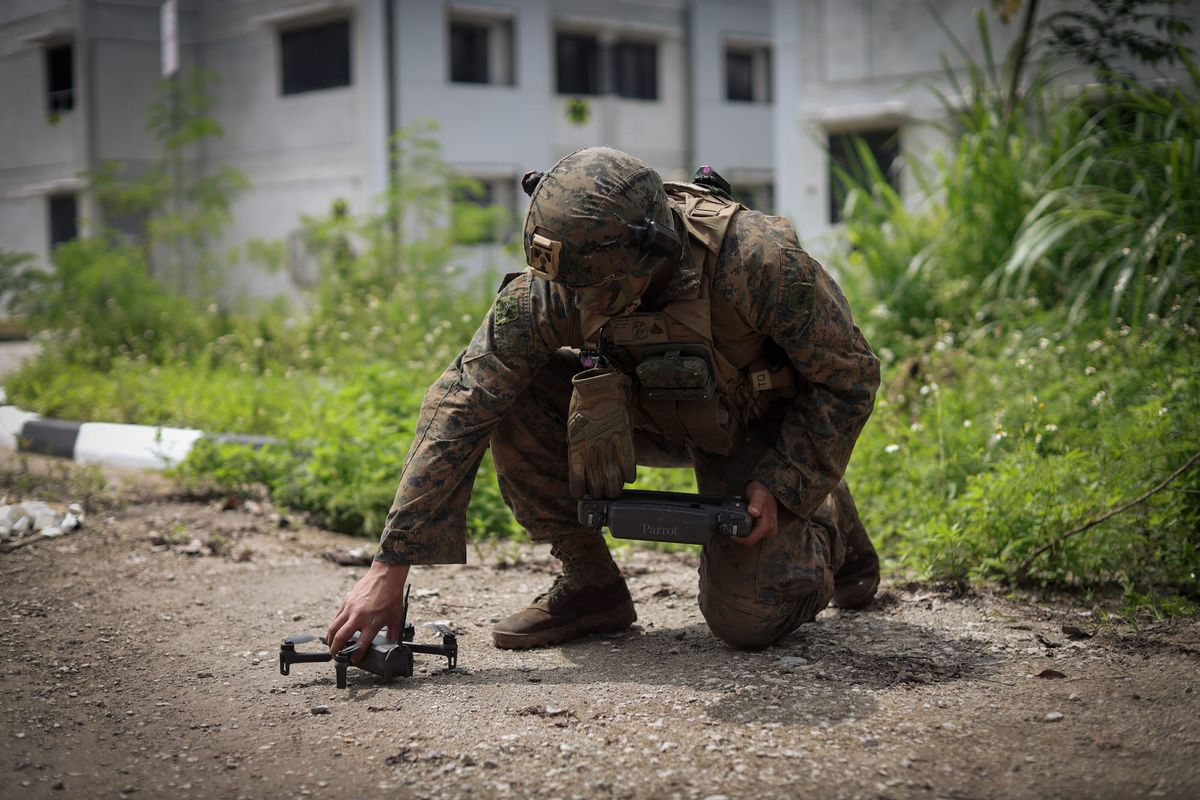
The US Marine Corps is beginning to give its smallest combat formations precision-strike power previously beyond the reach of traditional infantry weapons.
Marines operating under 4th Marine Regiment have completed the Corps’ first series of live-fire first-person view attack-drone flights in South Korea.
The training shows how lessons from modern drone warfare, particularly conflicts in Eastern Europe, are being incorporated into conventional American units in the Western Pacific.
The series involved two separate events. Marines from 3rd Light Armored Reconnaissance Battalion conducted the first range on 30 July, followed by a second iteration involving 3rd Battalion, 7th Marine Regiment on 5 August.
Both units are forward deployed to the Indo-Pacific through the Marine Corps’ Unit Deployment Program.
During the exercises, Marines used Neros Archer drones to conduct explosive strikes against armoured and personnel targets. The first-person view system sends video from the drone’s onboard camera to its operator, who manually guides it towards the target.
The Marine Corps places the Archer’s effective range at approximately 20 kilometres. That is far beyond the one-to-two-kilometre reach it assigns to existing systems available to rifle squads and platoons.
This gives small Marine units another way to strike targets without depending on larger firing platforms that are not organic to their formations. The Corps says the capability can provide units down to fireteam level with their own precision fires.
The development forms part of a wider redesign of Marine infantry.
The Marine Corps’ 2025 Force Design update confirmed that the service was returning to a 13-Marine rifle squad and adding a dedicated precision-fires Marine responsible for operating small lethal drones.
It also identified FPV one-way attack drones among the capabilities being integrated through the Corps’ Infantry Battalion Experimentation programme.
This points towards attack-drone proficiency becoming part of conventional infantry operations rather than remaining concentrated inside specialist drone teams.
The service established its Marine Corps Attack Drone Team at Quantico on 3 January 2025 in response to the rapid proliferation of armed FPV systems in contemporary conflicts.
The team has since helped develop tactics, training standards and certification programmes intended to move the technology into operational formations. US Marine Corps
In December 2025, the Corps said it intended to have every infantry battalion, reconnaissance battalion and littoral combat team equipped to employ FPV attack drones by May 2026.
The South Korean ranges show that at least some forward-deployed conventional units have now progressed to live-fire employment, although they do not confirm that the service met its fielding target across every eligible formation.
The exercise also shows that the capability is not being confined to the Marine Littoral Regiments created for distributed operations around strategically important islands and coastlines. The forces involved included a light armoured reconnaissance battalion and a conventional infantry battalion operating under 4th Marine Regiment.
Cost helps explain the urgency. In 2025, the Marine Corps estimated that its first kinetic FPV strike cost less than $5,000, compared with more than $80,000 for existing precision missiles held at infantry battalion level.
The figure illustrates the potential economics of attack drones, but it is not a direct comparison of equivalent weapons. The Corps did not provide a detailed breakdown of what the $5,000 estimate included, while a small FPV drone does not carry the same warhead as a larger guided missile.
It can still give dispersed troops a relatively inexpensive way to attack armoured vehicles and personnel from beyond the range of most direct-fire infantry weapons.
Conducting the training in South Korea also required more than supplying the drones. The regiment worked with the US Eighth Army, 2nd Infantry Division, 2nd Combat Aviation Brigade and South Korean authorities to establish the necessary airspace, regulatory and safety arrangements.
That institutional work will be necessary if armed drones are to become a routine part of US and allied training. Their employment must be coordinated with crewed aircraft, helicopters and other friendly unmanned systems operating in the same airspace.
The exercise leaves several important questions unanswered. The Marine Corps has not disclosed how the Archer performed under electronic attack or whether the ranges included realistic jamming and counter-drone threats. It has also provided no information about hit rates, the number of drones employed or the types of warheads used.
The release does not say that South Korean personnel operated the drones, and it does not connect the training to a specific contingency involving either North Korea or China. Its immediate importance lies in the arrival of armed FPV drones among forward-deployed conventional Marines.
A successful range strike does not establish how the system will perform on a contested battlefield. It does show how quickly the Marine Corps’ conception of infantry firepower is changing. The rifle squad of the future may carry precision weapons capable of striking targets many kilometres beyond its line of sight.

Comments ()