
Why Australia Still Needs the Five Power Defence Arrangements
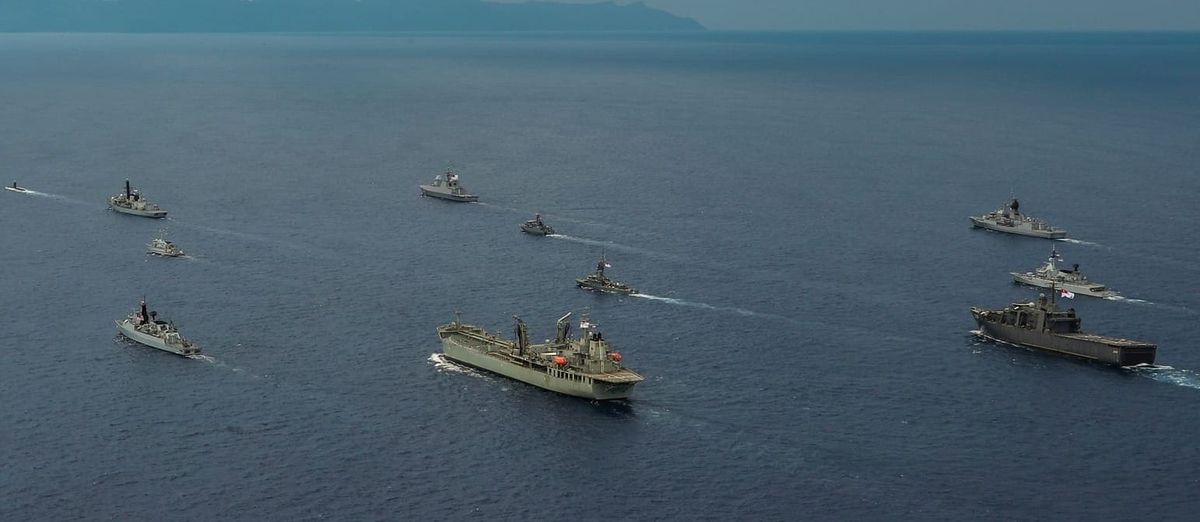
Australia is preparing its armed forces to deter an adversary from projecting military power through its northern approaches. One of the institutions helping Canberra strengthen its regional defences dates back to 1971, when five countries established a security framework to protect Malaysia and Singapore.
This week, Australia deployed around 220 military personnel, F-35A fighters, P-8A maritime patrol aircraft and the replenishment ship HMAS Stalwart to Exercise Bersama Lima 2026. Hosted by Singapore, the exercise brings together five countries under the Five Power Defence Arrangements (FPDA).
The FPDA provides Australia with longstanding military relationships in maritime Southeast Asia, a multinational defence headquarters in Malaysia and regular opportunities to practise complex operations with regional partners. Those connections have acquired greater strategic significance as Canberra seeks to strengthen deterrence and prepare its military for high-intensity conflict.
Yet the arrangement has an important limitation. Unlike NATO's collective-defence pledge, the FPDA commits its members only to consult if Malaysia or Singapore is attacked or threatened. Its members also have different strategic priorities and relationships with China.
As Australia places greater emphasis on collective deterrence, the question is how much this Cold War-era institution can contribute to its evolving defence strategy.
Australia's northern defence strategy
Australia's 2026 National Defence Strategy builds on a strategy of denial introduced in 2024, designed to prevent potential adversaries from successfully projecting military power against the country.
The strategy places particular emphasis on Australia's northern approaches, protecting its economic connections with the wider region and strengthening cooperation with Indo-Pacific partners.
Southeast Asia is central to these objectives. The region contains maritime routes connecting the Indian and Pacific Oceans, including the strategically important Malacca and Singapore straits. Australia's ability to protect its interests depends partly on maintaining close military relationships with countries along these routes.
The FPDA offers an established framework for doing so.
Its permanent military headquarters, the Headquarters Integrated Area Defence System (HQIADS), is located at Royal Malaysian Air Force Base Butterworth in Penang. Staffed by personnel from all five members, the headquarters coordinates exercises and develops common procedures for multinational operations.
Butterworth is also important to Australia's wider military presence in Southeast Asia. Under the separate bilateral Operation Gateway, Australian P-8A aircraft regularly conduct maritime surveillance missions from the Malaysian base over the northeast Indian Ocean and South China Sea.
In June, three Australian P-8As completed a deployment from Butterworth, gathering information on maritime activity in some of the world's busiest shipping corridors.
The base therefore supports both the FPDA's multinational activities and Australia's bilateral defence cooperation with Malaysia. In September, the two governments reaffirmed its strategic importance and welcomed infrastructure upgrades expected to be completed by the end of 2026.
Australia's relationship with Singapore is also expanding. A memorandum of understanding signed in October 2025 provides for greater Australian military access in and through Singapore, including more frequent port calls and aircraft stopovers. Singaporean forces will also receive increased access to training facilities in Australia.
These bilateral relationships operate independently of the FPDA, but the arrangement reinforces them through decades of common training, military exchanges and operational planning.
A security framework with limited commitments
Established after Britain's decision to withdraw most of its forces from east of Suez, the FPDA commits its five members to consult in the event of an externally organised or supported armed attack, or threat of attack, against Malaysia or Singapore.
Unlike NATO's collective-defence pledge, the FPDA provides no obligation to come to another member's military assistance. The five governments instead decide what measures, if any, should be taken jointly or separately.
Nevertheless, recurring military exercises give the FPDA an operational dimension that extends beyond political consultation.
Research published by the Lowy Institute in August 2025 found that FPDA exercises expose Malaysian and Singaporean forces to demanding combat scenarios, shared communications procedures and multinational command structures.
The arrangement also provides Australia with a means of building military cooperation without requiring Southeast Asian partners to enter a formal alliance.
Malaysia, in particular, maintains a policy of non-alignment while cultivating defence relationships with Western countries and China.
Writing for Singapore's S. Rajaratnam School of International Studies in February, Malaysian defence scholar Adam Leong Kok Wey argued that the FPDA's consultative structure allows Kuala Lumpur to preserve this independence while benefiting from military training, advanced technologies and a limited form of indirect deterrence.
For Canberra, preserving that flexibility matters. Regional defence cooperation depends on partners with different strategic interests remaining willing to train and operate together.
Can the FPDA keep pace?
The more immediate challenge concerns military capability.
Australia, Singapore and Britain increasingly operate advanced aircraft, sensors and networked command systems. Malaysia's armed forces face a more difficult modernisation process, creating potential obstacles to integrating all five militaries in sophisticated operations.
Leong highlighted these technological disparities following Bersama Lima 2025, which brought together Australian F-35A fighters and a British carrier strike group led by HMS Prince of Wales.
Another RSIS researcher, Ian Li, warned in May that emerging cyber, information and space domains, alongside artificial intelligence and unmanned weapons systems, present operational challenges that the FPDA cannot afford to ignore.
The organisation has begun responding. Recent exercises have incorporated cyber and information operations, unmanned aircraft and humanitarian assistance scenarios. In May 2025, the five defence chiefs also endorsed a roadmap to develop the arrangement's capabilities for conventional and non-conventional operations over the following five years.
The ability to integrate different national forces remains dependent on the equipment, personnel and resources that each country can commit.
The FPDA's future will therefore rest partly on whether its members can turn increasingly complex exercises into practical warfighting capabilities while preserving the political flexibility that has sustained the arrangement.
In September, Australia and Malaysia reaffirmed their support for the continued evolution and modernisation of FPDA cooperation. Malaysia is due to host the next FPDA Defence Ministers' Meeting and Exercise Suman Protector in 2027.
For Australia, the FPDA provides a longstanding foundation for military cooperation in a region central to its defence strategy. Its real value lies in maintaining the relationships, military familiarity and combined capabilities that Canberra may need in a future crisis.
Whether those preparations would translate into collective military action remains a decision for the five governments.
Comments ()