
US Marines prepare to take their island missile strategy closer to Taiwan
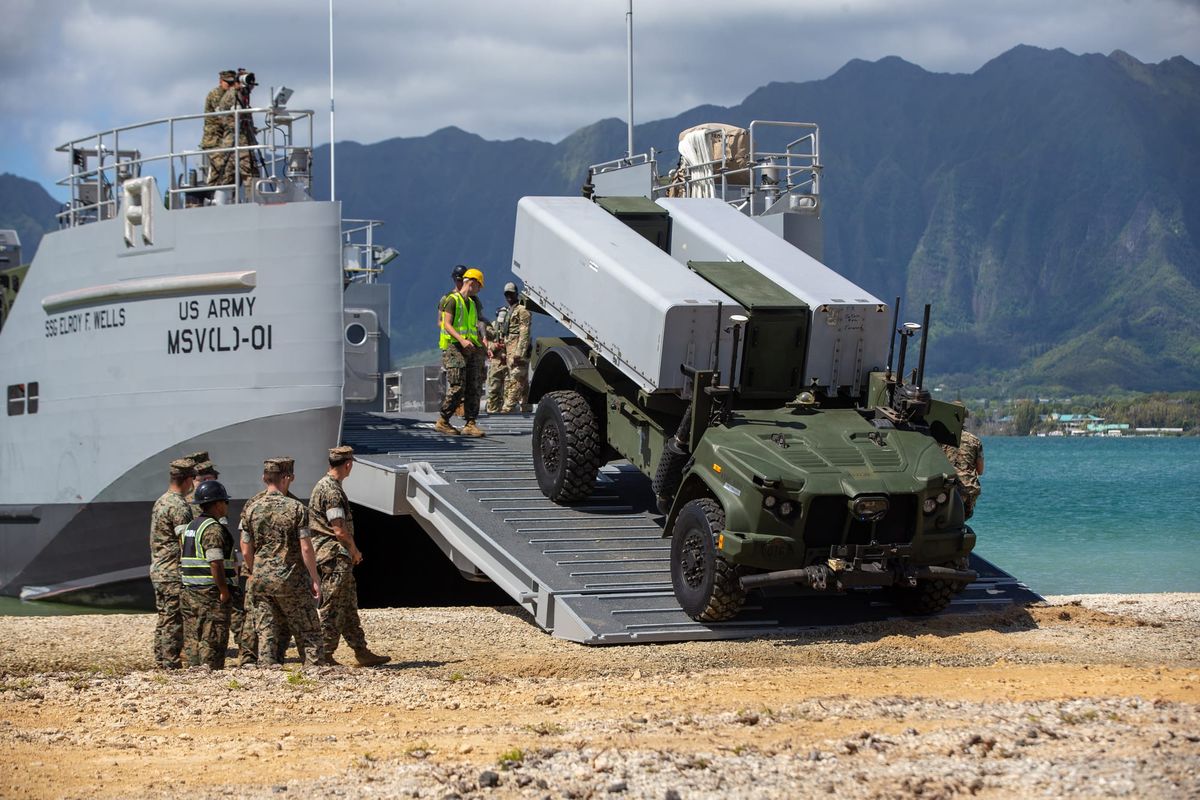
US Marines are preparing to deploy mobile anti-ship missile launchers to Japan’s Yonaguni island this month. The planned exercise would bring weapons designed to threaten warships from land to an island just over 100km from Taiwan.
The waters between the two islands are a route Chinese naval vessels use to move between the East China Sea and the Pacific. Positions ashore could give the Marines another way to threaten ships using that passage, alongside the weapons carried by aircraft and warships.
Japanese defence ministry planning documents, published by Yonaguni’s town government, list the 12th Marine Littoral Regiment and the Navy-Marine Expeditionary Ship Interdiction System, or NMESIS, for Keen Sword 27.
The exercise is scheduled for 19–29 October. The equipment list also includes short-range air-defence systems and radar. Deployment details remain subject to change.
Each NMESIS launcher carries two Naval Strike Missiles on a remotely operated ground vehicle. It gives small Marine units the ability to engage surface ships from positions ashore. The wider operational concept calls for mobile forces that are difficult to detect, working alongside allies inside areas an adversary can threaten.
The intended effect is to complicate an opposing fleet’s movements and force it to account for dispersed missile positions. Those units would also face surveillance and attack themselves. Their usefulness would depend on finding targets, moving between firing positions and maintaining supplies while under pressure.
The Okinawa-based 12th regiment received NMESIS in June. Hawaii’s 3rd Marine Littoral Regiment received the system in November 2024 and has taken it to Philippine exercises. These deployments are building experience with the equipment, terrain and partnerships needed to put the concept into practice.
Training in Hawaii shows some of the work involved. From 28 September to 2 October, the 3rd regiment’s missile battery rehearsed reconnaissance, selecting and occupying positions, establishing security and moving rapidly.
Marines practised processing firing missions and coordinating distributed command posts alongside patrolling and casualty care. The firing missions were simulated.
These tasks are notable because a mobile launcher remains dependent on people and information beyond its immediate position. A battery must receive usable targeting data and firing instructions while maintaining enough security to keep operating.
During KAMANDAG in the Philippines in June 2025, Marines moved NMESIS into a concealed position in the Batanes islands. A US Navy P-8A Poseidon patrol aircraft supplied identification and targeting data for simulated engagements in the Luzon Strait. The rehearsal illustrated the connections between aircraft, headquarters and launchers behind a maritime strike.
Yonaguni’s plans likewise describe the support arrangements around the weapons. Its airport and Kubura fishing port are listed for equipment transport. Separately, Japanese Self-Defence Forces communications units are scheduled to establish links across Yonaguni, Ishigaki and Miyako.
The transport and communications rehearsals illustrate the wider support needed for dispersed operations. In a conflict, crews would also need replacement missiles, fuel, repairs and medical support as an enemy sought to disrupt them.
Keeping that network functioning would determine whether the Marines could sustain pressure on an opposing fleet after the first missiles were fired.
Comments ()