
First Brazil-Assembled Gripen E Flies as Exports Grow
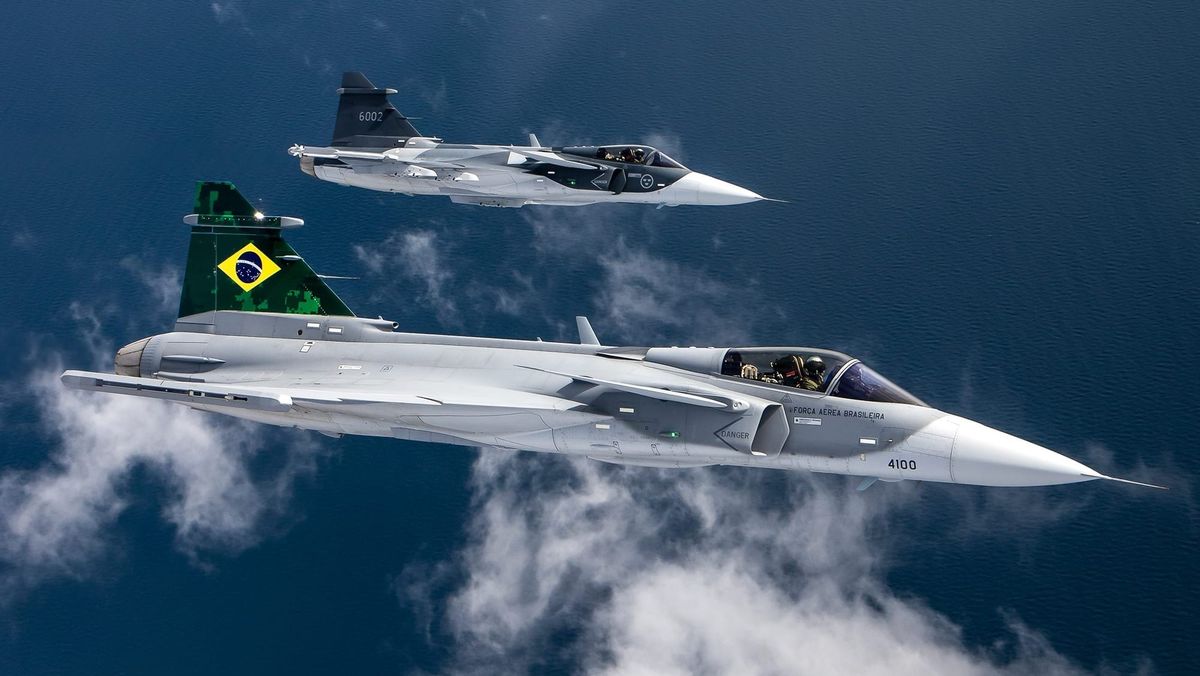
When Saab chief test pilot Jakob Högberg took the first Brazilian-assembled Gripen E into the air at Embraer's Gavião Peixoto aerodrome on 6 October, the flight carried significance well beyond the Brazilian Air Force. It was the first Gripen built outside Sweden to fly, and it comes as Saab works to raise production on the back of a run of new export orders.
The sortie was the aircraft's first production acceptance test, planned and run by Embraer flight engineers with support from Saab. Once the acceptance campaign is complete, the jet will be certified and handed to the First Air Defence Group at Anápolis, which currently operates 10 Gripens.
It is the first of 15 aircraft Embraer is building under Brazil's 2014 contract for 36 Gripen E/Fs, a deal built around technology transfer that has given South America its only supersonic fighter production line.
Brazil may yet lean further on that capability. On 4 June, Swedish Defence Minister Pål Jonson said Brazil had expressed interest in 20 more Gripen E/Fs, to be manufactured in Brazil, after the two governments signed a declaration of intent that includes plans for a Gripen innovation centre in the country.
Separately, in July, Saab and Embraer signed a Heads of Agreement for the potential assembly of 20 additional aircraft at Gavião Peixoto, which could serve Brazilian or international customers. Both initiatives still depend on further agreements.
The export pipeline behind that agreement has grown over the past year. Thailand ordered three Gripen Es and one two-seat Gripen F in August 2025 as a first batch towards a requirement for 12 aircraft, and Colombia followed in November with a €3.1 billion contract for 15 Es and two Fs to replace its Kfirs.
The largest new order came on 30 June, when Saab signed a SEK24.6 billion contract with Sweden's procurement agency for 16 Gripen Es for Ukraine. The aircraft are due for delivery in 2029–30, and the purchase is financed through the EU's Ukraine loan facility with British support. Sweden is also donating up to 16 older Gripen C/Ds to bridge the gap.
Those commitments sit behind Saab's July announcement that it aims to lift Gripen output from about 15 aircraft a year to between 25 and 30. The Gavião Peixoto flight shows that Brazil can assemble and flight-test a Gripen E, and a confirmed expansion there would give Saab production capacity beyond Linköping. It also strengthens the company's pitch elsewhere, where it has identified Canada and Portugal as potential production sites.
The risks essentially lie in execution. One aircraft does not establish a sustained production rate, Brazil's extra 20 jets remain a statement of intent, and a Saab executive said in February that Colombia's first delivery was scheduled for 2028.
Raising output to 25–30 aircraft a year will also depend on suppliers keeping pace. Nearly 12 years after Brazil signed for the Gripen, though, the technology transfer it insisted on is beginning to serve Saab's export ambitions as well as Brazil's own air force.
Comments ()