
US Targets PAC-3 and THAAD Propulsion Bottleneck in Missile Production Push
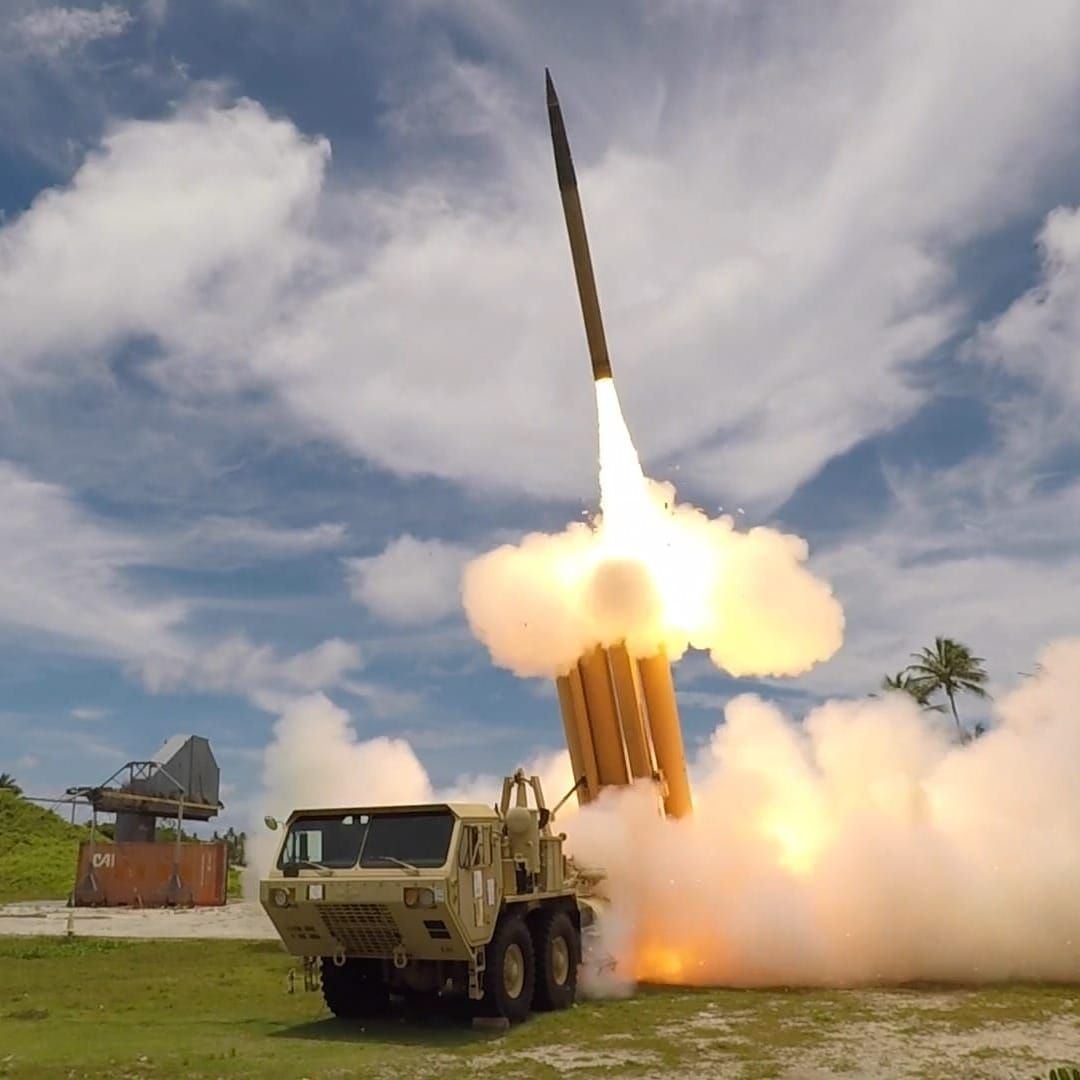
The United States has signed two seven-year framework agreements with L3Harris to expand propulsion production for PAC-3 MSE and THAAD interceptors, bringing a critical node in the missile supply chain into Washington’s wider production drive.
The agreements extend the strategy below prime contractor Lockheed Martin and into the factories supplying the components that make each interceptor move. Higher final assembly capacity will achieve little unless rocket motors, guidance systems and other specialised parts arrive at the required rate.
For the PAC-3 Missile Segment Enhancement interceptor, L3Harris will expand production of its two-pulse solid rocket motor, Attitude Control Motors and Lethality Enhancer. The main motor provides the speed and range needed to engage aircraft, cruise missiles and tactical ballistic missiles. The much smaller control motors refine the interceptor’s course as it closes on its target.
L3Harris says each PAC-3 interceptor contains 180 egg-sized attitude-control motors. At full utilisation of the planned 2,000-missile annual MSE production rate, completed interceptors would therefore incorporate 360,000 ACMs a year. That calculation excludes motors produced for testing, spares or other PAC-3 variants.
The separate THAAD agreement covers the solid rocket boost motor that launches the interceptor and the Liquid Divert and Attitude Control System used to manoeuvre its kill vehicle during the final stage of an engagement. THAAD is designed to intercept ballistic missiles both inside and outside the atmosphere.
The propulsion deal supports a much larger expansion already underway. On 24 June, the US government awarded Lockheed Martin a seven-year undefinitized contract action worth up to $35 billion to increase THAAD interceptor production from 96 to 400 missiles annually. The Pentagon has also reached an agreement with BAE Systems to quadruple production of THAAD’s infrared seeker.
For PAC-3, Washington plans to raise annual MSE production from approximately 600 to 2,000 missiles. The Pentagon has also agreed with Boeing to triple PAC-3 seeker production and reached a separate arrangement with Honeywell covering other critical components.
This supplier-level approach reflects a basic industrial reality. Lockheed Martin cannot deliver thousands of additional interceptors if a single specialised component remains scarce. The latest deals are intended to keep propulsion, guidance and final assembly capacity aligned as production increases.
L3Harris has already begun expanding its manufacturing footprint. In June, the company broke ground on two self-funded PAC-3 propulsion facilities in Camden, Arkansas, covering approximately 145,000 square feet. The buildings will add automated casting and X-ray inspection systems alongside expanded curing capacity. L3Harris is building approximately 60 facilities and adding nearly one million square feet across sites in Arkansas, Alabama and Virginia.
In April, L3Harris closed a first-of-its-kind $1 billion Department of War investment in the form of a convertible preferred security in its Missile Solutions business. The unit has since confidentially filed for an initial public offering planned for the second half of 2026, subject to market conditions.
The new L3Harris agreements do not disclose their value, existing component-production rates or a timetable for reaching higher output. They also contain no specific interceptor order or procurement quantity. Their significance lies in connecting Washington’s headline missile targets to the less visible suppliers that will determine whether those targets can be met.


Comments ()