
How the US Army is preparing for war in the Pacific
From missile launches in northern Australia to Apache helicopters operating at sea, the US Army is adapting its forces for a potential conflict across the Indo-Pacific.
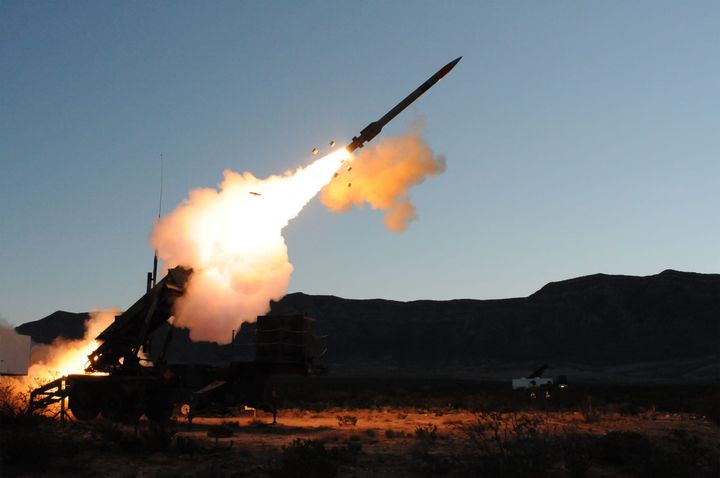
In July 2025, a US Army missile launcher deployed to Australia's Northern Territory fired a Standard Missile-6 (SM-6) at a maritime target, sinking it during Exercise Talisman Sabre.
The demonstration marked the first time the Army's Mid-Range Capability, known as Typhon, had been fired west of the International Date Line. More importantly, it showed how American ground forces could help control contested waters using missiles launched from allied territory.
It also illustrated a wider transformation underway across US Army Pacific (USARPAC). In a region traditionally dominated by naval and air power, the Army is preparing to strike ships, defend strategically important territory and sustain dispersed forces across enormous distances.
Speaking on 12 October, USARPAC commander General Ronald Clark emphasised the importance of forward positioning.
"Our responsibility to deliver warfighting capability at the place and time of our choosing is really tied to posture," he said.
Australia becomes a testing ground
Australia is emerging as an important location for demonstrating how US and allied land forces could contribute to maritime warfare.
During Talisman Sabre 2025, the Army's 3rd Multi-Domain Task Force deployed Typhon to the Northern Territory and successfully engaged a maritime target using an SM-6.
The exercise also validated targeting and command-and-control coordination with Australia's 10th Brigade, demonstrating how allied ground forces could integrate long-range strikes.
Typhon can launch both SM-6 missiles and Tomahawk cruise missiles, giving Army commanders options for engaging maritime and land targets at considerable distances.
Australia is developing complementary capabilities.
On 25 July 2025, the Australian Army fired its first Precision Strike Missile (PrSM) from HIMARS at Mount Bundey in the Northern Territory. The weapon has a maximum range exceeding 500 kilometres, significantly extending the Army's land-based strike reach.
These developments reflect a shared objective: using mobile ground forces to complicate an adversary's freedom of movement through strategically important maritime areas.
Multi-Domain Task Forces and the first island chain
Central to the US approach are Multi-Domain Task Forces (MDTFs), formations designed to combine long-range precision fires, intelligence, electronic warfare and other capabilities.
Their purpose is to support the wider joint force by detecting, targeting and threatening adversary assets across multiple domains.
Typhon deployments illustrate how this concept is being tested.
The system was deployed to the Philippines in April 2024 and appeared at Marine Corps Air Station Iwakuni in Japan during exercises in September 2025.
In 2026, US Army systems were deployed to Kanoya Air Base in southern Japan, with temporary storage at Kadena Air Base on Okinawa subsequently announced.
These activities demonstrate growing experience moving advanced missile systems between allied operating locations. They do not establish permanent basing arrangements.
Positioning such weapons along the first island chain could complicate Chinese naval operations during a conflict. However, their effectiveness would depend on reliable targeting information, secure communications and the ability to survive retaliatory strikes.
Apache helicopters move into maritime warfare
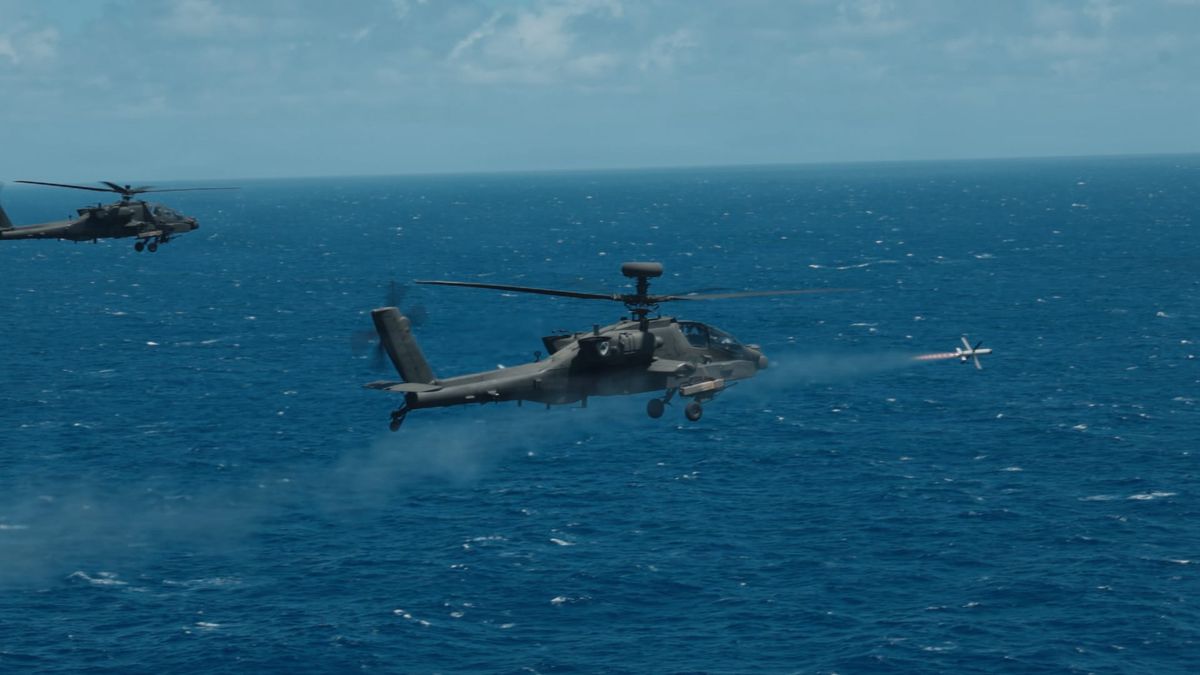
The Army is also experimenting with attack helicopters in maritime environments.
During RIMPAC 2026 near Hawaii, AH-64 Apache helicopters from the 16th Combat Aviation Brigade fired Spike non-line-of-sight missiles at the decommissioned cruiser USS Mobile Bay.
The helicopters participated in a multinational sinking exercise, rather than independently sinking the vessel.
Separately, Apache helicopters from the 25th Combat Aviation Brigade conducted deck-landing operations aboard the amphibious assault ship USS Essex.
These activities demonstrate how Army aviation could support naval operations, including reconnaissance, coastal defence and engagements against maritime targets.
Nevertheless, Apaches face limitations in range, survivability and maintenance when operating over water or from ships.
Their value lies in providing additional options near contested coastlines and islands, not replacing specialised naval aviation.
The logistics challenge
Deploying missile launchers and helicopters is only part of the problem. Sustaining them across the Pacific presents a potentially greater challenge.
US Army units may have to operate from widely separated islands and bases, with limited infrastructure and supply routes vulnerable to disruption.
Australia is becoming part of the solution.
In May 2024, the US Army and Australian Defence Force signed a logistics agreement covering American equipment stored at Bandiana in Victoria.
The arrangement established procedures for maintaining forward-positioned equipment, reducing the requirement to transport everything from the United States for each exercise or contingency.
USARPAC is also using Operation Pathways to strengthen regional access and interoperability. Clark said the programme now encompasses 54 exercises annually, allowing American forces to train alongside partners on their territory.
But prepositioned equipment and rehearsed logistics cannot eliminate the difficulties of wartime sustainment. Dispersed units would still need fuel, ammunition, spare parts and protection against missile and drone attacks.
Can landpower deter China?
The Army's evolving Pacific strategy is not about replacing the US Navy or Air Force. It is about creating additional threats that an adversary must account for.
Mobile missile launchers could threaten ships from land, while air defence systems protect critical bases and aviation units provide supporting capabilities.
Distributed forces could complicate Chinese military planning by creating multiple potential launch locations and reducing reliance on a small number of major bases.
Yet the strategy also depends on political access to allied territory, resilient communications and logistics networks capable of surviving sustained attacks.
Exercises in Australia, Japan and the Philippines demonstrate growing technical and organisational integration. They do not prove those arrangements would survive the pressures of a major conflict.
The decisive question is whether the Army can sustain distributed combat power across the Pacific while remaining mobile and difficult to target.
For the United States and its allies, that may determine whether land forces can meaningfully influence a future maritime conflict.

Comments ()