
US Air Force tests rocket-based military cargo delivery aboard SpaceX flight
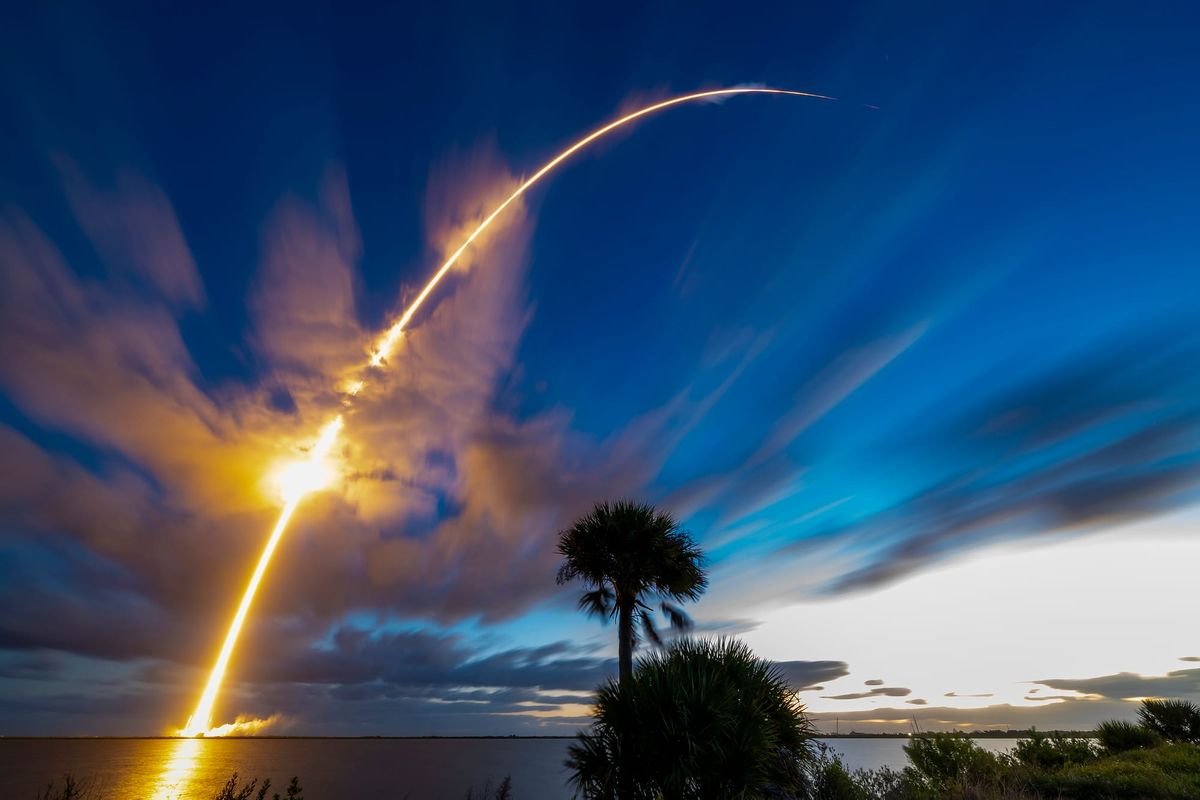
The US Air Force has tested military cargo delivery equipment aboard a SpaceX mission, advancing research into whether commercial rockets could transport critical supplies to distant locations faster than conventional military aircraft.
The Air Force Research Laboratory (AFRL) conducted the experiment during SpaceX's Bandwagon-5 rideshare mission, launched from Cape Canaveral Space Force Station, Florida, on 20 October.
The experiment used SpaceX's Starfall reentry capsule, carrying experimental cargo pods equipped with sensors designed to measure temperature, vibration and shock during flight.
It forms part of AFRL's Rocket Cargo programme, which is examining the feasibility of using commercial launch vehicles for rapid military logistics.
The laboratory announced the demonstration on 22 October. It did not establish that an operational point-to-point cargo delivery capability had been achieved.
Testing military supplies in space
AFRL developed cargo pods designed to accommodate different types of military equipment while monitoring the conditions experienced during spaceflight.
Test loads included batteries, emergency medical equipment, survival gear, a satellite communications-enabled tracker and a reverse-osmosis desalination system.
Researchers focused on how sensitive electronics and other essential supplies would withstand the stresses associated with launch and reentry.
Engineers also assessed whether a life raft could fit inside the capsule for possible future experiments.
Air Force Brigadier General Douglas Wickert, AFRL's commander, said the flight would help the laboratory work with commercial partners to reduce technical risks and collect performance data.
The Pentagon has not disclosed the experimental cargo's weight, detailed sensor results or a timeline for operational deployment.
Rockets for contested logistics
Rocket Cargo is intended to explore an alternative to conventional airlift, particularly in regions where military runways, roads or ports are unavailable, damaged or under threat.
Potential applications include supplying isolated forces, supporting expeditionary operations, delivering emergency equipment and responding to natural disasters or hazardous incidents.
Unlike smaller experimental delivery systems, the broader programme is examining whether commercial rockets could eventually move substantial quantities of cargo over intercontinental distances.
The challenge extends beyond launching equipment into space. A practical military system would also need to return its payload safely, reach a useful delivery location and allow personnel to recover supplies quickly.
Such operations would need to be reliable and economically viable before they could supplement established military transport networks.
Leveraging commercial space investment
The October experiment took place aboard SpaceX's Bandwagon-5 mission, launched on a Falcon 9 rocket.
AFRL is investigating how commercial launch and reentry technologies could be adapted to military requirements without developing an entirely new rocket fleet.
The laboratory's Rocket Cargo programme emphasises acquiring commercial transportation services rather than funding the development of launch vehicles.
Its research also examines delivery costs, operational speed and the practical requirements of loading, transporting and recovering military cargo.
The latest flight provides an opportunity to collect data for those assessments, but it does not demonstrate a deployable military transport service.
Further testing will determine whether rocket-based logistics can offer a useful combination of speed, payload capacity, reliability and cost for operations in contested environments.
Comments ()