
Rheinmetall restores British tank and artillery barrel production
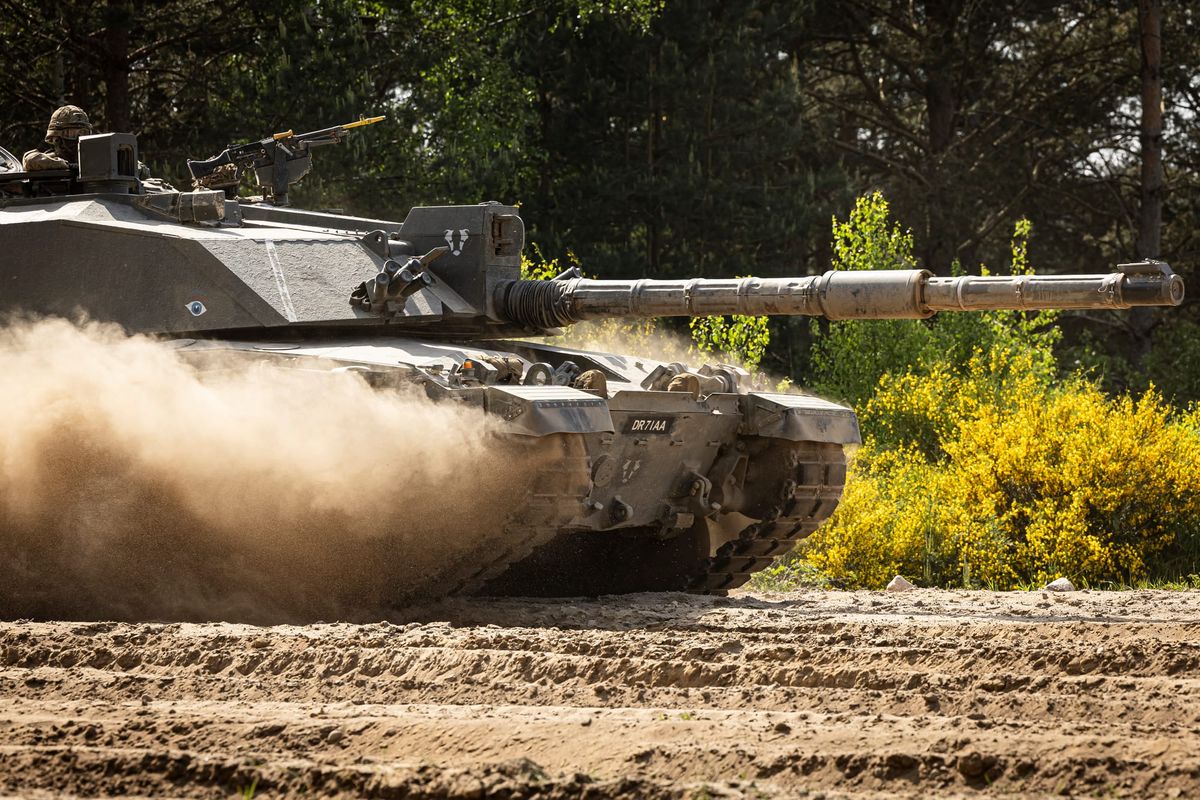
Britain has restored domestic manufacturing of large-calibre gun systems with the opening of Rheinmetall UK's new production hall in Telford, marking a significant expansion of its defence industrial base.
Defence Secretary Wes Streeting officially opened the facility on 22 October alongside the Chief of the General Staff, General Sir Roly Walker, and Rheinmetall chief executive Armin Papperger.
The hall manufactures barrels and breeches for 120mm tank guns and 155mm artillery systems. The Ministry of Defence said the opening restored a sovereign manufacturing capability absent for approximately two decades and would support 100 skilled jobs.
Rheinmetall plans to expand the workforce as production increases.
Manufacturing for tanks and artillery
The facility will produce weapon systems for the Challenger 3 main battle tank and future artillery platforms.
According to Rheinmetall, its planned peak annual capacity is up to 245 barrels across both calibres and more than 50 breeches. The company says breech production began in May 2026, followed by barrel production in June.
The RCH 155 programme is a major early customer for the facility.
In May 2026, the British government announced plans to procure 72 RCH 155 self-propelled howitzers under a contract worth nearly £1 billion, including initial training and in-service support.
The weapon systems, including barrels, breeches, recoil mechanisms and trunnions, are to be manufactured at Telford. KNDS UK will produce the Boxer drive module at Stockport.
Initial vehicle deliveries are expected in 2028.
Rheinmetall also plans to incorporate British steel from Sheffield Forgemasters into production, strengthening the domestic supply chain.
British workforce trained in Germany
Specialist British workers received training at Rheinmetall's Unterlüß manufacturing facility in Germany before returning to establish production in Telford.
Their training covered precision engineering, quality assurance and the manufacture of large-calibre weapon components.
The Ministry of Defence said Rheinmetall moved from an empty facility to production in eight months, having taken over the site in autumn 2025.
"Britain is back in the business of making the weapons that our Armed Forces need to defend the nation against our adversaries," Streeting said.
Rheinmetall intends to work with British small and medium-sized enterprises to develop longer-term domestic supply chains.
UK-Germany defence partnership
The Telford investment forms part of the industrial cooperation established under the Trinity House Agreement, signed by Britain and Germany in October 2024.
The agreement supports closer bilateral defence cooperation, including joint equipment development and manufacturing.
Rheinmetall confirmed Telford as the location for its gun barrel facility in May 2025, initially targeting production by 2027. Manufacturing began in 2026.
The company's investment also complements its wider work in Britain on Challenger 3 and Boxer armoured vehicle programmes.
Papperger said the opening marked an important step in rebuilding Britain's defence industrial capacity and strengthening cooperation with NATO allies.
Rebuilding domestic manufacturing capacity
Large-calibre gun manufacturing requires specialised machinery, precision engineering and a trained workforce, making production capacity difficult to expand quickly.
The new facility allows Britain to manufacture and assemble selected major weapon components domestically, reducing reliance on overseas facilities for those production stages.
It also adds capacity to Rheinmetall's European manufacturing network at a time of growing demand for artillery and armoured vehicle systems.
Neither the government nor Rheinmetall has disclosed a complete production cost breakdown or a detailed delivery schedule for finished weapons from the Telford hall.
The longer-term test will be whether the facility reaches its stated production capacity and meets delivery commitments for the British Army's tank and artillery programmes.


Comments ()