
Turkey, Qatar, Pakistan and Indonesia form new defence industry partnership
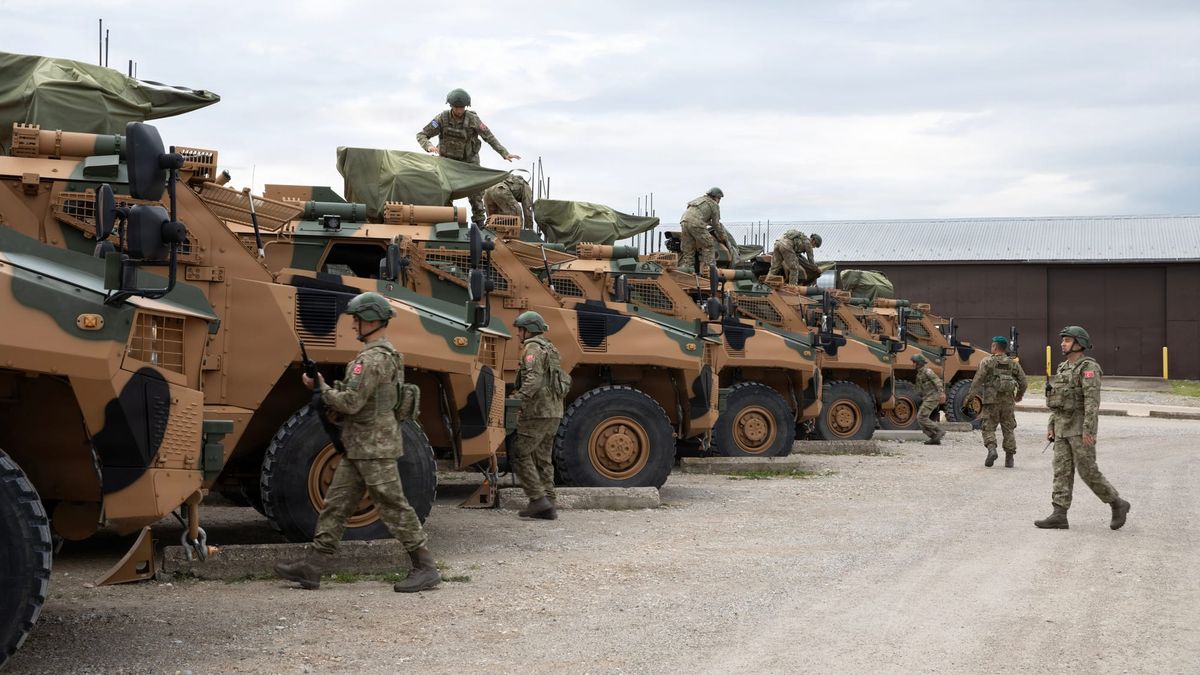
Turkey, Qatar, Pakistan and Indonesia have signed a multilateral defence industry agreement intended to expand military production, technical cooperation and research, potentially linking existing manufacturing partnerships across the Middle East and Southeast Asia.
The Badr memorandum of understanding was signed in Doha on 21 October by representatives of the four countries' defence ministries, alongside Pakistan's defence production authority and Turkey's Presidency of Defence Industries.
Turkish Defence Minister Yaşar Güler, Pakistani Defence Minister Khawaja Muhammad Asif, Qatar's Deputy Prime Minister and Minister of State for Defence Affairs Sheikh Saoud bin Abdulrahman bin Hassan Al Thani, and Indonesian Deputy Defence Minister Yusuf Jauhari attended the signing.
According to Qatar's Ministry of Defence, the memorandum aims to strengthen defence manufacturing, technical military training and research and development.
The agreement establishes a framework for cooperation rather than a confirmed joint procurement programme. No budget, production schedule or initial project has been publicly announced.
A broader defence manufacturing network
The Badr initiative seeks to combine the participating countries' industrial capabilities and improve their ability to develop and manufacture military equipment.
Pakistan's defence minister said Islamabad wanted to explore joint production, technology transfer and industrial cooperation using the complementary strengths of the four defence sectors.
Qatar's official account also said other friendly countries could join the initiative under criteria agreed by the existing participants.
That provision creates scope for the framework to expand beyond its founding members, although no additional participants have been announced.
For Turkey, Badr provides another avenue to develop defence-industrial relationships with countries that already purchase or manufacture Turkish military equipment.
The proposed cooperation could allow participating manufacturers to share development costs, production responsibilities and technical expertise. However, the memorandum does not establish how those arrangements would operate.
Existing projects provide a foundation
Turkey has established defence manufacturing relationships with both Pakistan and Indonesia.
Turkish state-owned defence company ASFAT has managed Pakistan's four-ship MILGEM corvette programme, involving construction of two vessels in Istanbul and two at Karachi Shipyard.
The programme demonstrates an established model of naval construction cooperation between Turkish and Pakistani industry.
Turkey's FNSS and Indonesia's PT Pindad have also jointly developed the Kaplan MT, known in Indonesia as the Harimau medium tank.
Their 18-vehicle production agreement allocated the first ten tanks to manufacturing in Turkey and the remaining eight to Indonesia, supported by technology transfer and technical assistance.
These projects illustrate the industrial relationships Badr could build upon, although neither has been identified as part of the new memorandum.
Indonesia connects the initiative to Southeast Asia
Indonesia is the only Southeast Asian participant in Badr, extending the initiative's geographical reach beyond Turkey's established Middle Eastern and South Asian defence relationships.
Jakarta has pursued defence procurement and industrial cooperation with a wide range of international partners, including Turkey, Australia and Western suppliers.
In February 2026, Australia and Indonesia signed a Treaty on Common Security, establishing mechanisms for closer consultation and security cooperation.
The countries also completed Exercise Keris Woomera in October, involving Australian and Indonesian military forces across several operational domains.
Indonesia's participation in Badr is consistent with its broader approach to diversifying defence relationships and strengthening domestic manufacturing capabilities.
For Indonesian industry, the prospective value lies in access to additional joint development and production opportunities. Those benefits will depend on whether the four governments agree on specific projects and technology-transfer arrangements.
Industrial cooperation, not a military alliance
Badr comes amid wider defence cooperation involving Turkey and Pakistan.
In August, the two countries signed a separate joint defence agreement with Saudi Arabia. A ratification bill for that agreement reached Turkey's parliament on 21 October, the same day Badr was signed.
The arrangements have different participants and objectives. The Saudi agreement concerns collective defence and military coordination, while Badr focuses on industrial cooperation.
Neither Qatar nor Indonesia is a party to the Saudi agreement, and Badr's announced provisions contain no mutual defence commitment.
The new memorandum nevertheless reflects efforts by its four participants to deepen defence-industrial cooperation beyond existing bilateral projects.
Its significance will become clearer when the governments identify their first joint production programme, establish funding arrangements or announce specific technology-transfer commitments.

Comments ()