
South Korea Is Rebuilding Its Marine Corps. But for Which War?
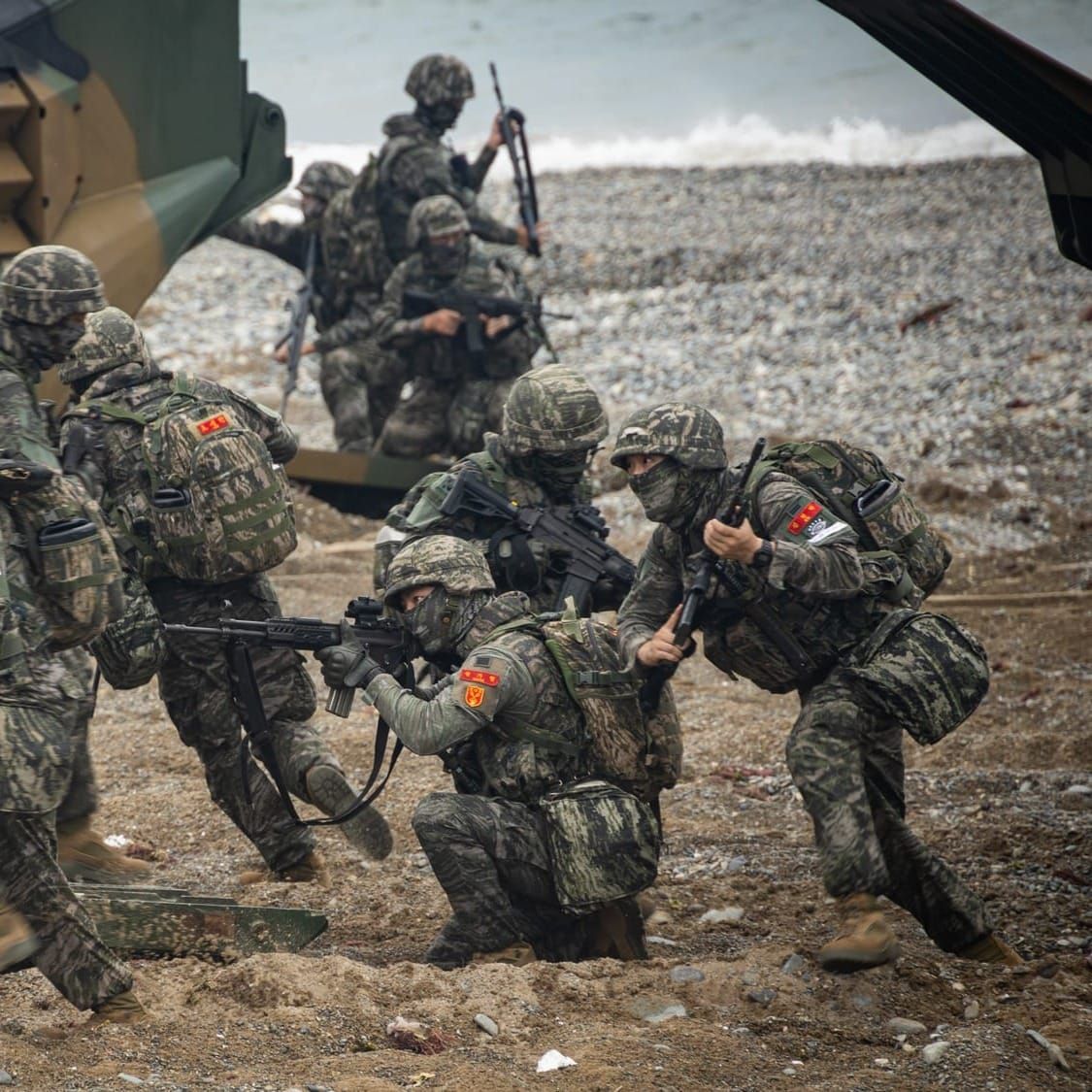
American and South Korean marines will spend 12 days conducting live-fire drills, amphibious operations and logistics training across South Korea from 28 July. The exercise, known as KMEP 26.2, is designed to improve their ability to operate together during a crisis.
It comes as Seoul reverses Marine Corps command arrangements in place for more than 50 years. The overhaul will give the force greater control over its own units, but leaves a larger question unanswered: what kind of war should the newly empowered Marine Corps prepare to fight?
Since 1973, the South Korean Army has controlled the Marine Corps’ two main divisions. Control of the 1st Marine Division is due to return by the end of 2026. Peacetime control of the 2nd will follow in 2028, while its wartime arrangements will be reviewed later. This internal reform is separate from the wider debate over transferring wartime command from the US-led Combined Forces Command.
The Marine Corps will remain part of the Navy, but its commandant will receive greater authority. The government also plans to widen its legal mission beyond amphibious operations to include the defence of South Korea’s frontline islands.
South Korean marines guard vulnerable islands near the disputed maritime border with North Korea, including Yeonpyeong, which North Korean artillery shelled in 2010. They also form the country’s main amphibious force.
The reform corrects a genuine problem. Marine commanders have been responsible for preparing their force without exercising full control over its largest combat units. A clearer chain of command should improve planning, speed up decisions and make responsibility easier to establish.
Yet the reform currently says more about institutional status than military strategy. Seoul has discussed greater independence, a possible Marine operations command and opportunities for Marine officers to reach four-star rank. It has said much less about how the force should adapt to a changing regional battlefield.
KMEP brings that gap into view. The South Koreans are training with III Marine Expeditionary Force, the main US Marine formation permanently based in the western Pacific. The US Marine Corps is reorganising to operate in small, dispersed units across islands and coastlines. These forces would use drones, sensors and mobile missiles to track enemy ships and restrict their movement, particularly during a conflict with China.
Washington’s 2026 defence strategy also says South Korea is capable of taking primary responsibility for deterring North Korea, with more limited American support. That combination could pull the two marine corps in different directions. Seoul needs forces ready to defend the Korean Peninsula, while Washington is placing greater weight on a wider maritime contest with China.
This does not mean South Korea must commit its Marines to a possible war over Taiwan. Such a decision would carry enormous political and military risks. North Korea remains the country’s most immediate threat.
Many capabilities required for the two missions nevertheless overlap. Better drones, mobile missiles, air defences, secure communications and dispersed supply networks would strengthen South Korea’s island defences. They would also allow its marines to work more effectively with American forces during a wider regional crisis.
The return of operational control is therefore the beginning of the reform. Seoul now needs an operational concept connecting the defence of the peninsula with the increasingly contested seas around it.
KMEP 26.2 will show how well American and South Korean marines can operate together. The harder question is whether they are still preparing for the same war.
Comments ()