
Royal Navy faces serious submarine warfare gaps as Russian threat grows
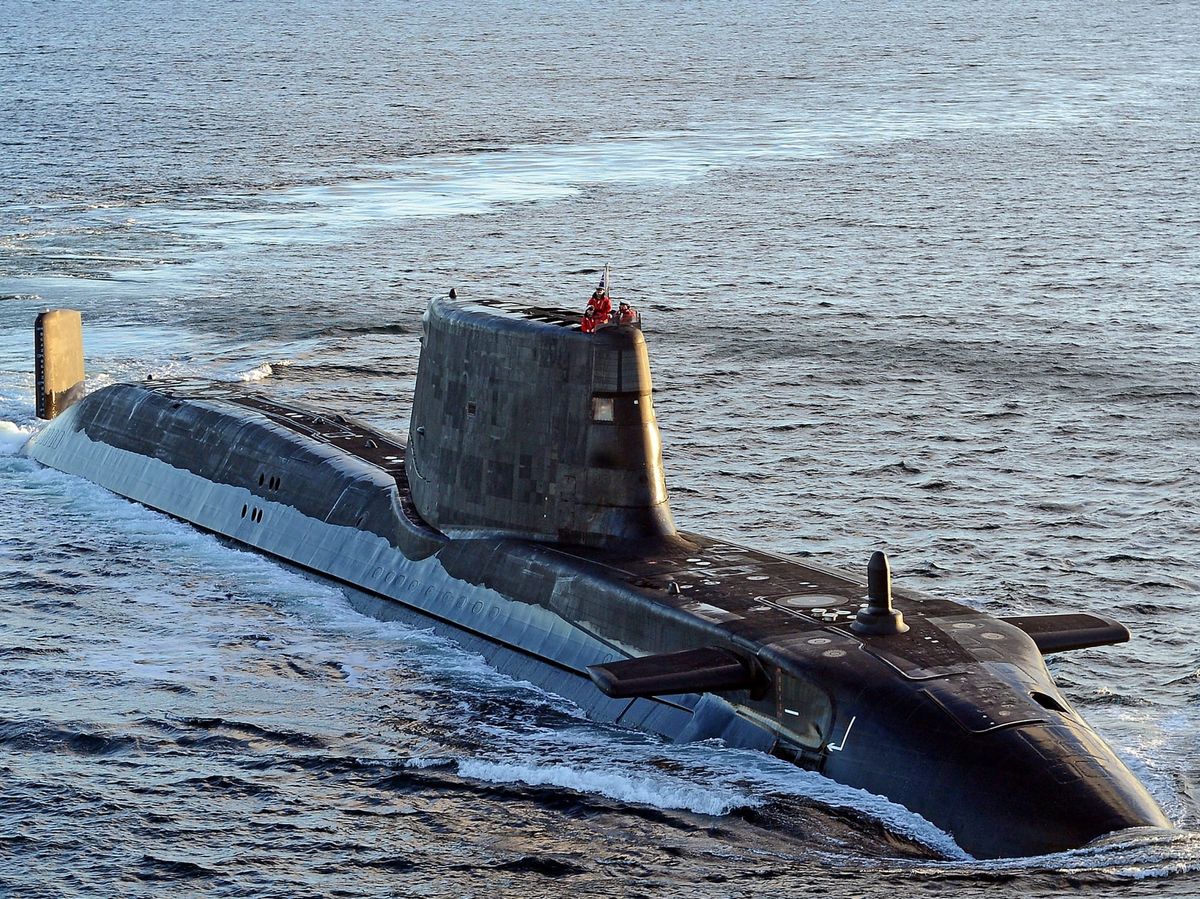
Britain faces serious gaps in its ability to counter Russian submarine activity in the High North, with shortages of specialist frigates and a lapsed under-ice capability threatening its ability to meet NATO commitments, according to a parliamentary report published on 22 October.
The House of Commons Defence Committee said the Royal Navy's limited anti-submarine warfare capacity could leave critical infrastructure, Atlantic supply routes and Britain's nuclear deterrent more exposed to Russian threats.
Its report, Defence in the High North, questions whether the UK can meet its growing regional responsibilities before new warships and submarines enter service.
"The UK needs to be willing to address a hard truth: it does not currently have all the capabilities to operate successfully in the High North," committee chair Tan Dhesi said.
He warned that Russian submarine and seabed sabotage capabilities posed direct risks to Britain and its NATO allies.
Royal Navy faces anti-submarine frigate shortage
The committee identified a shortfall in frigates equipped with towed-array sonar, used to detect and track submarines at extended distances.
Britain has reduced its force to five such frigates against a requirement for eight, creating what the committee described as a serious anti-submarine warfare gap.
The reduction comes as the Royal Navy transitions from ageing Type 23 frigates to the new Type 26 class.
The committee questioned whether that transition had been adequately managed and recommended that no further towed-array-equipped Type 23 frigates leave service until replacements enter service on a one-for-one basis.
It also raised concerns about the availability of destroyers, frigates and nuclear-powered attack submarines, warning that existing fleet pressures could undermine operations before replacement vessels arrive.
Under-ice submarine capability must be restored
The report also criticised the lapse of the Royal Navy's under-ice submarine capability.
The capability previously existed within the Trafalgar-class submarine fleet, whose final vessel retired in 2025.
The Ministry of Defence is working to certify Astute-class attack submarines for under-ice operations, but the committee said Britain had allowed the capability to lapse as the High North became strategically more important.
According to evidence presented to the inquiry, the Royal Navy's most recent submarine Arctic ice exercise took place in 2018.
Operating beneath Arctic ice requires specialist training and equipment, including the ability to surface safely through ice cover.
The committee warned that without a credible under-ice capability, Britain would have less ability to contest Russian submarine operations near the country's northern bases.
Russia's Northern Fleet operates strategic nuclear submarines from the Kola Peninsula, using Arctic waters and ice cover to protect its ballistic missile submarines.
The committee called for rapid restoration of under-ice capability to at least part of the Astute fleet, alongside regular exercises to maintain operational proficiency.
Joint Expeditionary Force could shift north
Beyond naval equipment, the report questioned whether the UK-led Joint Expeditionary Force is making the best use of its resources.
The 10-nation coalition was established to support rapid military cooperation across northern Europe, including the Baltic and High North.
The committee argued that its growing focus on hybrid and sub-threshold threats had limited its development for more demanding military operations.
It recommended reassessing the JEF's contribution to European security within a year of Britain assuming leadership of NATO's Joint Force Command Norfolk.
If retained and strengthened, the force could concentrate more heavily on High North operations, particularly anti-submarine warfare, while aligning more closely with NATO's regional plans.
Such a shift would have implications for the Baltic, where British and allied forces maintain commitments to Estonia and other NATO members.
The committee suggested Britain might need to expand its Army presence in Estonia to brigade strength, comparable with Germany's planned military commitment in Lithuania.
Neither the JEF refocusing nor an expanded British deployment to Estonia has been adopted as government policy.
Pressure on Britain's northern defence commitments
The committee's findings come after the UK took over leadership of NATO's Joint Force Command Norfolk, responsible for the alliance's northwestern operational area.
The High North includes approaches through which Russian submarines could enter the North Atlantic, threatening allied shipping and undersea infrastructure.
Britain is developing its Atlantic Bastion concept to strengthen maritime surveillance and anti-submarine warfare, including greater use of autonomous systems.
However, the committee warned that future technology investments would not resolve immediate shortages in operational ships and submarines.
The government is expected to respond to the report within two months.
Its response will indicate whether ministers intend to retain remaining specialist Type 23 frigates, accelerate the restoration of submarine under-ice operations and reconsider the JEF's regional priorities.
Comments ()