
Philippines plans Kazakhstan embassy to expand ties across Central Asia
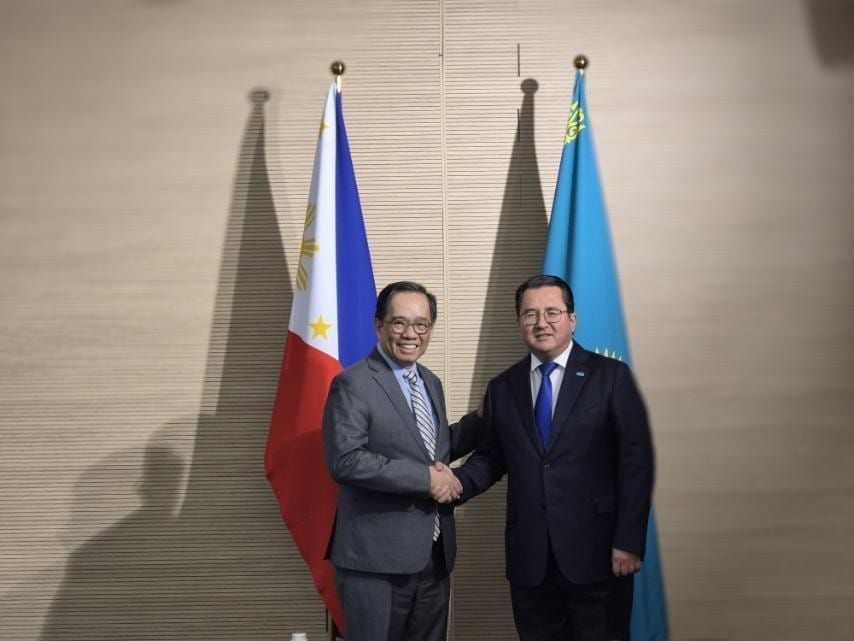
The Philippines is preparing to establish its first resident embassy in Central Asia, with a planned mission in Kazakhstan that would also cover four neighbouring republics.
The proposal featured in political consultations between Philippine and Kazakh officials in Astana in mid-October, the first such meeting between the two countries in 12 years.
According to the Philippine Department of Foreign Affairs (DFA), the embassy would seek concurrent accreditation to Kyrgyzstan, Tajikistan, Turkmenistan and Uzbekistan, potentially giving Manila a permanent diplomatic base serving all five Central Asian states.
Kazakhstan's Foreign Ministry welcomed the planned mission, saying it would strengthen bilateral relations.
The initiative points to a broader effort to expand Philippine diplomatic and economic engagement beyond its established partners, although Manila has not announced a formal Central Asia strategy.
Manila expands its diplomatic presence
The embassy plan predates the latest consultations.
Philippine Foreign Secretary Maria Theresa Lazaro outlined plans for a diplomatic mission in Kazakhstan in October 2025, identifying Central Asia as an area of growing economic interest.
President Ferdinand Marcos Jr reaffirmed the intention in June 2026, announcing planned embassies in Kazakhstan and Ghana as part of a wider expansion of the Philippine diplomatic network.
The latest consultations therefore represent progress on an existing initiative rather than the launch of a new policy.
The Philippine delegation was led by Undersecretary for Policy Leo Herrera-Lim, while Deputy Foreign Minister Arman Issagaliyev headed the Kazakh delegation.
The two countries established their political consultations mechanism in 2013 and held their first meeting in Manila in October 2014.
The resumption of formal consultations after a 12-year interruption could provide a basis for more sustained diplomatic engagement.
Kazakhstan has previously been covered by the Philippine Embassy in Moscow. Establishing a resident mission in Astana would give Manila a more direct presence in the country.
Energy, trade and connectivity
Economic cooperation was central to the discussions.
The two sides examined opportunities in energy, information and communications technology, trade, investment, air connectivity, education and cultural exchanges.
Kazakhstan's Foreign Ministry also reported discussions about establishing an intergovernmental economic commission, strengthening business contacts and easing visa requirements.
For Manila, Kazakhstan offers a potential entry point into a region with significant energy and mineral resources.
For Astana, stronger ties with the Philippines could expand its commercial and diplomatic relationships in Southeast Asia.
The discussions also covered cooperation through the United Nations and ASEAN, alongside regional and international developments.
However, neither government announced a major investment agreement, new transport route or specific energy project following the talks.
An emerging Central Asia strategy?
The proposed embassy's regional accreditation is the clearest indication that Manila intends to pursue more systematic engagement across Central Asia.
Rather than immediately establishing separate missions in each republic, the Philippines plans to use Astana as a diplomatic base for relations across the region.
That could make regular political dialogue easier and help identify commercial opportunities in countries where Philippine engagement has historically been limited.
The initiative also comes as Central Asian governments seek to broaden their own international relationships and economic partnerships.
There is insufficient evidence, however, to portray Manila's outreach as an attempt to counter China or Russia, or as the beginning of a Philippine security role in Central Asia.
Official statements have concentrated on economic cooperation, connectivity and diplomatic relations.
The immediate test will be whether Manila opens the embassy, obtains accreditation to the four neighbouring republics and follows the consultations with concrete agreements.
For now, the planned mission marks an expansion of Philippine diplomatic ambitions rather than the establishment of a fully developed Central Asia strategy.

Comments ()