
NATO's Black Sea Defences Face Growing Threat as Romania Shoots Down Drones
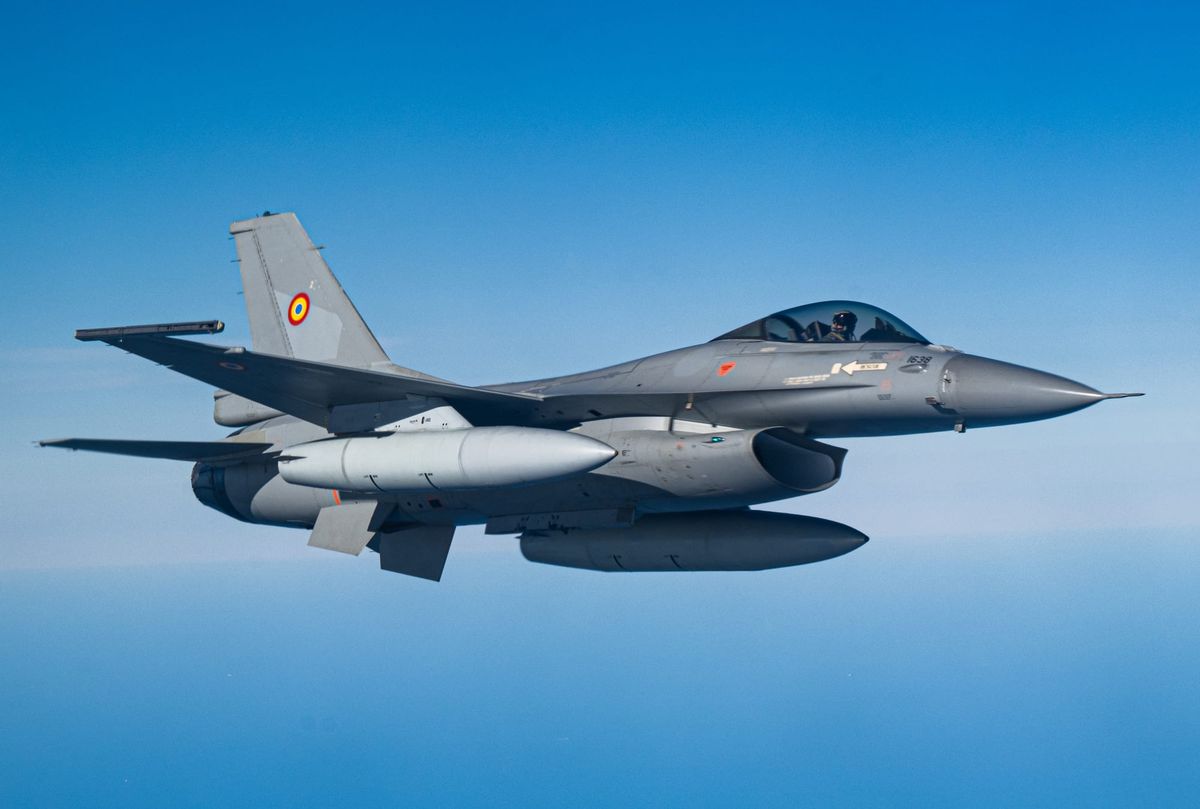
Romanian F-16s have destroyed two Geran-family attack drones over national waters as strikes on commercial shipping and Bulgaria's request for reinforcements increase pressure on NATO's Black Sea defences.
Romanian fighter jets have shot down two attack drones inside NATO airspace over the Black Sea, as repeated incursions and attacks on commercial shipping intensify security concerns along the alliance's southeastern flank.
Two Romanian Air Force F-16s destroyed the drones over Romania's territorial waters near Sulina on Saturday, 17 October, following their detection by military radar.
The Romanian Ministry of National Defence identified both aircraft as jet-propelled attack drones belonging to the Geran family, weapons associated with Russia's campaign against Ukraine.
The interceptions came after a week of drone activity near the Romanian border and attacks on merchant vessels operating close to NATO territory.
The incidents have prompted Romania to seek an alliance-level discussion on Black Sea defence, while neighbouring Bulgaria has formally requested additional NATO combat aircraft and counter-drone systems.
Together, the developments are increasing pressure on NATO to strengthen regional air and maritime security without becoming directly involved in the Russia-Ukraine war.
Romania moves from tracking drones to destroying them
Romania's Defence Ministry said its radar systems detected a group of aerial targets approximately 120 kilometres east of Snake Island, travelling southwest.
Two F-16s scrambled from the 86th Air Base at Borcea at 17:43 local time.
The first drone entered Romanian airspace shortly before being destroyed at 18:01 southeast of Sulina. The second was shot down four minutes later, east of the town.
Both engagements occurred over Romania's territorial waters, which form part of its sovereign airspace.
Defence Minister Radu Miruță subsequently said the aircraft were probably Russian-made Geran-4 drones, travelling at approximately 450 kilometres per hour.
The exact variant has not been independently established.
Romania had already intercepted and destroyed an intruding drone over land in July, but the latest engagements involved faster jet-powered aircraft operating above the Black Sea.
The Defence Ministry reported eight separate radar detections near the Ukrainian border during the preceding week, including four incidents in which drones briefly entered Romanian airspace.
The frequency of those incursions is placing greater demands on Romanian air surveillance and interception capabilities.
Attacks on shipping widen the security challenge
The drone interceptions followed attacks on commercial vessels near the Danube delta, an important maritime route connecting Ukrainian exports with international shipping.
Two chemical tankers were struck near the Sulina Canal, while further incidents occurred closer to Bulgaria's coastline.
Reuters reported that a NATO military source attributed the tanker strikes to Russian drones. The circumstances and responsibility for individual attacks remain subject to investigation.
The Romanian Defence Ministry has acknowledged that several merchant vessels were struck during the preceding week, including incidents inside Romanian territorial waters.
Commercial shipping has become increasingly exposed as the maritime dimensions of the Russia-Ukraine conflict extend towards NATO's borders.
Russian forces have repeatedly attacked Ukrainian ports and maritime infrastructure, while Ukraine has targeted Russian naval vessels and other military assets in the Black Sea.
Moscow has also claimed attacks against merchant vessels it alleges were carrying military or dual-use supplies for Ukraine. Those claims have not been independently verified.
Attacks on civilian shipping create a security challenge extending beyond the immediate belligerents.
They threaten crews, disrupt commercial traffic and increase the possibility of incidents involving NATO members, particularly where vessels operate close to Romanian and Bulgarian waters.
The Sulina route is especially sensitive because it provides access to the Danube and remains important for Ukrainian trade.
Bulgaria seeks NATO reinforcements
Bulgaria has responded to the deteriorating maritime security situation by formally requesting additional alliance support.
Defence Minister Dimitar Stoyanov said on 16 October that Sofia had asked NATO to deploy combat aircraft and counter-drone systems to strengthen its defences.
The request was addressed to NATO Secretary General Mark Rutte and the alliance's Supreme Allied Commander Europe.
Stoyanov also indicated that Bulgaria would seek closer coordination with Romania and Turkey, the three NATO countries bordering the Black Sea.
Bulgaria expects to join a NATO counter-drone initiative before the end of October.
The request broadens the issue from Romania's national air-defence responsibilities to the protection of NATO's southeastern flank.
NATO already maintains integrated air surveillance and air-defence arrangements across allied territory. Additional fighter deployments, counter-drone equipment and maritime monitoring could strengthen the regional response.
However, no new deployment has yet been announced as a direct consequence of Romania's latest interceptions.
NATO faces a difficult Black Sea security calculation
The alliance must manage two related but legally and operationally different security problems.
Romania has the authority to defend its national airspace, including the airspace above its territorial waters. Its F-16 interceptions fall within that responsibility.
Protecting commercial shipping outside NATO territorial waters is more complicated. The appropriate response depends on the location of an incident, the vessel's nationality, the available evidence and the military risks involved.
NATO must also consider escalation.
An unauthorised drone incursion violates national sovereignty, but it does not automatically establish a deliberate armed attack on the alliance or trigger collective defence under Article 5.
Additional surveillance aircraft, naval coordination and counter-drone systems could improve protection without requiring NATO forces to conduct offensive operations against Russia.
Yet maintaining effective coverage across the Black Sea would demand sustained resources, particularly as faster drones and attacks approaching from different directions complicate defensive planning.
The alliance must also distinguish accidental incursions, navigational failures and deliberate attacks when assessing how to respond.
North Atlantic Council to consider regional defences
Romanian Foreign Minister Oana Țoiu has announced that the North Atlantic Council will discuss Black Sea defence and deterrence on Tuesday, 20 October, at Bucharest's initiative.
The meeting will provide an opportunity for allies to assess the latest incidents and consider whether existing air and maritime security arrangements require reinforcement.
Any concrete decisions remain to be announced.
For Romania and Bulgaria, the immediate requirement is stronger protection of national territory and maritime approaches.
For NATO, the challenge extends to maintaining freedom of commercial navigation while preventing the expanding drone threat from generating a direct confrontation with Russia.
Comments ()