
Japan's fighter scrambles jump 67% as Russian air activity surges
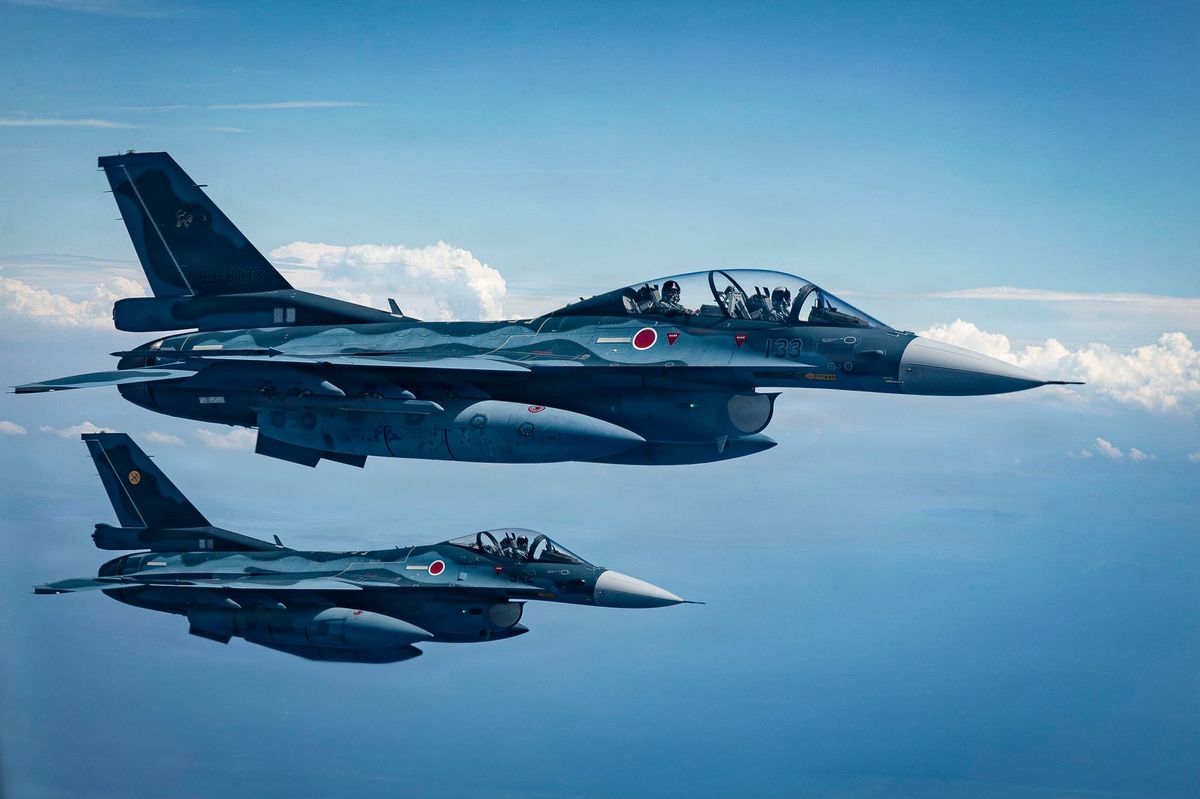
Japan's Air Self-Defense Force scrambled fighter jets 442 times in the first half of fiscal 2026, a 67% increase from a year earlier, as Chinese and Russian military aircraft maintained extensive operations around the country.
Figures released by Japan's Joint Staff Office on 16 October show that scrambles between 1 April and 30 September rose from 265 during the corresponding period of 2025. The six-month total was already equivalent to nearly three-quarters of the 595 scrambles recorded throughout the previous fiscal year.
Chinese aircraft accounted for 285 scrambles, approximately 65% of the total, compared with 198 a year earlier. Scrambles involving Russian aircraft rose from 59 to 152, an increase of 158%, while five were attributed to other aircraft.
Although China remained the principal focus of Japan's air defence responses, Russia contributed slightly more to the overall increase in scrambles. The figures include estimated nationalities where the aircraft involved could not be definitively identified.
Russian aircraft drive sharp rise in northern and western activity
The increase was particularly pronounced outside Japan's southwestern approaches, where Chinese military aviation has traditionally generated the greatest number of responses.
The Northern Air Defense Command, responsible for Hokkaido and northern Honshu, recorded 112 scrambles, up from 53 a year earlier.
The Western command recorded an even sharper increase, from 14 to 102 scrambles, while the Central command's total rose from nine to 27.
The Southwestern command, responsible for the approaches to Okinawa and the East China Sea, remained the busiest with 201 scrambles, compared with 189 during the corresponding period of 2025.
The Joint Staff highlighted repeated Russian IL-20 intelligence-gathering flights over the Sea of Japan and towards the Pacific.
Chinese Y-9 intelligence aircraft were also active over the East China Sea, including flights recorded on five consecutive days between 3 and 7 September.
Japan additionally documented Chinese TB-001 reconnaissance and strike drones operating alongside Y-9 aircraft on 12 June and 18 August.
Chinese and Russian bombers conduct joint long-range flight
One of the most significant operations occurred on 27 June, when Chinese and Russian military aircraft conducted a joint long-range flight around Japan.
According to the Joint Staff, two Chinese H-6 bombers accompanied by two J-16 fighters flew from the East China Sea into the Sea of Japan, where they joined two Russian Tu-95 bombers and two Tu-142 maritime patrol aircraft.
The aircraft subsequently flew together towards the East China Sea before continuing between Okinawa's main island and Miyako Island into the Pacific off Shikoku.
Four Chinese J-16 fighters accompanied the later phase of the operation. Japan also identified a Russian Su-35 fighter among the aircraft involved.
A further Russian bomber operation was recorded on 21 July, when a Tu-95 and an Su-35 flew over the Sea of Japan.
Tokyo has repeatedly expressed concern about growing military coordination between Moscow and Beijing. Japan's 2026 defence white paper described joint bomber flights and naval operations by China and Russia as demonstrations directed against Japan and a serious concern for its security.
Scrambles rise without Japanese airspace violations
Despite the increase in fighter responses, Japan recorded no unauthorised entry into its territorial airspace during the six-month period.
Fighter scrambles are launched to identify, monitor or intercept aircraft approaching Japanese airspace and do not necessarily indicate an airspace violation or hostile action.
Japan's busiest year on record was fiscal 2016, when the Air Self-Defense Force conducted 1,168 scrambles. The latest figures nevertheless mark a sharp increase from recent years.
For Japan, the larger concern is the simultaneous pressure across the East China Sea, the Sea of Japan and the northern Pacific, as Chinese and Russian forces continue operating around the archipelago.
Comments ()