
India and Japan deepen defence ties with plans for missile training and naval technology cooperation
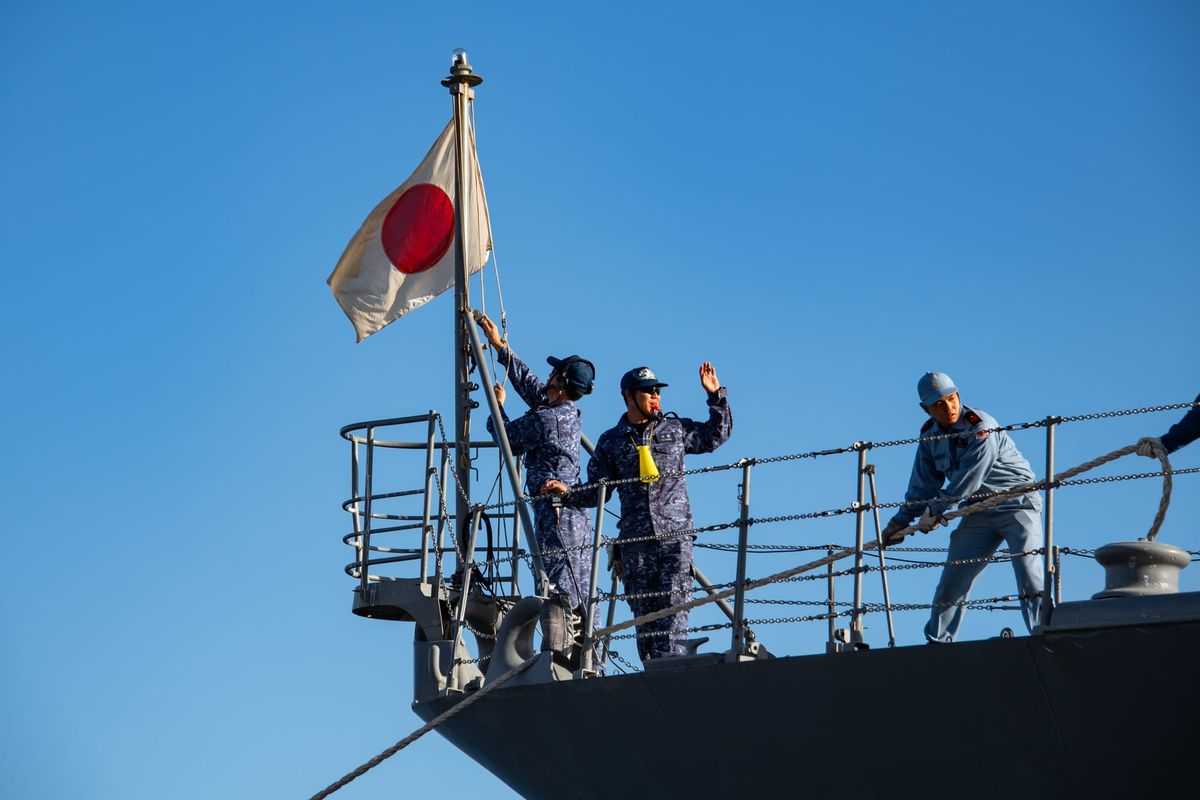
Plans for Japanese surface-to-ship missile training in India and progress on naval technology transfers signal a more operational defence partnership as both countries respond to growing Indo-Pacific security pressures.
India and Japan have agreed to advance plans for Japanese forces to conduct live-fire missile training on Indian territory for the first time, marking a significant step in the development of their defence partnership.
The agreement, announced after the fourth India-Japan foreign and defence ministerial meeting in Tokyo on 19 November, forms part of a wider programme covering naval technology transfers, maritime surveillance, mine countermeasures and defence-industrial cooperation.
The two governments signed a letter of intent that would allow Japan's Self-Defence Forces to use Indian firing ranges, including for surface-to-ship missile training. Although the arrangement does not establish a date for the first exercise, it represents a move towards more demanding forms of bilateral military cooperation.
The initiative reflects a broader convergence between New Delhi and Tokyo over the importance of maritime security and maintaining a rules-based regional order. Both countries face increasingly complex security environments, although their strategic priorities and relationships with China are not identical.
From diplomatic alignment to operational cooperation
The Tokyo meeting brought together Indian Defence Minister Rajnath Singh and External Affairs Minister S. Jaishankar with their Japanese counterparts, Shinjiro Koizumi and Toshimitsu Motegi.
Their joint statement reaffirmed opposition to unilateral attempts to change the status quo and emphasised sovereignty, territorial integrity and the peaceful settlement of disputes.
The language reflects concerns shared by both governments over coercive behaviour in the Indo-Pacific, particularly at sea.
For Japan, the security environment is shaped by Chinese military activity around its southwestern islands, tensions in the East China Sea and the possibility of a conflict involving Taiwan. India must balance its competition with China along their disputed land border against its growing maritime interests in the Indian Ocean.
Neither government has formally described the new missile-training arrangement as directed exclusively against China.
UNICORN moves towards an Indian procurement decision
The meeting also advanced discussions over Japan's Unified Complex Radio Antenna, known as UNICORN, a naval communications system designed to consolidate multiple antenna functions into a more integrated configuration.
The ministers expressed an expectation that the necessary arrangements would be formulated and that India would issue an Acceptance of Necessity by February 2027.
That deadline is an important procurement milestone, but it should not be mistaken for a completed equipment purchase or delivery agreement.
An Acceptance of Necessity is an initial approval in India's defence acquisition process. Subsequent negotiations, approvals and contractual steps would still be required.
Maritime security becomes a wider industrial partnership
Cooperation is expanding beyond exercises and equipment transfers.
The ministers agreed to advance work on mine countermeasures, maritime and air domain awareness, information sharing, search and rescue, and humanitarian assistance.
They also committed to exploring joint development in naval shipbuilding and design.
Mine countermeasures are particularly relevant to the protection of ports, naval approaches and maritime trade routes. The ability to locate and neutralise naval mines can become decisive during a crisis, especially where commercial shipping and military access depend on narrow waterways.
Joint shipbuilding and design, meanwhile, could eventually connect Japanese technology and engineering expertise with India's expanding domestic naval-industrial base.
A broader Indo-Pacific security network
The agreement comes amid expanding military interaction between India and Japan.
Both countries participated in the Malabar 2026 naval exercise with Australia and the United States, while the bilateral Japan-India Maritime Exercise, JAIMEX26, also took place in Japan during November.
The ministers additionally welcomed new trilateral engagement involving India, Japan and the Philippines, as well as cooperation involving Indonesia.
These arrangements illustrate a developing network of overlapping security partnerships across the Indo-Pacific rather than the emergence of a single formal military alliance.
Comments ()