
Germany opts for open drone competition over direct Ghost Bat deal
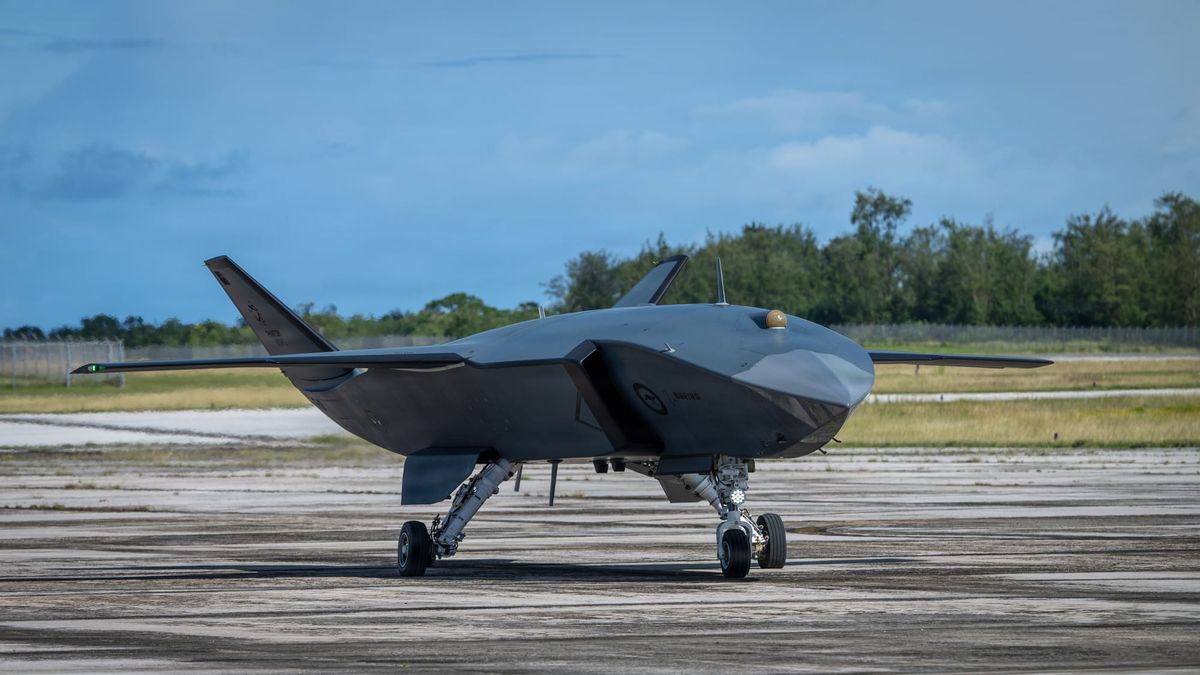
Germany will select its first collaborative combat aircraft through an open competition rather than directly acquire Australia's MQ-28 Ghost Bat, Defence Industry Minister Pat Conroy has confirmed.
Germany will hold an open competition for its first collaborative combat aircraft (CCA), rather than award a direct contract for Australia's MQ-28 Ghost Bat, Defence Industry Minister Pat Conroy confirmed on Monday.
"The German Government has decided to run an open competition to acquire a collaborative combat aircraft," Conroy told reporters in Sydney on 19 October.
Asked whether Germany had lost interest in Ghost Bat, Conroy rejected that interpretation, describing the move as "a slightly different procurement strategy".
Boeing Defence Australia will compete alongside German defence company Rheinmetall, with Conroy saying Canberra was "backing it 100 per cent".
Germany's competitive approach was already public in June, when Conroy said three platforms were being offered. His latest remarks therefore confirm Berlin's procurement direction rather than announce the cancellation of an agreed purchase.
Germany's interest in Ghost Bat
German Defence Minister Boris Pistorius inspected Ghost Bat at RAAF Base Amberley in Queensland on 27 March.
Speaking afterwards at Rheinmetall's facility near Brisbane, Pistorius described the aircraft as a serious competitor and indicated that Germany would make a decision as soon as possible.
Days later, Boeing Australia and Rheinmetall announced a partnership to offer Ghost Bat to the Bundeswehr, with Rheinmetall acting as the German system manager.
The companies promoted the aircraft as a mature solution for Germany's ambition to field collaborative combat aircraft by 2029.
Developed by Boeing Defence Australia alongside the Royal Australian Air Force, Ghost Bat had completed more than 150 flights by March, according to the manufacturers.
Its development programme reached a significant milestone in December 2025 when an MQ-28 fired an AIM-120 AMRAAM missile at Woomera, destroying an airborne target drone.
Australia has also committed additional funding for six Block 2 aircraft and an enhanced Block 3 prototype.
European rivals enter the contest
Ghost Bat faces growing competition from European and American manufacturers pursuing Germany's future uncrewed combat aircraft requirements.
Airbus and Kratos are offering the U740 Valkyrie, combining an American-developed airframe with a European mission system.
On 12 October, the companies announced the aircraft's first European flight, saying development remained on track for a combat-ready capability by 2029. Airbus's mission system is expected to be integrated during subsequent testing.
German defence technology company Helsing is developing its CA-1 Europa autonomous combat aircraft, unveiled in September 2025. The company has targeted operational capability within four years of that announcement.
General Atomics is also positioning its Gambit family for German requirements, signing an agreement with Germany's INTEC Group in June covering integration and logistical support.
These programmes represent competing industrial approaches, although Germany has not publicly confirmed a final procurement shortlist.
Why an open competition matters
For Berlin, a competition offers the opportunity to compare technical maturity, delivery schedules, costs and domestic industrial participation.
Ghost Bat brings an established flight-testing record and demonstrated weapons capability.
Airbus is emphasising European control over mission software, while Helsing is pursuing a domestically developed aircraft.
Industrial sovereignty could influence Germany's decision, although its defence ministry has not publicly identified that as the reason for adopting an open competition.
Timing is another consideration. Germany is acquiring 35 F-35A fighters while the future of Europe's next-generation combat aircraft programmes remains uncertain.
Collaborative combat aircraft could provide additional combat capacity before a new generation of crewed fighters enters service.
What it means for Australia
Germany's decision complicates Boeing's prospects of securing a quick export order, but does not amount to a rejection of Ghost Bat.
The Rheinmetall partnership gives Boeing a German industrial presence, potentially strengthening its position against European competitors.
Conroy welcomed the contest, saying "competition is good", and expressed confidence in the Australian aircraft.
He also said Germany "is not the only market" and that "a range of other countries" were interested, without identifying them.
For Australia, the immediate challenge is translating Ghost Bat's technical maturity into an international contract.
Germany's eventual selection will test whether an established Australian-designed aircraft can compete with rivals offering greater European industrial participation and control over critical systems.
Comments ()