
Dark Eagle May Have Deployed to Guam as US Hypersonic Inventory Remains Thin
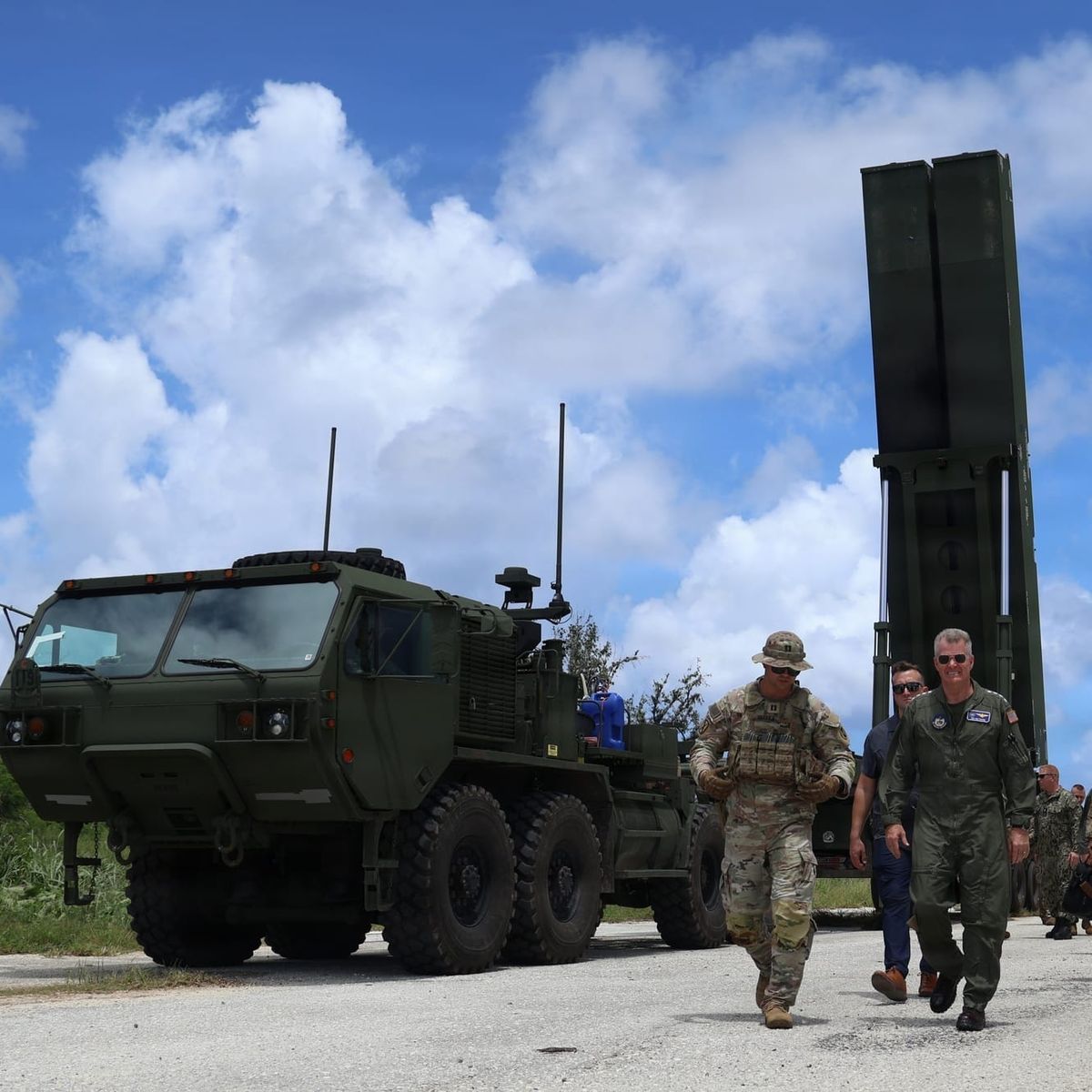
New US Army photographs have raised the possibility that America’s longest-range ground-launched weapon trained on Guam during Exercise Valiant Shield, placing mainland China within its publicly declared reach.
The images show Admiral Samuel Paparo, commander of US Pacific Command, observing soldiers working with the Dark Eagle Long-Range Hypersonic Weapon. The Army confirmed that the training took place during Valiant Shield, although it did not disclose the location.
The five-image gallery was posted to the Defense Visual Information Distribution Service on 19 July. Its caption identifies Paparo alongside officers assigned to the 7th Infantry Division, now designated Multi-Domain Command Pacific.
Defence Blog reported on 20 July that the photographs may have been taken on Guam, citing an assessment by the open-source military account @lfx160219. Jerry Owens at Tech Times subsequently examined what that possible location would mean for Dark Eagle’s ability to reach mainland China.
The available evidence supports the assessment without confirming it. Official records place Paparo in Guam and the Northern Mariana Islands from 28 to 30 June, during the final days of Valiant Shield.
The DVIDS record contains an apparent date problem. Its metadata lists 6 June, which conflicts with the official 22 June to 1 July exercise window. The caption dates the activity only to June 2026. Guam therefore remains a credible open-source identification rather than an established fact.
If correct, the location carries direct strategic weight. Lieutenant General Francisco Lozano, the Army official overseeing hypersonic weapons, publicly placed Dark Eagle’s range at 3,500 kilometres during a December 2025 briefing and explicitly said it could reach mainland China from Guam. The island lies approximately 3,000 kilometres from the nearest part of China’s mainland coast.
A temporary exercise deployment would not establish permanent basing. It would demonstrate that the Army can transport and operate Dark Eagle from a strategically important island much closer to a potential Taiwan conflict than Australia or the continental United States.
Dark Eagle uses a two-stage rocket booster to accelerate an unpowered Common Hypersonic Glide Body. The vehicle then manoeuvres through the atmosphere at speeds above Mach 5. Its speed, manoeuvrability and lower flight path are intended to complicate detection and interception by missile defences.
The Army formally announced the Dark Eagle name in April 2025. Lockheed Martin serves as the weapon-system integrator, while the missile shares technology and production infrastructure with the Navy’s Conventional Prompt Strike programme.
The photographs do not prove that their release was planned as a message to Beijing. They do show Paparo personally inspecting the system during a major Pacific exercise. That indicates senior command interest, although the capability behind the signal remains limited.
Dark Eagle made its first operational appearance outside the continental United States in Australia’s Northern Territory during Exercise Talisman Sabre in July 2025. That deployment demonstrated strategic mobility. Guam, if confirmed, would add something Australia could not: immediate reach into mainland China.
The operational depth remains thin. The Government Accountability Office’s 2026 assessment puts the combined estimated acquisition cost of the initial prototype and two follow-on batteries at approximately $7.4 billion in 2025 dollars.
The first battery consists of four launchers, related equipment and eight missiles. GAO reported that the complete battery would be fielded more than two years after its original target. The Army subsequently told the watchdog that it had fielded the battery.
An Army officer said in December that missile production was running at approximately one a month, with an eventual target of two. That rate sharply limits how many high-value targets Dark Eagle could threaten during a sustained conflict.
Testing is also incomplete. The Pentagon’s operational test director reported that insufficient data were available to evaluate Dark Eagle’s operational effectiveness, lethality, suitability and survivability. Enough evidence for a full evaluation is not expected until the second quarter of the 2027 financial year.
GAO separately found that missile-delivery problems had delayed the second battery until at least the same quarter. Production difficulties could also affect the third battery because the Army and Navy rely on the same missile design and industrial base.
China already operates the DF-17, a hypersonic weapon unveiled in 2019 and now operationally deployed. The Pentagon assesses that its intended targets include foreign military bases and fleets across the Western Pacific.
A confirmed Guam deployment would extend America’s ability to answer that threat. The photographs reveal a weapon moving closer to China while remaining scarce, expensive and incompletely tested.
Comments ()