
Australia Develops Sea Mine and Drone Payloads for Ghost Shark
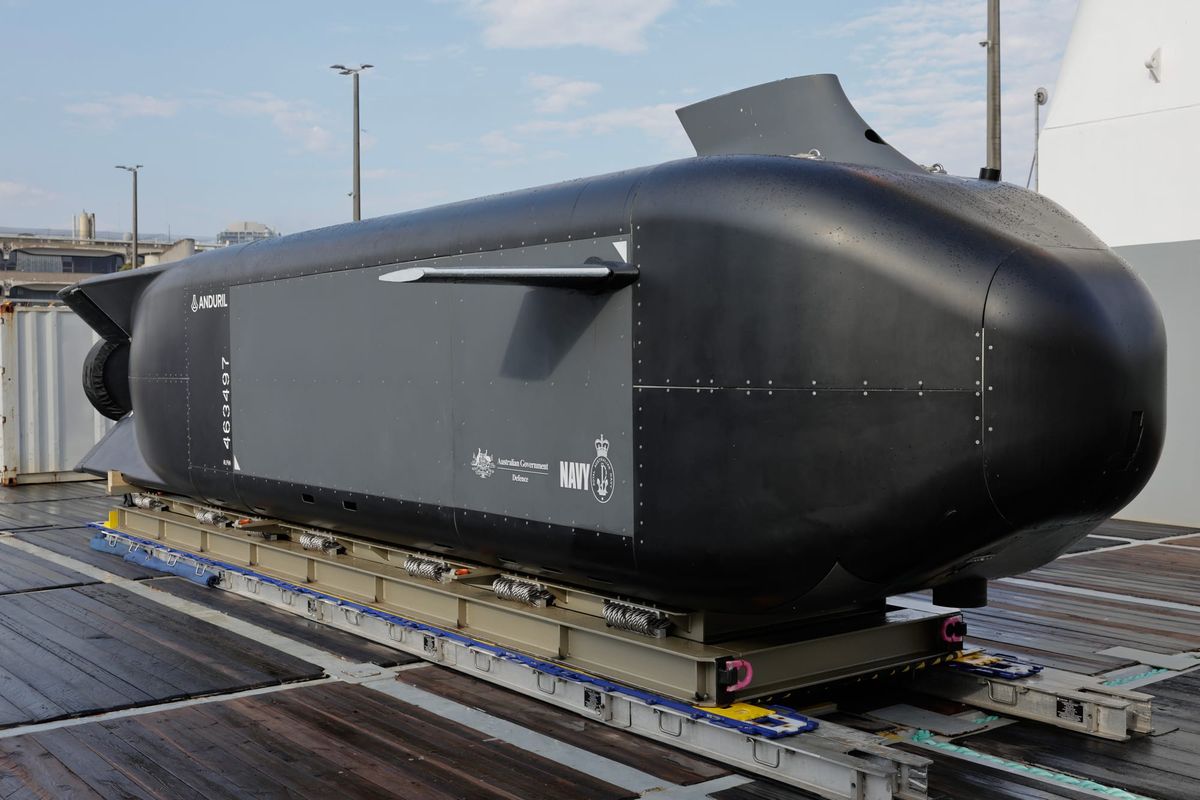
Australia has revealed new mission payloads for its Ghost Shark, Speartooth and Bluebottle autonomous maritime platforms, expanding their potential roles in sea denial, seabed operations and the protection of critical undersea infrastructure.
Australia has unveiled new mission payloads under development for its Ghost Shark, Speartooth and Bluebottle autonomous maritime systems, signalling an expansion of the Royal Australian Navy's ambitions in undersea warfare, sea denial and seabed operations.
The payloads include systems designed to remotely deliver sea mines, supply caches and uncrewed aerial vehicles, potentially allowing autonomous maritime platforms to perform a wider range of missions without exposing crewed vessels to the same operational risks.
Announced on 19 October, the development comes as Australia prepares to demonstrate selected technologies alongside the United States and United Kingdom during Exercise Maritime Big Play Pacific, an AUKUS Pillar II experimentation event taking place off Southern California from 5 to 25 October.
The announcement marks progress towards equipping Australia's growing fleet of autonomous maritime platforms with more diverse mission capabilities. However, Defence has not identified which payloads will participate in the exercise or disclosed their operational readiness.
While Australia has made substantial progress in developing autonomous underwater vehicles, integrating mission-specific payloads remains essential to turning those platforms into versatile naval capabilities.
From autonomous vehicles to military capability
The newly disclosed developments exploit the modular design of Australia's emerging uncrewed maritime fleet, allowing different payloads to be integrated according to operational requirements.
Defence identified the remote delivery of supply caches, sea mines and uncrewed aerial vehicles as examples of the capabilities being developed.
Such flexibility could eventually allow autonomous systems to support intelligence collection, logistics, sea denial and operations involving critical seabed infrastructure, without requiring a separate vehicle design for every mission.
The ability to deploy sea mines remotely could be particularly consequential. Naval mines can restrict access to strategically important maritime areas, complicate an adversary's operational planning and impose disproportionate costs on forces attempting to clear them.
Autonomous delivery systems could potentially expand the locations and circumstances in which such weapons might be employed, while reducing the requirement for crewed platforms to enter contested waters.
However, the government's announcement does not establish that Ghost Shark or Speartooth has successfully deployed operational sea mines. The specific payloads, their testing status and the platforms configured to carry them have not been disclosed.
Likewise, the ability to deploy supply caches or uncrewed aerial vehicles could support more distributed maritime operations, but the practical effectiveness of these concepts will depend on payload capacity, endurance, communications and integration with existing naval systems.
The significance of the announcement therefore lies in the development and integration of mission systems rather than confirmation of fully operational new capabilities.h=
Three platforms with complementary roles
The payload programme encompasses three Australian-developed systems with distinct characteristics.
Ghost Shark, developed by Anduril Australia, is an extra-large autonomous underwater vehicle designed for long-range intelligence, surveillance, reconnaissance and strike missions.
The platform is intended to complement Australia's crewed surface combatants and future nuclear-powered submarines by providing additional reach and persistence in the underwater domain.
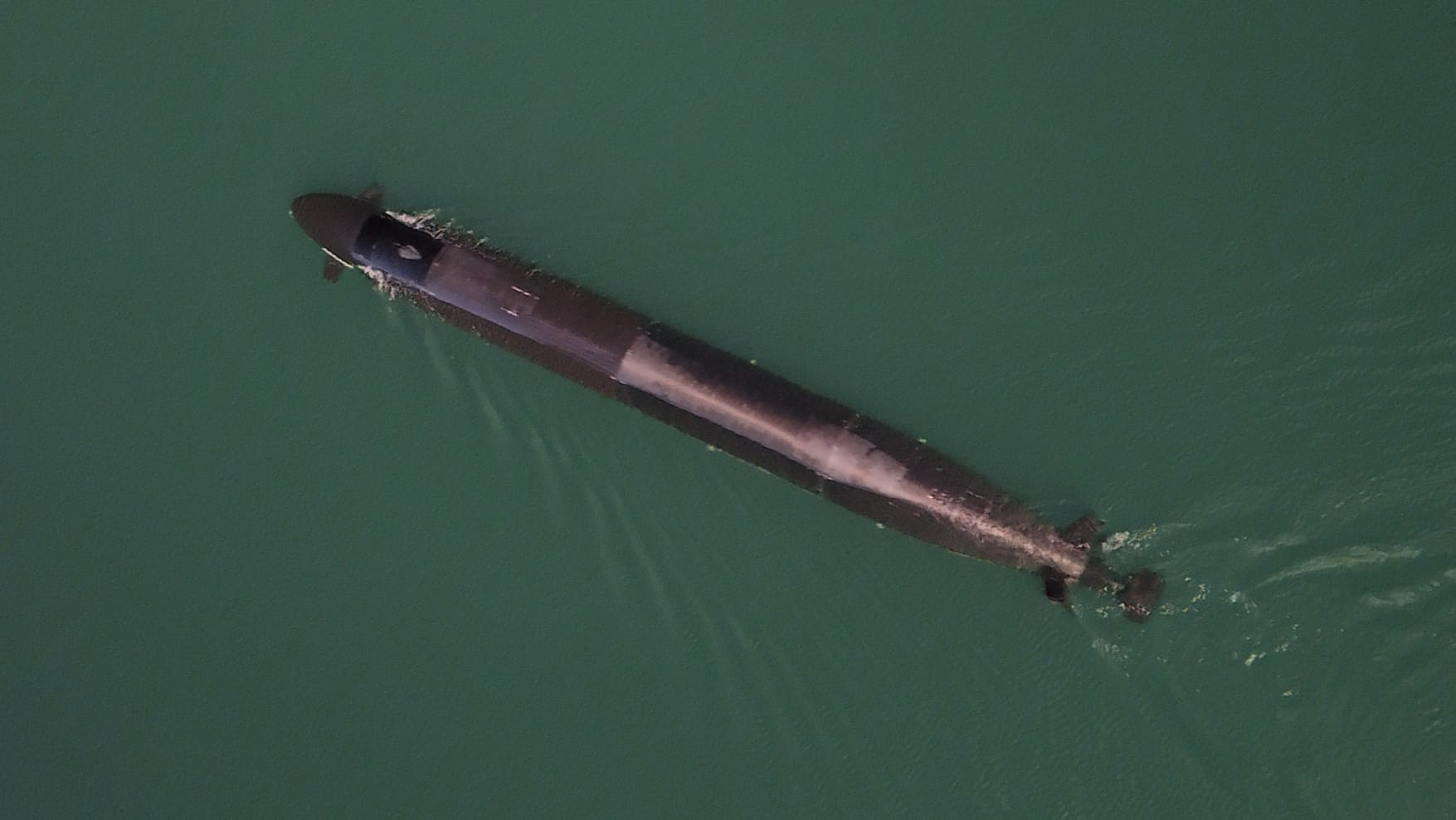
Speartooth, developed by C2 Robotics, is a large uncrewed underwater vehicle. The system has already been used as a test platform for novel payload configurations during AUKUS experimentation, including an Australian-led Maritime Big Play exercise in February 2026.
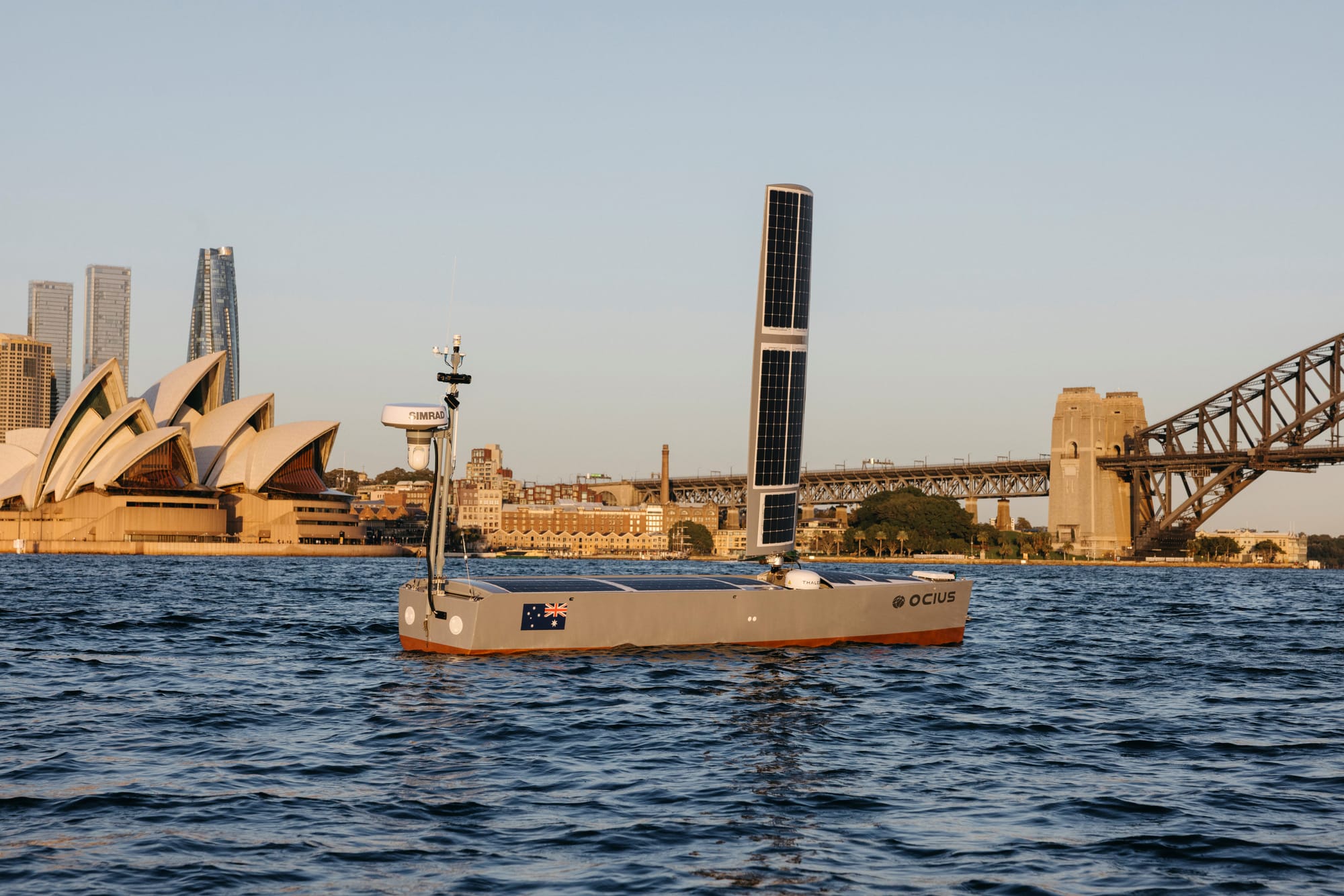
Bluebottle, developed by Ocius Technology, is an uncrewed surface vessel rather than an underwater vehicle. Its inclusion reflects the wider maritime scope of Australia's autonomous capability development, which combines surface and subsurface systems.
The three platforms form part of the Royal Australian Navy's developing autonomous fleet.
In April 2026, the RAN formally named its Maritime Autonomous Systems Unit, established through Project SEA 1200 to accelerate the development, integration and operational employment of maritime autonomous capabilities.
The unit brings together complementary systems and provides a focal point for experimentation, doctrine development, training and operational integration.
This structure reflects a broader shift in naval warfare towards combining crewed platforms with uncrewed systems able to perform specialised tasks across large maritime areas.
AUKUS Pillar II shifts towards interchangeable payloads
Australia's latest announcement is aligned with a wider AUKUS effort to accelerate the development of advanced autonomous maritime technologies.
In May 2026, Australia, the United Kingdom and the United States announced their first AUKUS Pillar II Signature Project, focused on payloads and enabling systems for uncrewed underwater vehicles.
According to the British Ministry of Defence, the programme is intended to deliver technologies that can be used across the three countries' underwater platforms, with delivery starting in 2027.
The initiative initially focuses on nationally developed interchangeable payloads that can be integrated by each partner, followed by joint development and production of trilateral payloads and supporting technologies.
It also encompasses shared technical standards, common control systems and operational concepts designed to improve interoperability between allied forces.
The objective is to move beyond individual national systems towards technologies that can be integrated across different fleets and operational environments.
Australia's newly disclosed payload developments provide a practical example of that ambition, although their precise relationship with the future trilateral payload architecture has not been publicly detailed.
The Maritime Big Play Pacific exercise is intended to accelerate this process.
Running from 5 to 25 October in the United States Navy's Southern California operating area, the exercise involves more than 40 government and industry technologies from the three AUKUS countries.
Experimentation includes autonomous systems, command and control, contested resupply, strike operations and undersea warfare.
The exercise builds on earlier AUKUS activity, including trials during RIMPAC 2026 off Hawaii.
Those July trials involved systems including the HUGIN Superior autonomous underwater vehicle, a Schilling remotely operated vehicle, the Lightfish Seasat uncrewed surface vessel and the Rock Lobster underwater acoustic communications system.
They demonstrated broader progress in subsea interoperability and infrastructure protection, rather than testing the newly announced Ghost Shark, Speartooth or Bluebottle payloads.
Australia commits A$5.8 billion to autonomous undersea warfare
The Albanese government says it is investing up to A$5.8 billion over the decade in autonomous and uncrewed undersea warfare capabilities under the 2026 National Defence Strategy and Integrated Investment Program.
The total includes A$1.7 billion for the acquisition of Australian-designed and manufactured Ghost Shark vehicles.
That acquisition was announced in September 2025 through a five-year contract with Anduril Australia covering delivery, maintenance and continued development of the platform.
The latest announcement was made at Anduril's facility in New South Wales, where Ghost Shark production is expanding.
Defence Industry Minister Pat Conroy said Ghost Sharks "are now rolling off the line at an increasing rate into the hands of the Australian Navy".
The statement indicates progress in the production programme, although the government has not provided updated fleet numbers or detailed deployment information in its latest release.
The development of payloads and enabling systems involves collaboration between the Royal Australian Navy, Defence Science and Technology Group, Advanced Strategic Capabilities Accelerator and Australian defence industry.
For Canberra, the investment serves two objectives: strengthening the Navy's future maritime capabilities while expanding Australia's domestic capacity to design and manufacture advanced defence technology.
Strategic implications for the Indo-Pacific
The growing emphasis on autonomous underwater capabilities aligns with Australia's broader strategy of deterrence by denial.
The 2026 National Defence Strategy places considerable importance on denying an adversary the ability to project military power against Australia, particularly through its northern approaches.
Autonomous maritime systems could support that objective by expanding surveillance coverage, complicating hostile naval operations and providing additional options for operating in contested environments.
Sea-denial missions are especially relevant to Australia's geography. Maritime approaches, strategic chokepoints and critical undersea infrastructure all present potential areas where persistent autonomous capabilities could complement conventional naval forces.
The ability to deploy mission-specific payloads may also give Australia greater flexibility in how it uses its relatively limited number of high-value crewed vessels.
An autonomous underwater vehicle carrying surveillance equipment could serve a different operational purpose from one configured for logistics or a future sea-mining mission, even if both use a common underlying platform.
That adaptability could become increasingly valuable as regional naval forces expand and competition intensifies across the Indo-Pacific.
Nevertheless, the military effectiveness of these capabilities remains dependent on factors that are difficult to assess from public announcements.
They include endurance, underwater navigation, communications resilience, payload reliability, survivability and the ability to operate effectively alongside allied naval forces.
There are also important distinctions between successfully demonstrating a capability during experimentation and integrating it into operational doctrine, logistics and command structures.
Australia's latest announcement does not resolve those challenges, but it indicates the direction in which the country's autonomous maritime programme is developing.
The focus is shifting from proving that uncrewed vehicles can operate at sea towards determining the military tasks they can perform and how those capabilities can be integrated with allied forces.

Comments ()